Vilnius just became a must-see landmark for history lovers with one of the region’s most significant early modern discoveries in recent decades. Hidden in the crypts of Vilnius Cathedral at the outbreak of World War II, the royal burial insignia of 16th-century Lithuanian-Polish monarchs are now on public display for the first time in nearly a century.
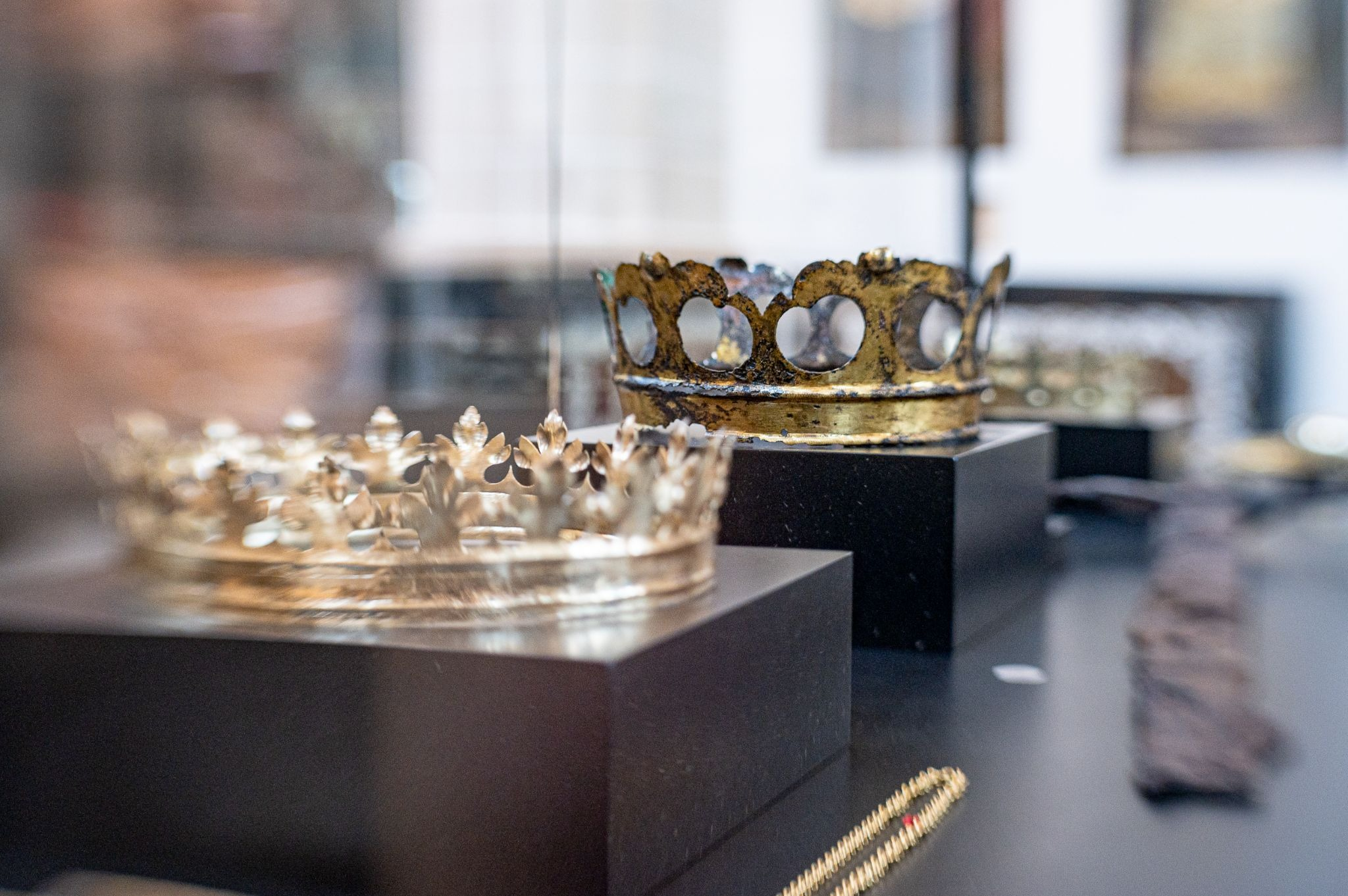
On July 9, ilnius opened the doors to “Hidden Within,” one of the most remarkable exhibitions of royal insignia in the region’s recent history. Hidden at the outbreak of World War II, the burial crowns belonged to Lithuania and Poland’s XVI century rulers Alexander Jagiellon (Aleksandras Jogailaitis), Elizabeth of Austria (Elzbieta Habsburgaitė) and Barbara Radziwill (Barbora Radvilaitė). The artifacts were only rediscovered in late 2024, and will be presented to the public at the Vilnius Church Heritage Museum, for the first time in nearly a century.
The insignia along with the remains of the three royals were originally uncovered in 1931, after spring floods exposed the royal crypts beneath the Vilnius Cathedral. However, fearing destruction or looting as World War II approached, the Church hid the treasures. While part of the Vilnius Cathedral treasury was rediscovered in 1985, the royal insignia remained missing for nearly a century.
“Today, when Europe’s royal insignia have been studied so extensively that discoveries of this scale are hardly expected, finding objects that many believed were lost forever is an internationally significant moment,” says Prof. Ph.D Andrzej Betlej, director of the Wawel Royal Castle in Kraków, Poland. “When news of Vilnius’ insignia came out, it was received in Poland with genuine excitement – I immediately realized that we were witnessing a historic moment. The rediscovery is a symbolic restoration of the memory of one of the most important periods in the history of Poland and Lithuania and seeing the original insignia in person has a power that no reproduction or photograph can ever replace.”
After spending decades in a humid environment, the objects were found in a fragile condition. However, following careful conservation and restoration, they are ready to be shown to the public once again.
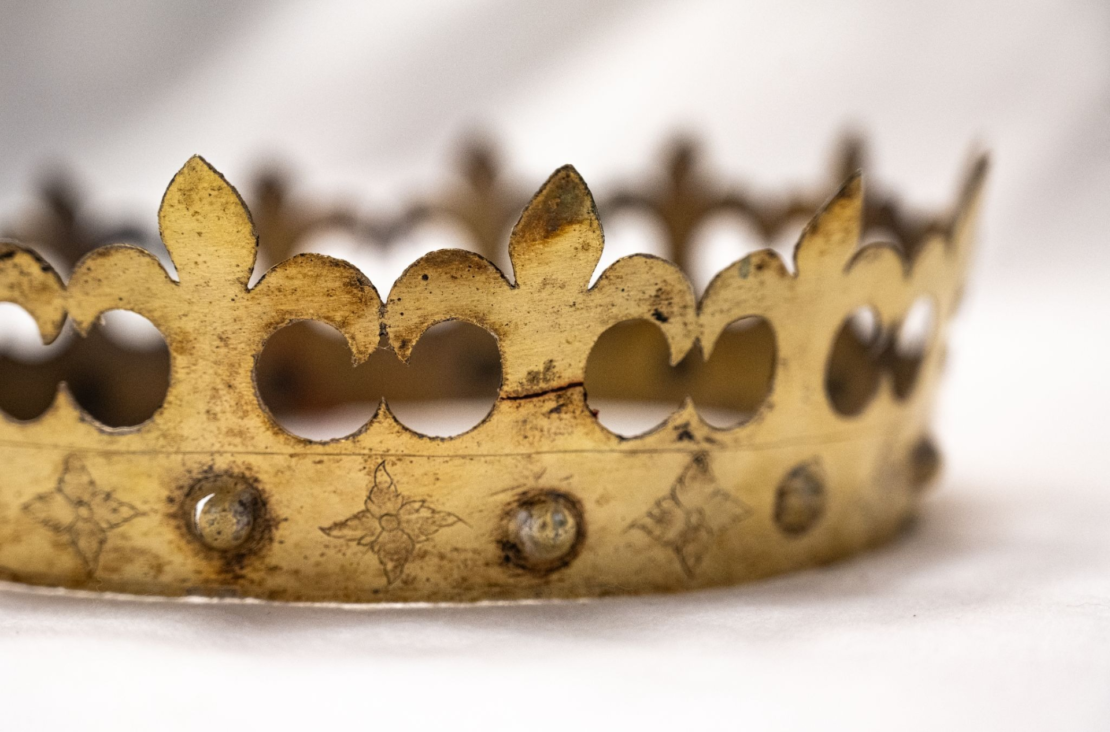
Burial Insignia (c) Aistė Karpytė, Vilnius Archdiocese
One particularly unusual object is Elizabeth of Austria’s medallion. It was made using a unique 10-ducat coin minted in 1533. The medallion’s face features portraits of Sigismund the Old and Sigismund II Augustus – the only known example of its kind in the world. In addition, the collection of gems reveals sophisticated craftsmanship techniques and tricks of the period, including hollowed garnets used to imitate rubies and crystal doublets fused with a red backing to create the appearance of richly colored gemstones.
Unique funerary insignia of Lithuanian-Polish rulers. King Alexander Jagiellon’s (1461–1506) and both Queens’s, Elizabeth of Austria (1526–1545) and Barbara Radziwill (1522–1551), funerary regalia, which include three funeral crowns, a sceptre, and an orb, are of the greatest symbolical, historical, and artistic value.
Exceptional jewelry of Renaissance queens. In addition to unique royal funerary insignia, personal jewelry belonging to the rulers of the country was also discovered. The hideout revealed a gold chain found on Barbara Radziwill and four of the queens’ rings made of gold and adorned with rare gemstones, including diamonds, rubies and emeralds. These treasures are testaments to the culture of marvel and virtuosity of early Renaissance goldsmiths.
“Personal royal regalia created for a specific ruler are exceptionally rare; as opposed to burial crowns, most coronation crowns were used for generations,” says Dr. Giedrė Mickūnaitė, curator of the exhibition. “There were never many of them to begin with, and over the centuries most were melted down, remade, or simply lost. The artifacts’ rediscovery brings back not only symbols of the long tradition of Lithuanian statehood, they also remind us of the shared dynastic history that shaped Central and Eastern Europe for centuries.”