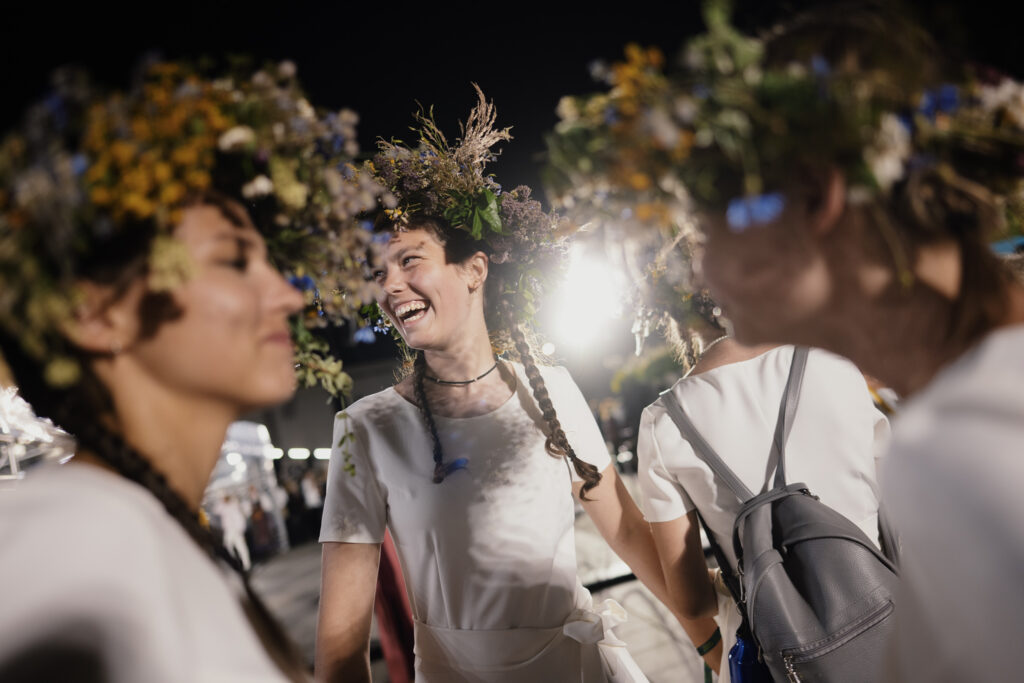
The Lithuanian School Students’ Song Festival begins today, 3 July. Bringing together 24,000 children and young people from across Lithuania, the festival will open, for the first time, with a grand procession. Over the coming days, the programme will feature four major events: the Wind Orchestra Concert, Ensemble Evening, Dance Day and Song Day. Events will take place across the capital, with several hundred thousand people expected to follow them both in person and via live broadcasts.
The festival forms part of Lithuania’s unique Song and Dance Celebration tradition – one of the country’s most powerful expressions of cultural identity, community and continuity. Lithuania held its first official Song Celebration in Kaunas in 1924, while the wider Baltic song and dance celebration tradition, shared by Lithuania, Latvia and Estonia, has been recognised by UNESCO as intangible cultural heritage. More than a concert or a performance, this tradition brings together choirs, dancers, musicians and communities across generations, turning folk culture into a living, shared experience.
The School Students’ Song Festival carries this tradition into the future. It gives children and young people the opportunity not only to perform on the country’s biggest stages, but also to become part of a cultural movement that has connected Lithuania for more than a century. Like the national Song Celebration, it is shaped over years of preparation in towns, villages, schools and cultural centres across the country.
According to the organisers, preparations for this year’s celebration have been under way for several years. Several dozen experienced choir conductors, composers, choreographers, directors, managers and technical specialists have worked on the festival, together with hundreds of ensemble leaders who have been preparing children across Lithuania. This year, a specially formed Youth Council has served as a bridge between the organisers and the participants, conveying the expectations of the children and teenagers arriving in Vilnius, as well as sharing its own views and ideas.
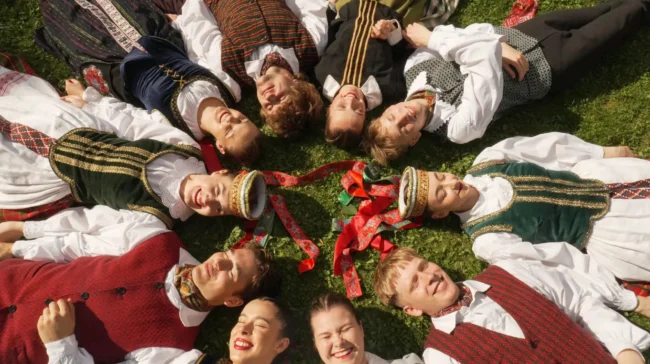
The School Students’ Song Festival will open with a procession of thousands of participants dressed in national costumes. Today at 5 pm , participants will walk from Vilnius Independence Square to Cathedral Square, greeting future audiences along the way.
In the evening, at 7 pm, the sound of wind orchestras will fill Cathedral Square, where more than 1,500 musicians will perform. According to Andrius Žiurauskas, director of the Wind Orchestra Concert, the event will take place in a deeply symbolic setting, with views opening up to the park and to Gediminas with his arms raised – the conductor of Lithuania’s history.
The highlight of the programme on Saturday, 4 July, will be the Ensemble Evening in Kalnų Parkas, bringing together more than 4,000 participants. This year, special attention will be given to the kanklės, the traditional Lithuanian string instrument, whose commemorative year is being marked in 2026.
For the first time in the history of the School Students’ Song Festival, the sound of more than 300 traditional kanklės will merge with the melodies of concert kanklės. A special arrangement will bring the two instruments together, complementing their archaic sound with contemporary rhythms. Jurgita Petkutė-Marcinkienė, chief conductor of the traditional kanklės performance at the Ensemble Evening, notes that children, young people and adults are rediscovering the kanklės, which is why the number of participants playing the instrument this year is particularly high.
Dance Day is also expected to draw considerable attention. Taking place on 5 July at Arena Vilnius, it will feature 6,000 dancers in a theatrical performance titled “Ratu ratu”, vividly reflecting the cycle of the seasons and, at the same time, the cycle of life.
Živilė Adomaitienė, artistic director of Dance Day, says the performance will captivate not only the packed arena watching live, but also audiences following from their screens.
“We will draw on traditions, customs and Lithuanian celebrations, while the stage will feature not only dancers but also actors and the characters they create. A new element of this performance is the four islands – spring, summer, autumn and winter – which will connect the show through textual and theatrical interludes. Audiences will certainly recognise details from folklore: bees, birdhouses, impressive Užgavėnės masks, storks, elements of nature, flour and more. Dance Day should become an extraordinarily beautiful and moving spectacle,” says Adomaitienė.
The School Students’ Song Festival will symbolically culminate in Song Day, a final event full of surprises, taking place on 6 July at the Vingis Park amphitheatre. A choir of 10,000 voices will perform both well-known repertoire and contemporary works. Popular performers, including Pijus Opera, Veronika Povilionienė, Girmantė Vaitkutė and others, will also take to the stage.
“During Song Day, we will follow a child’s story from cradle to maturity, from a mother’s love to the first signs of romantic love. This year, audiences will hear many optimistic, joyful and familiar songs, and will also see sign language included in the performance,” says Vytauatas Miškinis, revealing some of the programme’s key accents.
The culmination of Song Day will be the singing of “Tautiška giesmė” – Lithuania’s national anthem, sung by Lithuanians around the world – uniting both the participants and the audience gathered in Vingis Park. Those wishing to watch Song Day live from standing areas must obtain a free ticket, while seated tickets are still available for purchase.