Thirty-six years after restoring its independence, Lithuania is no longer just a textbook case of democratic transition. It is a confident European state – politically anchored, economically agile, and increasingly influential in debates that shape the continent’s security and future. What began on 11 March 1990 as a high-stakes act of political courage has matured into a resilient democracy with strong institutions, a dynamic economy, and a generation now building Lithuania’s next chapter without any memory of life behind the Iron Curtain.

Independence in Lithuania is not a ceremonial date observed once a year. Across the country, the national tricolour flies from streets and balconies – a vivid reminder that freedom has been reclaimed. Alongside it, Ukrainian flags send a parallel message: Lithuanians see their own history reflected in Ukraine’s fight for freedom today.
Courage That Changed History
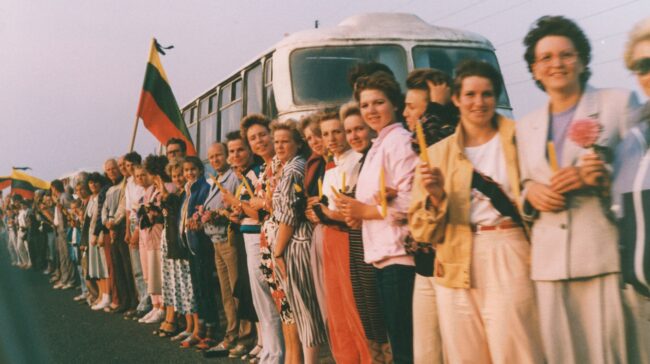
For nearly fifty years, Lithuania endured Soviet occupation. Yet language, culture, and civic identity kept the idea of statehood alive beneath the surface. In the late 1980s, that quiet persistence grew into Sąjūdis, the civic movement that mobilised society around the goal of self-determination.
The decision to declare independence on 11 March 1990 was far from symbolic; it carried real risk. Soviet forces moved to reverse it, culminating in the tragic events of 13 January 1991, when 14 civilians were killed defending key institutions in Vilnius. The lesson remains central to Lithuania’s strategic reflex: freedom is never self-sustaining. Today, a new generation demonstrates what the country is capable of across public life, business, culture and innovation—strengthening a modern Lithuania while protecting the hard-won space to live freely.
A Generation Raised in Freedom
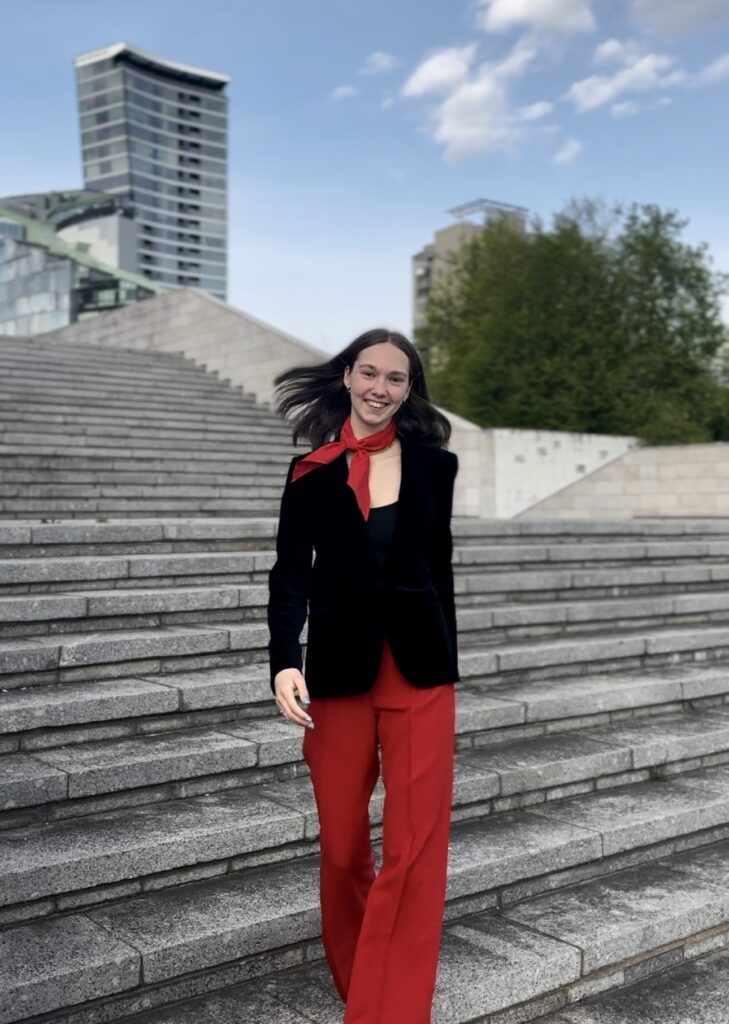
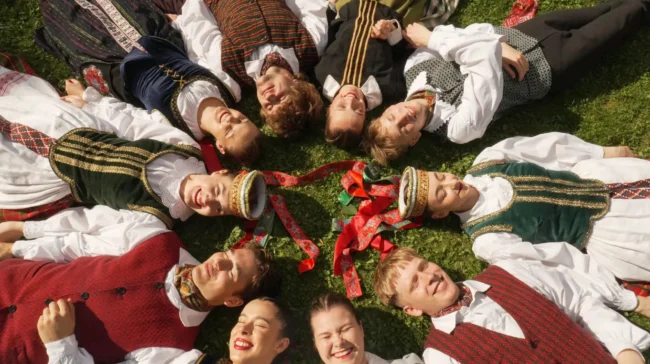
The most visible marker of Lithuania’s transformation is generational. Those born after independence grew up with open borders, global education, and professional mobility that would have been unimaginable to their parents.
“I grew up in a free country, and I know how lucky I am. My parents and grandparents didn’t have the same freedoms I have today – to travel, to make choices, and to speak freely. I feel deep appreciation, and I know that freedom is something that must be cherished.
I also try to be active and contribute to the student union I lead by strengthening our sense of community and building traditions,” explains Eglė Jasiulionytė, a student of Fashion Management at one of Lithuania’s private universities.
This confidence also reflects in the data. According to the 2024 World Happiness Report, Lithuania ranks first globally for life satisfaction among people under 30, with young respondents rating their happiness at 7.6 out of 10 – ahead of many Western European countries.
Lithuania on Europe’s Front Line
Over more than three and a half decades since 11 March 1990, Lithuania has consolidated democratic governance, strengthened civil society, and embedded the rule of law. EU and NATO membership did more than “mark a milestone” – they hard-wired Lithuania into the Euro-Atlantic architecture that matters most when the geopolitical weather turns: security guarantees and economic opportunity.

This Western anchoring also brings greater defence responsibilities. Lithuania’s 2026 state budget allocates 5.38% of GDP to national defence – one of the highest shares in the Alliance and a clear signal that deterrence is not treated as someone else’s job. At the same time, Lithuania remains among Ukraine’s most consistent backers—pressing for sustained international support and treating Kyiv’s EU path as a strategic interest, not a rhetorical flourish.
Taking the Helm: Lithuania’s EU Presidency
In the first half of 2027, Lithuania will hold the Presidency of the Council of the European Union. The government’s ambition is a results-oriented presidency – one that advances Europe’s security and enlargement agenda.
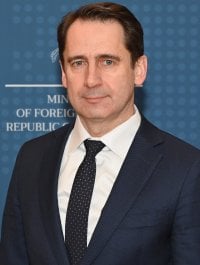
“The Presidency’s first and foremost priority is strengthening the security and defence of the European Union and the Euro-Atlantic area, ensuring continued political, defence, economic and humanitarian support to Ukraine. EU’s enlargement and the preservation of a rules-based international order are also vital for long-term peace and stability in Europe”, says the Vice-Minister of Foreign Affairs Sigitas Mitkus.
The six-month Presidency will provide an opportunity for Lithuania to reflect on its mission within the European Union and to assess the progress made since the first Presidency in 2013. “We will do that by actively engaging regional communities, young people, and diverse groups across Lithuanian society”, adds Sigitas Mitkus.
Public backing for the European project remains unusually strong. A 2025 Eurobarometer readout reported 77% support for EU membership in Lithuania, compared with an EU average of 62% – figures that help explain why “Europe” in Vilnius is less an ideology than a default setting. As one Lithuanian citizen put it: “Europe is not a direction for us – it is our home.”
A Nation That Treats Freedom as a Responsibility
Lithuania’s progress can be measured in institutions, GDP charts and international rankings. But the deeper metric is simpler: what a country does when freedom is threatened—at home or beyond its borders. That is why, when Russia launched its full-scale invasion of Ukraine, Lithuania’s response was immediate, sustained and outspoken. Since 2022, Vilnius has pushed for stronger European military assistance, tougher sanctions, and a credible long-term European future for Ukraine. By the end of 2025, Lithuania had provided approximately €1 billion in total aid to Ukraine – placing it among the world’s leading contributors relative to GDP.
Helping Ukraine stopped being a “campaign” and became part of the national rhythm – quiet, steady, and persistent. Lithuania is often cited as an example not because it speaks the loudest, but because it keeps showing up.
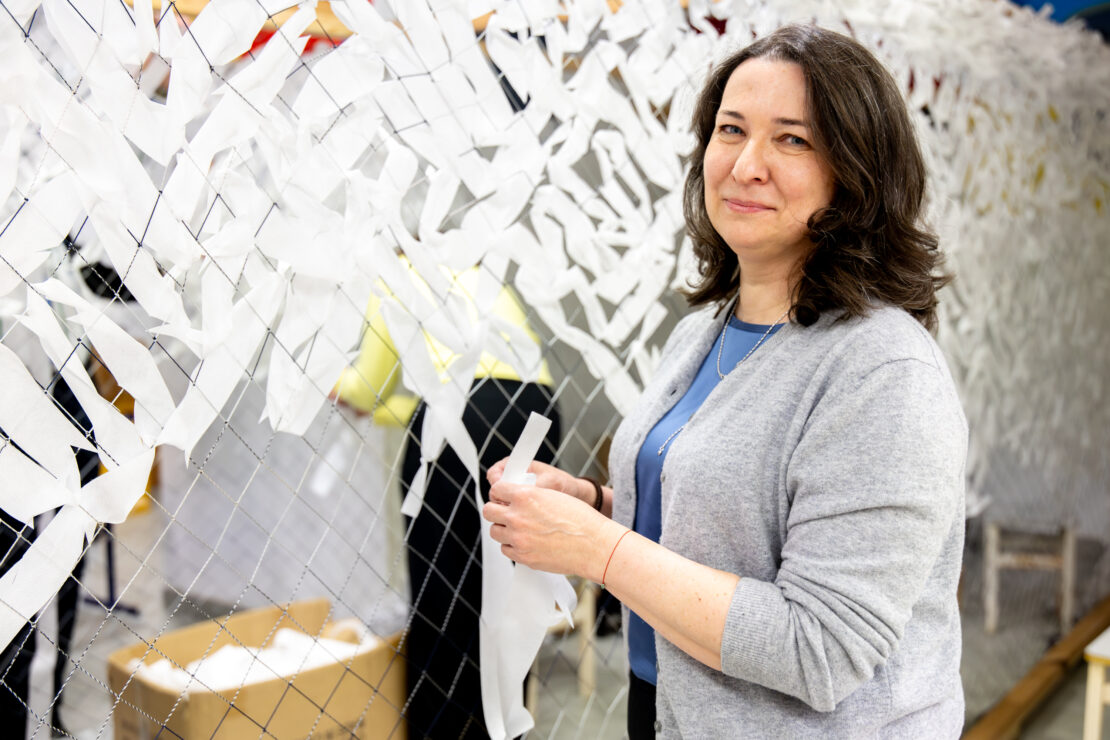
The commitment is also personal. Ramunė Zaicevienė, a public-sector employee, describes how her family’s support has become a tradition: “Since the very beginning of the war in Ukraine, our family has been donating to the ‘Blue/Yellow’ organization. I also support smaller initiatives, such as ‘Vilniaus vorai.’ It has already become a tradition that on Fridays my daughters and I go to weave camouflage nets that protect the lives of Ukraine’s defenders. We understand that this is also our fight for freedom.”Lithuania’s message to Europe is clear: values matter only when they carry a cost – and solidarity is most credible when it endures.
Culture as Confidence

Lithuania’s independence story is not only political or strategic. It is also cultural– not as ornament, but as a source of strength. As Rūta Prusevičienė, Director General of the Lithuanian National Philharmonic Society and Chair of the Association of Lithuania’s National Cultural and Arts Institutions, puts it: culture is part of national resilience. It shapes identity, signals what the country stands for, and builds the credibility to speak beyond its size. “Culture is not only a sphere of entertainment, but also a guardian of freedom and values,” she adds.
The strongest works do not sell a tidy national narrative; they speak directly about global realities – climate, anxiety, inequality, war – and do so in unconventional forms. That is why Lithuania’s cultural presence travels: the world recognises a voice willing to take on uncomfortable, often painful questions without softening them. Whether in cinema, theatre, or opera, Lithuanian artists are not chasing consensus – they are making work that insists on clarity.
Over the last few years, the awards have made that confidence legible internationally. Lithuanian cinema has secured major recognition at Sundance (2023) and the Venice Film Festival (2021), and in 2024, Lithuania took the Golden Leopard, Locarno’s top prize. In the performing arts, Lithuanian soprano Asmik Grigorian was named Female Singer of the Year at the International Opera Awards (2025), while conductor Mirga Gražinytė-Tyla won Gramophone’s Recording of the Year (2020). And in the visual arts, Lithuania’s cultural signature was cemented with a Golden Lion for Best National Participation at the Venice Biennale (2019) for the opera-performance Sun & Sea (Marina).
Optimistic, ambitious and free, Lithuania enters its next chapter as a country that treats freedom not as a memory to celebrate, but as a responsibility to defend – at home, for Ukraine, and across Europe.