As Lithuania marks 36 years since the restoration of its independence, it is a natural moment to take stock of what has been built and which industries now define the country’s economic trajectory. Biotechnology has emerged as one of the most dynamic sectors. National and institutional summaries commonly cite the sector’s footprint at roughly 3,7 % of GDP, an export share of around 90%, and an ambition to reach 5% by 2030.

One of the most direct commentators on how that momentum has formed is Jekaterina Kalinienė, Head of BioTech Lab at Innovation Agency Lithuania. Her message is clear: capability must be demonstrated in practice, not merely described. “We were once primarily known as a country of R&D, but the pandemic has shown that we can rapidly transition into manufacturing,” she says.
What “biotech” now covers
Biotechnology in Lithuania is no longer a single-lane story. It spans core molecular biology and bioprocessing, manufacturing to regulated standards, and an expanding set of adjacent capabilities that sit at the boundary between science and industry.
“Lithuania is already a leader in biotechnology in the region, especially in gene editing and CRISPR technologies,” Kalinienė says. She adds: “Lithuania also excels in precision fermentation, medical devices, pharmaceuticals, and digital health solutions.”
The connecting thread across these areas is repeatability: the ability to move from laboratory outcomes to production realities, and then to international markets. Companies are now scaling pilot processes into GMP-certified production lines, producing complex biologics, radiopharmaceuticals, and even specialty proteins that are thousands of times sweeter than sugar.
Early markers and credibility
Asked which crucial moments helped Lithuania’s biotech sector gain momentum, Kalinienė highlights July 2010, when Thermo Fisher Scientific acquired Fermentas International. “In biotech, such events matter less for headlines than for what they signal: that an industrial base can meet the compliance, quality, and delivery expectations that global supply chains demand,” she explains.
Lithuania’s success relies on a combination of scientific talent, regulatory know-how, and logistical efficiency. The country’s compact geography and infrastructure, including proximity to air transport and regional ports, enable rapid deployment of high-value products to over 100 global markets.
Scientific visibility: CRISPR-Cas and Professor Virginijus Šikšnys
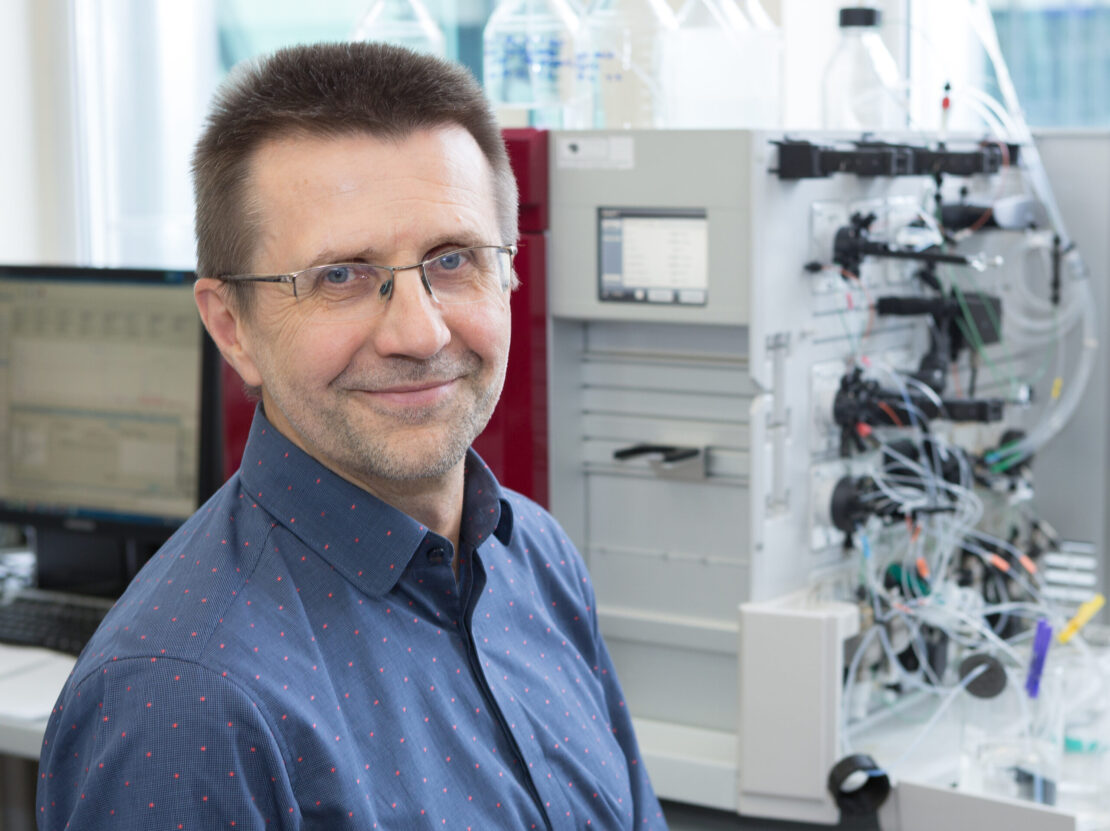
A second turning point came through scientific visibility. Lithuania’s association with CRISPR-Cas research spans multiple institutions and countries, but Professor Dr Virginijus Šikšnys’s revolutionary work – recognised with the Kavli Prize – has been pivotal in establishing the country’s profile in this transformative area of molecular biology.
The practical effect is concrete: it clarifies the ecosystem for international partners and increases the likelihood that talent, collaborations, and investment opportunities follow. The recent establishment of an EMBL-associated institute in Lithuania provides further proof of the country’s growing presence in cutting-edge life sciences.
System-building: Vilnius University Life Sciences Center
In 2016, Lithuania focused on institutional consolidation. The official opening of Vilnius University’s Life Sciences Center marked a decisive step.
“Visibility is not the same as capacity. A sector becomes repeatable when it has institutions that compress the distance between training, research, shared infrastructure, and early commercialisation,” Kalinienė notes. The Center integrates talent, laboratories, and facilities, making collaboration and technology transfer structurally easier.
Bio City: infrastructure designed for scale
Momentum in biotech ultimately depends on whether an ecosystem can scale efficiently. This requires specialised infrastructure for advanced R&D and capital-intensive biomanufacturing.
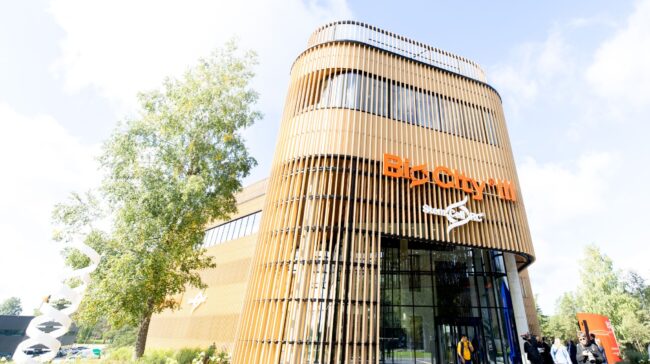
Bio City in Vilnius is positioned as a next-stage build-out: a campus designed to concentrate research, production capability, and company growth in one place. Kalinienė explains:
“If biotech is to become a durable economic pillar, scale-up cannot rely only on individual companies solving infrastructure constraints one by one; it requires an environment that makes scaling the default rather than the exception.”
Life Sciences Baltics: Lithuania on the global stage
Life Sciences Baltics, held in Vilnius since 2012, has become a key meeting point for researchers, start-ups, investors, and industry leaders. The 2025 edition at LITEXPO drew over 1,000 participants from more than 30 countries, with nearly 80 exhibitors across biotech, medtech, pharma, and digital health.
Kalinienė emphasises its practical impact: “The forum is how the world reads Lithuania’s ecosystem: research quality, clinical capabilities, and commercial intent. Life Sciences Baltics turns scientific strength into real collaborations.”
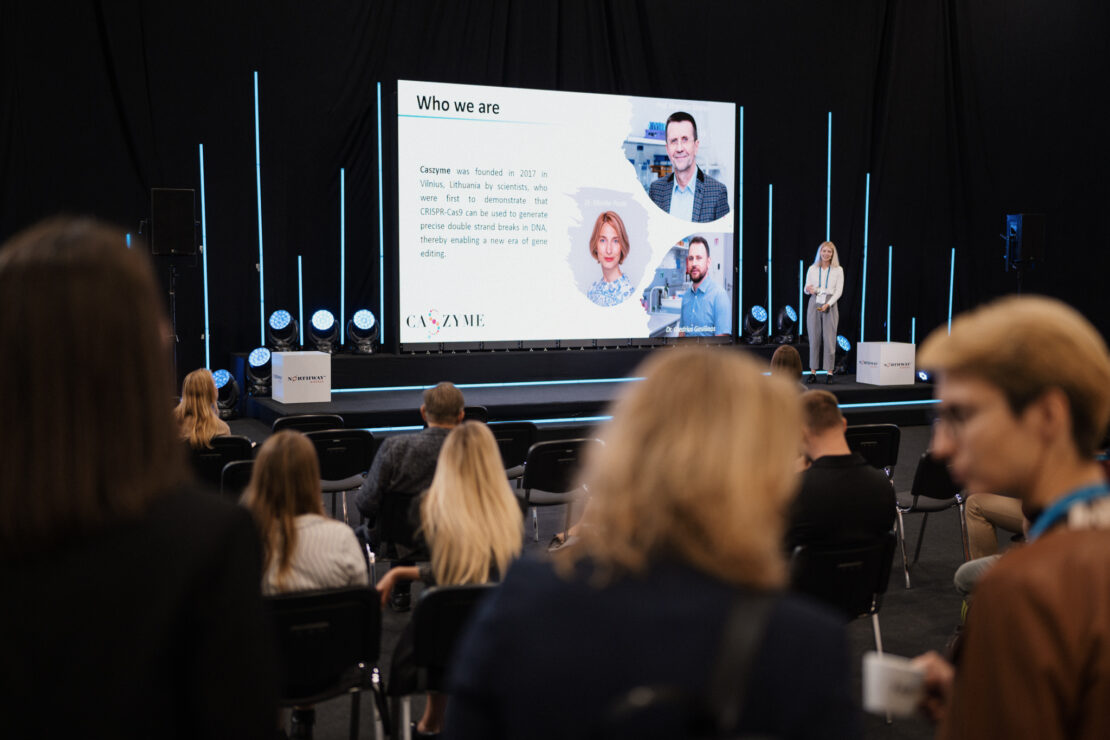
The next edition, in 2027, will be hosted in Kaunas for the first time, taking advantage of improved logistics and infrastructure, and aims to strengthen Lithuania’s global position as a hub where innovation meets commercial ambition.
Commercialisation: the current bottleneck
Despite strong fundamentals, the sector faces familiar challenges in moving from scientific depth to repeatable revenue models. Export orientation is high, but commercial leadership, regulatory navigation, and early validation environments remain areas for development.
“Scientific depth is necessary but not sufficient. Moving from strong science to consistent revenue requires patient capital, experienced commercial leadership, and mechanisms to validate local solutions against global standards,” Kalinienė warns.
She advocates greater use of Lithuania’s own healthcare infrastructure as a first market:
“If projects can be tested in Lithuanian clinical settings rather than only abroad, this would reduce risk and accelerate early adoption.”
Other practical considerations include mentoring scientists in sales, navigating potential rejection, and learning how to deliver the first sale internationally.
From Growth to a Firm Pillar of the Economy
Lithuania’s biotech story, viewed at the 36-year mark of independence, is no longer a question of whether competence exists. As commercial depth catches up with scientific strength and growing infrastructure, Lithuania’s biotech sector is poised to translate proven excellence into sustained global competitiveness – and to anchor a larger share of the country’s long-term economic growth.