In a small school in northern Lithuania, teachers are testing an idea many education systems are still grappling with: how to use artificial intelligence without losing the human heart of teaching.
Dubysos Aukštupio School, located in the Šiauliai region, is developing an AI-based system that helps teachers plan lessons according to the real needs of a specific class and individual pupils. The aim is not to replace teachers, but to give them a clearer picture of how their pupils learn – and more time to work with them directly.
Every child learns differently. Some need more time, others need clearer instructions, and some need a different kind of support from their teacher. The school’s headteacher, Vaidas Bacys, says the AI tool is being created to help teachers see those differences more clearly and respond to them more precisely.
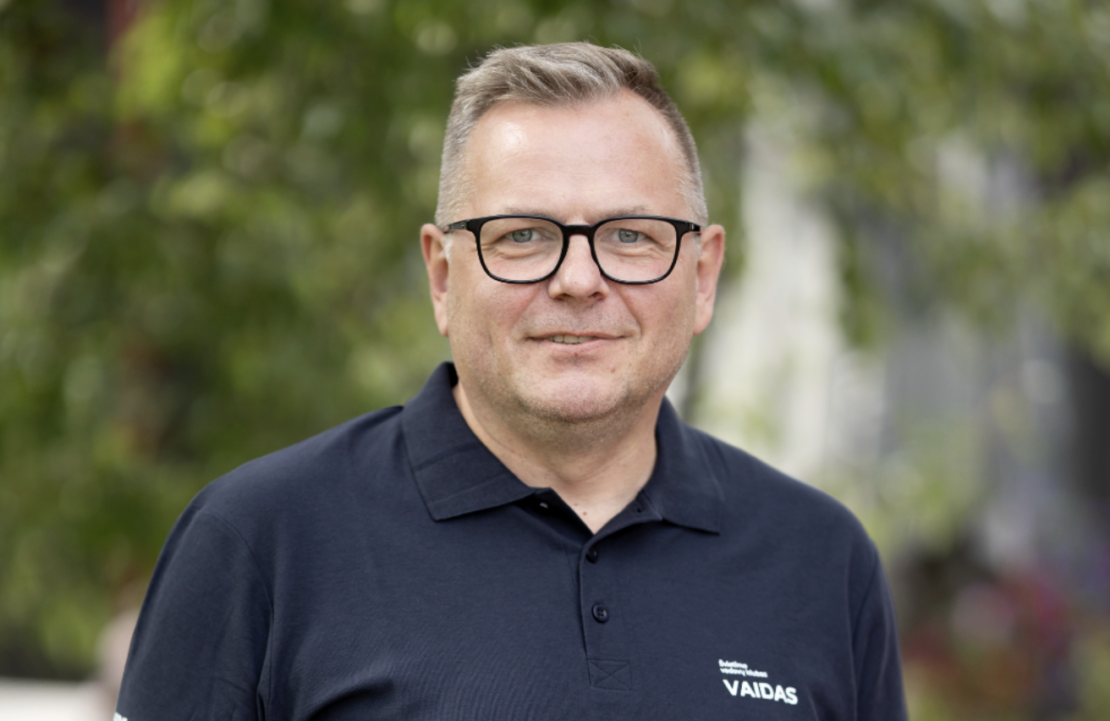
According to Bacys, the project began with a practical question: how can a school make better use of the information it already has?
“We first started thinking about how to systematise all the data we have about our pupils and how to create an institutional memory for the school,” he says. “Since we use a cooperative learning strategy, we wanted to help teachers plan lessons based on actual information about their pupils. That is where artificial intelligence came in.”
Dubysos Aukštupio is a joint school operating across several locations. This makes consistent planning, shared information and a common understanding of pupils’ needs especially important. For the school, AI is not a futuristic experiment – it is a practical management and teaching tool.
Since September 2025, the system has been used primarily to support lesson planning. It brings together Lithuania’s national curriculum, thematic plans, the school’s cooperative learning strategy, recommendations for working with pupils with different needs, and school-held data about specific classes.
“The system processes information about the class, the teacher’s chosen social skill and the relevant curriculum. It then recommends lesson structures, tasks and links to the national programme. The teacher receives suggestions for the lesson plan,” Bacys explains.
The final decision always remains with the teacher. The system provides recommendations, but the teacher decides what is suitable for the class, the lesson objective and the needs of particular children.
For Bacys, this distinction is essential. The main beneficiary of the system is the teacher. Pupils benefit because lessons can be better prepared and more closely adapted to their situation.
“The most important thing is that teachers should have more time for direct contact with pupils, not paperwork and planning,” he says. “A teacher should not be the person collecting and processing statistics. A teacher should be the person interpreting them.”
This is where the Lithuanian project differs from many general AI tools. Public tools such as ChatGPT can generate broad content, but teachers cannot upload sensitive information about specific pupils or classes into them. Dubysos Aukštupio School’s system is private and works only with the material provided inside the platform.
That material includes curricula, standards, achievement descriptions, recommendations on pupil needs, cooperative learning structures and lesson-planning logic. In other words, the tool is designed to work within a controlled educational environment.
“This system is designed to reduce the risk of hallucination because it does not rely on sources outside the materials provided by the school,” Bacys says.
Another crucial issue is data protection. The private system is being developed within a platform managed by Lithuania’s State Data Agency, allowing the school to work with its own data while protecting sensitive information about pupils.
For Bacys, this may be one of the project’s most important features. Around the world, education systems are asking how AI can be used in schools without compromising privacy, professional standards or public trust.

“Data protection is becoming a major issue everywhere,” he says. “AI raises challenges related to both intellectual property and personal data. In this case, we have found a systematic approach. If we manage to make the solution truly high-quality, adapting it for other Lithuanian schools should not be too difficult.”
The system is still a prototype. Teachers need time to learn how to use it, and the system itself needs feedback to better understand which recommendations are useful in real classrooms. There are also unresolved questions about data reliability, interpretation and ethics.
“The biggest challenge today is data reliability,” Bacys explains. “There are questions about how data is displayed, how correlations are identified and how links between different indicators are interpreted. We also constantly face the dilemma of anonymised and non-anonymised data – what a school may know about a child and what it may not.”
Another practical issue is textbook content. Teachers would benefit if lesson plans could refer directly to specific textbook materials, but this raises copyright questions.
The next stage of development could include signals or alerts to help teachers and school leaders notice concerning indicators early. The school is also considering a chatbot that could answer questions about school data, drawing on the institution’s historical memory and links between different data points.
Despite the ambition, Bacys argues for a cautious approach. The system should first be tested in a real school environment, improved and only then considered for wider use.
“I am against introducing the same solution everywhere at once,” he says. “This project is meant to be a prototype. If it works, it can be scaled. If it does not, we should not be afraid to put it aside and admit that it did not work.”
For him, the wider lesson is not only technological. Innovative schools need more than encouragement – they need professional feedback, research support and constructive criticism.
“We need more synergy between researchers, practitioners and policymakers,” Bacys says. “If a school initiates an innovative project, it would be extremely valuable to receive expert support: someone who could evaluate, summarise, recommend and analyse.”
The project is being developed in the broader context of Švietimas #1, a non-profit organisation established by Lithuania’s start-up association Unicorns Lithuania. The organisation brings together leaders who aim to build a progressive, world-class education system.
At a time when many debates about AI in education focus on fear – cheating, automation and the possible replacement of teachers – this Lithuanian school is testing a different idea: AI that helps teachers do what only they can do – understand their pupils better.