A €16.4 billion ecosystem, 39x growth in a decade, five unicorns, and the fastest-growing tech city in the EU. This is Lithuania’s startup scene in plain numbers. For a country of less than 3 million people, this sounds impressive on its own, but it’s the human story behind the numbers that is most compelling.
Hunger as Infrastructure
Ask any Lithuanian founder what makes the country stand out in the European tech landscape, and you are likely to hear a variation of: “We are still hungry.” While this might sound like a catchy slogan, it points to the fact that a large part of the country’s largest tech companies (including Vinted and Nord Security) grew to billion-dollar valuations by bootstrapping the majority of their growth.
“Founders here are commercially serious from day one. There’s less of the raise-first-figure-it-out-later culture you see in bigger ecosystems. People build things that need to make money, because the alternative was never really on the table,” says Julija (JJ) Jegorova, founder of London-based Black Unicorn PR.
For much of the 2010s, VC was fairly scarce, meaning that founders had little choice but to rely on customer revenue and reinvesting profits rather than seeking external investors. This necessity created the grounds for a situation that’s not exactly usual for startup scenes: early-stage companies that had to achieve genuine product-market fit before they could grow. You couldn’t paper over a weak business model with a funding round. You had to find customers and people willing to help and advise you.
“Lithuania is small enough to actually be a community. Everyone genuinely knows everyone, which means warm intros, faster feedback loops and less of the gatekeeping you get in, say, London or Berlin,” shares Jegorova.

In addition to informal founder networks, there is a healthy institutional infrastructure in place to give support and advice to early-stage startups. Startup Lithuania focuses explicitly on pre-acceleration and early-stage support, helping founders find international partners. The Innovation Agency, meanwhile, established InnoHub Lithuania and joined the Nordic Innovation House in Silicon Valley, while the globally renowned Plug and Play was brought in to run five acceleration cycles for up to 60 startups over three years.
The country’s relatively small domestic market has naturally pushed founders to think internationally from day one. With limited growth opportunities at home, Lithuanian companies learn to sell globally or they don’t survive. This push is complemented by the nation’s intrinsic entrepreneurial spirit – Lithuania secured 2nd place in the Global Entrepreneurship Index in the GEM 2024/2025 report.
Success in the early stages, however, doesn’t always lead to long-term growth. A recent Unicorns Lithuania study found that while existing startups are growing at a relatively fast pace, the number of new startups is rising only slowly. The association describes this as a “double challenge” – early-stage founders struggle to raise capital, while early-stage investors report a lack of investment-ready teams.
Leading the charge is Tadas Burgaila, co-founder of Kilo™ – one of the world’s leading wellness tech companies, bootstrapped from zero to consolidated revenue exceeding €500 million in 2025. In November 2025, Burgaila made headlines across Europe when he committed €1 million to wellness beverage startup Cannumo on Shark Tank Lithuania: €600,000 for a 20% equity stake and €400,000 as a loan. It was the largest investment ever recorded on any European business reality show. This also had the effect of bringing startup culture and entrepreneurship into the national conversation, with some schools even showing the episodes as part of their classes.
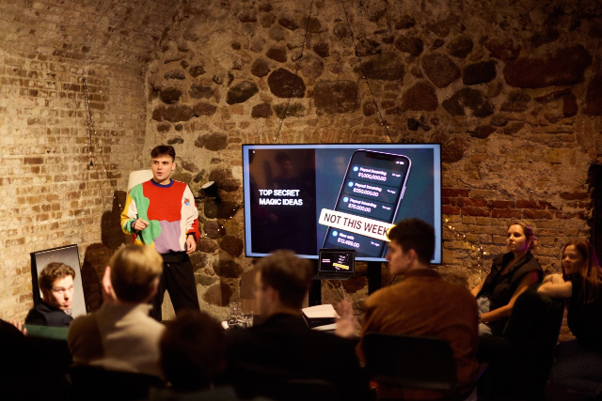
Burgaila has also been the guiding force behind a new venture-building studio and investment accelerator Lost Astronaut. Marius Burgaila, its co-founder and CEO, frames the accelerator’s mission in terms of mindset as much as capital: “Most people don’t lack ideas – they lose the habit of acting on them. We’re not trying to turn young people into founders. We’re trying to protect that early instinct to build before it gets replaced by hesitation, overthinking, or waiting for permission.”
Answering the capital question
Capital access remains a complex affair. The state, however, has remained a constant and generous supporter. The Lithuanian government’s €158 million invested into the VC ecosystem between 2017 and 2024 helped attract approximately €1.83 billion in private capital. In taxes paid by startups alone, that represents a roughly twelvefold return to the public budget.
One of the hallmarks of the Lithuanian ecosystem is the eagerness shown by the first generation of successful startups to reinvest in the local scene. The alumni of Vinted and Nord Security have gone on to found nearly 30 startups in the country.
“At the very early stage, the support is genuinely strong. Between the local VCs, the angel network, the accelerators and the government-backed initiatives, a first-time founder can get meetings, feedback and access to regulatory stakeholders. That isn’t true everywhere in Europe,” Julija Jegorova, CEO of Black Unicorn PR, observes.

The gap, she notes, opens further up the ladder: once founders move past pre-seed and start trying to scale internationally or position themselves in larger markets, the local support infrastructure begins to show its limits. But even here, the picture is improving: “The people who built the first wave of Lithuanian successes are now angel investing, advising, and starting again.”
That reinvestment is now extending towards an even more ambitious goal: creating the right conditions to nurture future entrepreneurial talent. Tesonet – the venture builder behind Nord Security and Surfshark – recently announced a long-term strategic investment in Lithuania’s education system, spanning early childhood through university. Co-founder Tomas Okmanas framed it plainly in January 2026: “Our future is linked to Lithuania. This is not just our home, but the base for our businesses.”
Lost Astronaut’s own trajectory illustrates what that capital, deployed early and decisively, can achieve. In under a year, the accelerator has invested in more than 40 startups across 7 countries and created 22 startup concepts in-house. In April 2026, one of its founders, Mykolas Karpičius (Cannumo), was included in the Forbes 30 Under 30 list, while Outcraft AI – backed at the founding stage – closed a €2 million early-stage round.
Staying Home and Scaling Out
Another key characteristic of the Lithuanian startup scene is its commitment to its roots. Only 26% of scaleups founded in Lithuania move their headquarters abroad – the lowest figure in Central and Eastern Europe, compared to 50% in Estonia and 70% in Latvia. Companies build globally while keeping talent, tax revenue, and know-how inside the country.
Jegorova identifies this as a deliberate cultural feature: “Lithuanian founders aren’t precious about their ideas, they iterate fast and they don’t waste time on pointless theatrics. But the ambition is global from day one. Nobody here is building for the Lithuanian market alone.” The ecommerce sector is perhaps the clearest expression of that outward reach. “Lithuanians have become associated with ecommerce and performance marketing prowess, as well as B2C expertise. Think of brands like Nord VPN, Surfshark, Hostinger. Every second YouTube video is supported by one of them.”
Second-hand fashion marketplace Vinted, now approaching decacorn status and launching in the US, is the most visible emblem of that global reach, and there are many more examples of companies built in Lithuania known primarily abroad. One of them is Billo – a creator marketing platform used by 22,000+ brands worldwide. According to its CEO and co-founder Donatas Smailys, building globally is a whole different sport.
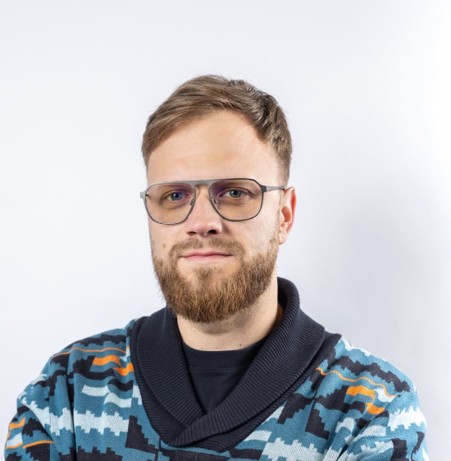
“You can’t build for global markets while only breathing local air, you need to at least visit where you want to compete and get some benchmarks. Pair that with resilience and an obsession with execution quality. There are levels to execution most local founders don’t see if they have limited experience. I didn’t fully get it until I started spending real time with US operators, got mentors who did it before, was blessed with a hustler co-founder and great investors,” Donatas Smailys observes.
There is one further dimension that deserves recognition. As Jegorova observes: “Women’s representation in Lithuania’s startup ecosystem is noticeably better than in most of Europe. Not perfect, but visibly different from the rooms I encounter in London. That shapes the culture in ways the rest of Europe could learn from.”
The numbers bear this out more broadly. In the first half of 2025 alone, startups contributed €283 million to the state budget – up 20% year on year – employing 19,500 specialists at an average monthly salary of €4,600, more than double the national average. The sector’s productivity nearly doubled between 2019 and 2024, from €117,000 to €237,000 revenue per employee, far outpacing traditional sectors.
The defining late-stage moment of recent months was Cast AI crossing the symbolic $1 billion threshold in January 2026, becoming Lithuania’s fifth unicorn alongside Vinted, Nord Security, Baltic Classifieds Group, and Flo Health. Cast AI was founded in the US but built its product from day one in Vilnius, where its largest engineering hub remains. Its 80 Lithuanian employees earn an average of €8,200 per month. The pattern – global ambition, Lithuanian roots – is the ecosystem’s signature.
Those roots also shape how the next generation of founders is being prepared. As Marius Burgaila observes, the challenge for young Lithuanian founders today is no longer access to tools or knowledge – but execution: “Most first-time founders don’t struggle with ideas, but with speed – overthinking instead of testing, building in isolation instead of in contact with reality.” What’s changing, he argues, is mindset: Gen Z founders are less interested in pitch theatre and more focused on building, shipping, and learning in real time.
For Jegorova, the direction of travel is clear: “London or Paris founders don’t need to explain where they’re from. Lithuanian founders still do.” But she is quick to add that this too is changing – and that those who are paying attention already know it: “Lithuania is not only a friendly place to do business, but also a place where exciting startups are consistently springing up.”