Lithuania’s laser industry is marking its 60th anniversary this year. What began in university laboratories has grown into one of the country’s highest value-added export sectors and a globally recognised area of technological excellence.
According to the Innovation Agency, 90–95% of Lithuanian laser production is exported to more than 80 countries, while the sector continues to grow by more than 16% annually.
Lithuania’s laser story began in 1966, just six years after the laser was invented in the United States. That year, Vilnius University physicists Juozas Vidmantis Vaitkus and Remigijus Baltramiejūnas created the first Lithuanian ruby laser. The real breakthrough came in the 1990s and 2000s, when companies emerging from the scientific community made a bold decision to compete globally from the outset.
Today, the profit generated by Lithuania’s laser sector per employee is more than twice the national average.
The sector’s success is also reflected in Lithuania’s export figures. According to Simona Buziliauskienė, Head of the Progress Department at the Innovation Agency, exports of high-technology goods grew by 7.2% last year, while knowledge-intensive services increased by 24%.

“Together, these areas account for 26.8% of all exports of Lithuanian origin. Exports of Lithuanian-origin high-technology goods are characterised by twice as rapid growth in export value. Over the past five years, the main export partners for high-technology goods have been Germany, Poland and the United States,” says Buziliauskienė.
An ecosystem built on science and business
The strength of Lithuania’s laser industry lies not only in individual companies, but in the wider ecosystem connecting universities, research centres and business.
Kristina Ananičienė, Executive Director of the Lithuanian Laser Association, says this close relationship between science and industry has been one of the key reasons behind the sector’s success.
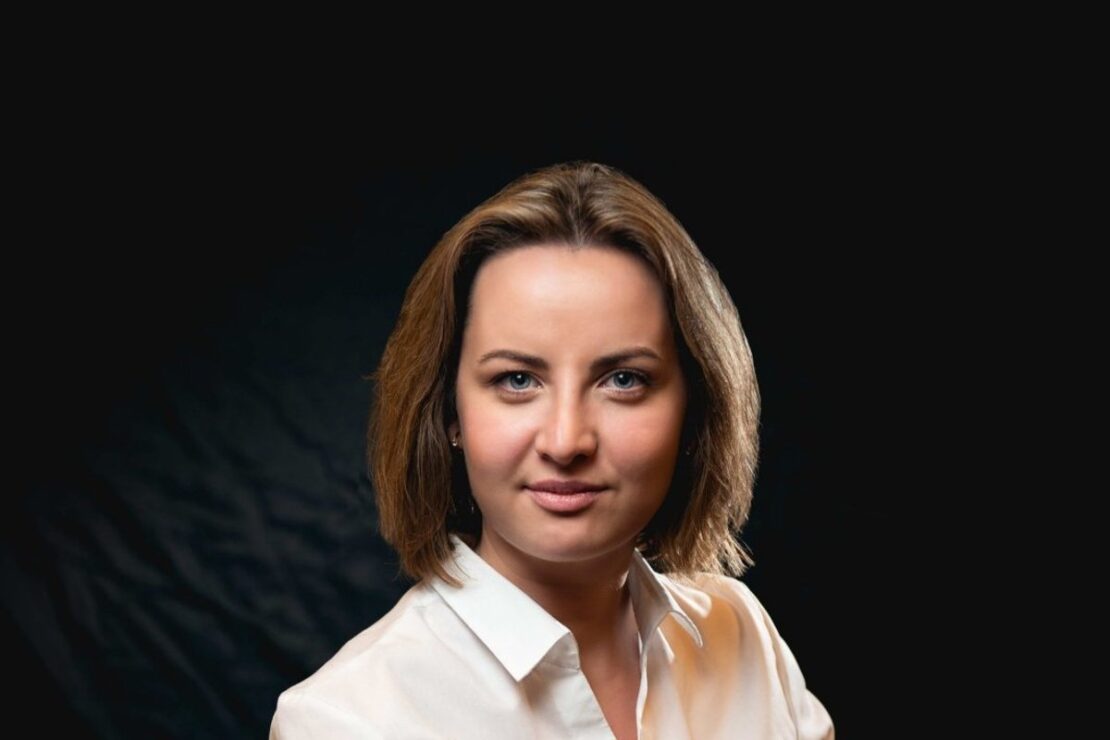
“From the very beginning, Lithuanian companies developed their own technologies rather than copying existing solutions. This allowed the country to become one of the strongest developers of ultrashort-pulse lasers in the world,” says Ananičienė.
Over the past three decades, the work of laser engineers has also changed significantly. In the early years, engineers often had to do everything themselves: design components, adapt parts from other equipment, search for information abroad and manage production processes. Today, with tens of thousands of Lithuanian laser systems operating worldwide, engineers can focus on precision technology development, industrial reliability and scientific progress.
Technologies shaping everyday life
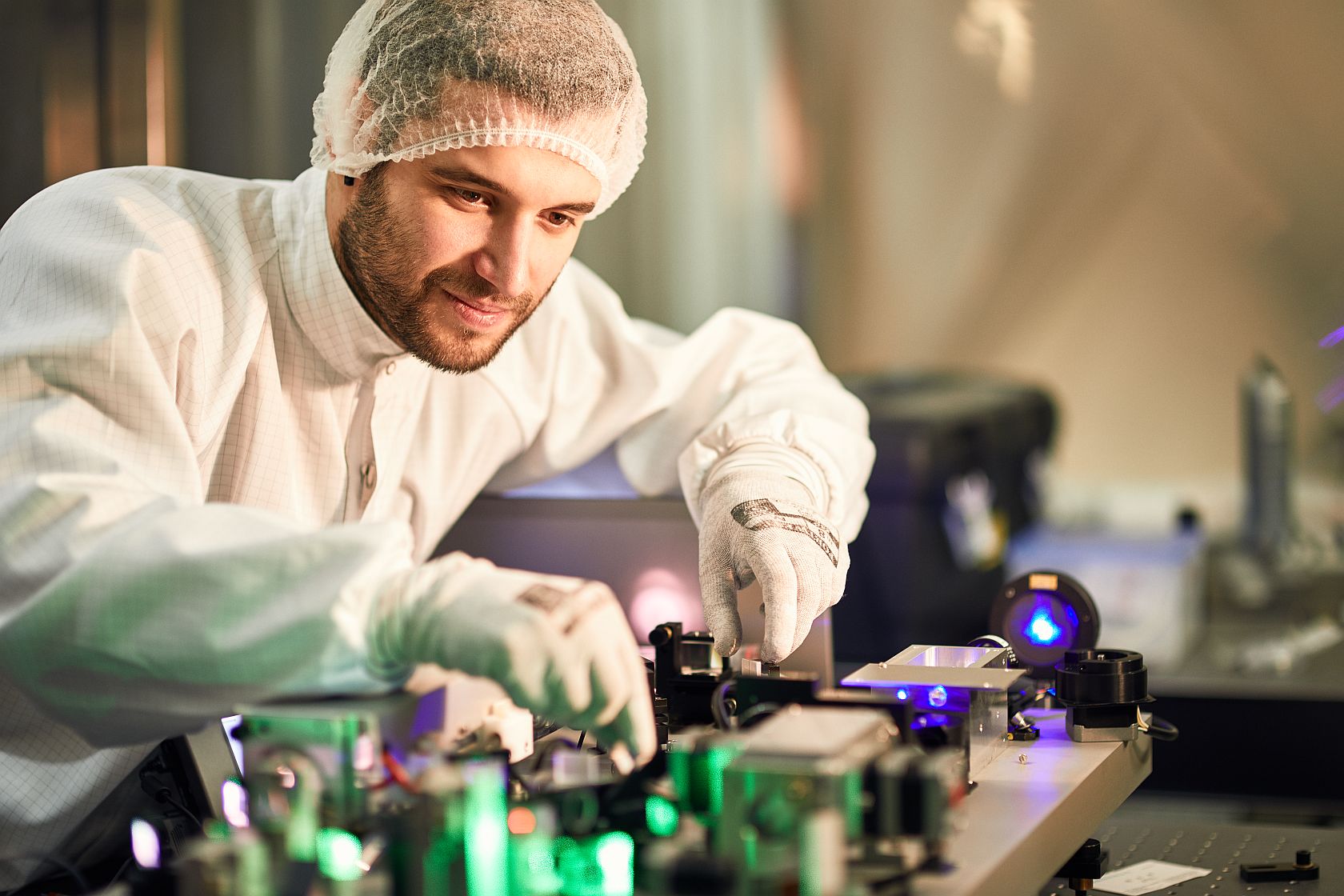
One of the best-known companies in the sector, Light Conversion, has grown from a group of scientists into a global leader in femtosecond lasers.
The company’s technologies are used in industries requiring exceptional precision, including electronics, automotive manufacturing and medicine. They help cut smartphone screens and camera glass, process fragile materials used in electronics, and drill microscopic holes in automotive fuel injectors to improve engine efficiency and reduce emissions.
According to Gabrielė Stankūnaitė, Head of Communications at Light Conversion, femtosecond lasers are also widely used in medicine.

“They make it possible to cut stents – tiny cylindrical mesh structures inserted into blocked or narrowed blood vessels to keep them open. Each year, more than one million stenting procedures are performed in the European Union alone. Femtosecond lasers are also used in vision correction surgery. Several tens of millions of such operations have already been performed worldwide, reflecting a broader shift towards minimally invasive medical procedures,” says Stankūnaitė.
Femtosecond lasers are also used for 5D data recording in glass. This technology allows vast amounts of information to be stored in extremely small, highly durable materials and preserved even under extreme conditions.
From Lithuania to Japan and beyond
EKSPLA is another major success story in Lithuania’s laser industry. Its origins date back to 1983, when physicists and engineers at the Eksma experimental plant began developing an advanced picosecond laser. In 1987, the PL1020 laser was presented and sold in Munich, proving that Lithuanian technology could compete internationally.
After Lithuania regained independence, EKSPLA reached Japan in 1993 with two lasers – at the time, the only Lithuanian products in that market. Japan became both an important export destination and a mark of quality, helping to open the door to the United States market.
Today, EKSPLA exports to more than 80 countries, supplies leading universities and industrial clients around the world, and has received prestigious SPIE Prism Awards.
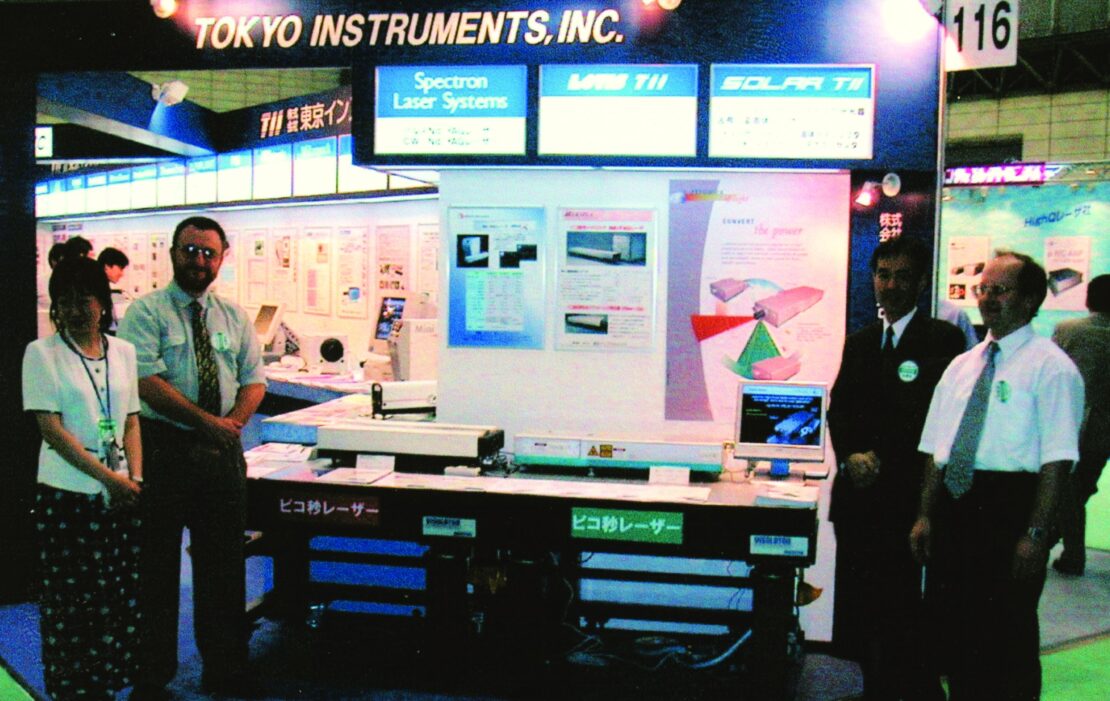
Kęstutis Jasiūnas, Chair of the Board of UAB EKSPLA and one of the company’s founders, says the company has travelled the path from laboratory solutions to industrial technologies.
Today, he notes, EKSPLA’s lasers no longer simply reflect scientific progress — they help create it.
The small components that make precision possible
Another important part of Lithuania’s laser ecosystem is EKSMA Optics, which for more than three decades has produced optical components used in science, medicine, quantum technologies, defence and the semiconductor industry.
These components may be small, but they are essential to the precision, reliability and safety of laser systems.
According to Audrius Jakštas, Sales Technical Director at EKSMA Optics, the company’s components are used in some of the world’s most powerful laser systems, including those being developed for laser-driven nuclear fusion — a technology that could in future become an alternative to current nuclear energy.
Among the company’s most in-demand technologies are electro-optical components, such as Pockels cells with integrated controllers, which allow laser pulses to be controlled with extreme precision and speed. EKSMA Optics also produces optical elements with special coatings made using Ion Beam Sputtering technology, which provides exceptionally high resistance to laser radiation damage.
These technologies help solve one of the key challenges in modern photonics engineering: ensuring that optical systems remain stable, precise and reliable when operating at extremely high power and with extremely short pulses.
From laboratories to factories
Over six decades, Lithuania’s laser sector has moved from scientific laboratories to the global market. One of the most important changes today is the sector’s clear shift towards industry: almost half of all laser sales now go directly to industrial companies.
This has also changed the nature of the technologies themselves. While earlier development was often driven by scientific breakthroughs, today lasers are increasingly designed to be practical, efficient and easily integrated into real production processes – from medicine and electronics to advanced manufacturing and defence.
The photonics era
The next decade is expected to be shaped by the growing importance of photonics. It is becoming an essential part of semiconductors, quantum technologies, space and defence.
For Lithuanian companies, this creates opportunities beyond the growing demand for high value-added lasers. It also opens the way to transform business models: from supplying individual components to developing complete, integrated solutions.
Such a shift could allow Lithuanian companies to create significantly greater economic value and further strengthen the country’s position in the global high-technology market.
Competition and geopolitical pressure
At the same time, the sector faces increasing global competition and geopolitical challenges.
Gediminas Račiukaitis, President of the Lithuanian Laser Association, identifies geopolitics and rapidly changing national priorities as among the sector’s greatest risks. Some laser technologies are considered sensitive products, meaning their export is affected by licensing and international restrictions.
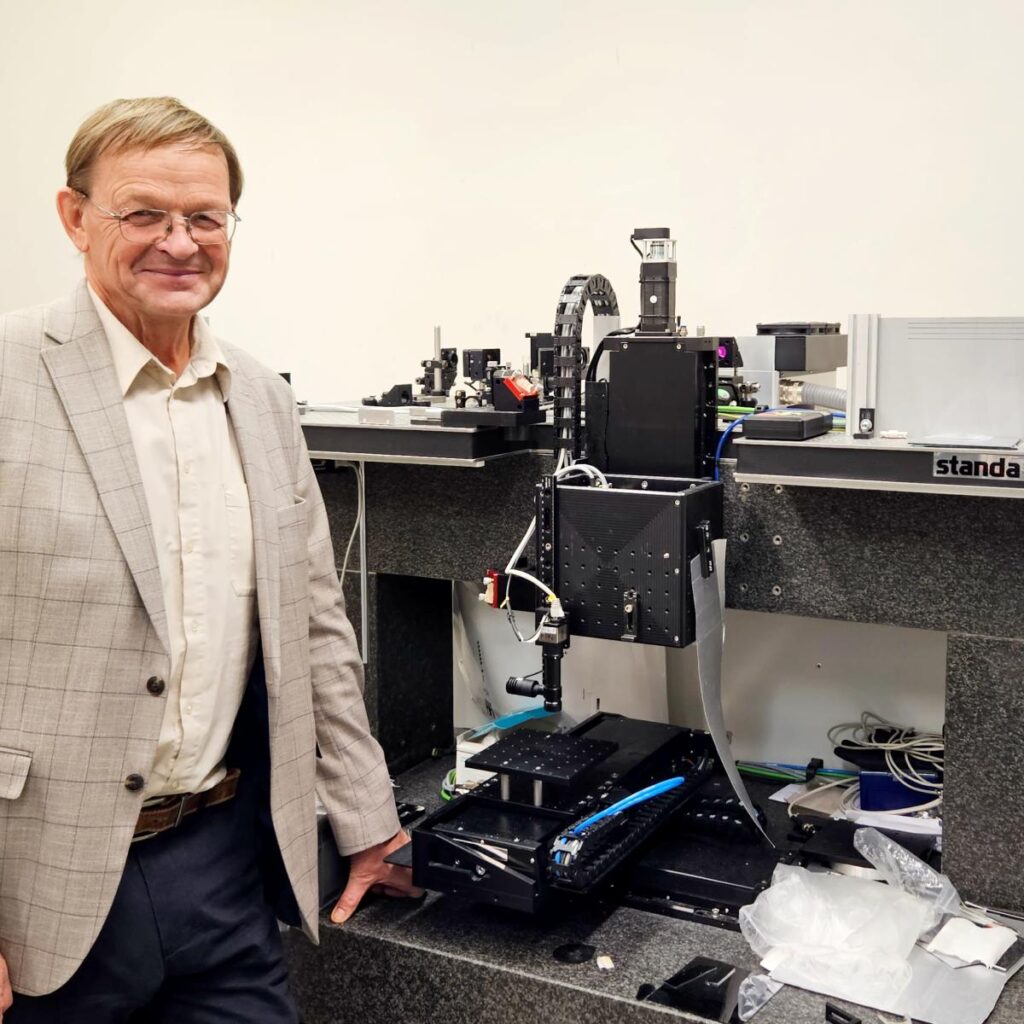
Competition is also intensifying. The United States, Germany and France have long been strong players in laser technologies, while China is progressing particularly rapidly in the field of ultrashort-pulse lasers.
Geopolitical tensions and supply chain disruptions in high-technology and defence industries are adding further pressure. They are also a reminder that technological leadership cannot be taken for granted. It must be continuously strengthened through investment in science, innovation and the ability to adapt quickly to changing export rules.
Why talent chooses Lithuania
Despite these challenges, Lithuania’s laser sector remains attractive to talent.
According to Račiukaitis, young people are motivated not only by competitive salaries, but also by the opportunity to develop world-class technologies in Lithuania. The sector’s international recognition encourages pupils to choose STEM subjects, while Lithuania’s growing reputation abroad is also encouraging some specialists who have emigrated to return.
A dynamic working environment plays an important role as well. In Lithuania’s laser sector, specialists can grow quickly, take responsibility and see the direct impact of their work on technologies of the future – without leaving the country.
A formula for success
Lithuania’s success in lasers is built not only on technology, but also on cooperation. A compact ecosystem, strong community ties and mutual trust allow Lithuania to be seen globally not as a collection of individual companies, but as one strong laser technology centre.
At the same time, the sector benefits from healthy internal competition between research centres and businesses. This balance – unity externally and competition internally – has helped Lithuania remain visible, innovative and competitive in the global market.
After 60 years, Lithuania’s laser industry has become one of the country’s strongest examples of how science, business and talent can come together to create global impact.