Lithuania is moving forward with plans to develop a modern film studio in Vilnius, aiming to strengthen the country’s rapidly growing audiovisual sector and attract larger international productions.
The Ministry of the Economy and Innovation has signed a cooperation agreement with Vilnius City Municipality, the Lithuanian Confederation of Industrialists and the Baltic Film & Creative Tech Cluster. The agreement brings together national and municipal authorities, industry representatives and potential investors to support the development of the project.
“Lithuania leads the region in terms of audiovisual production volumes. However, talent and a favourable business environment alone are not enough – modern infrastructure is essential for continued growth,” said Minister of the Economy and Innovation Edvinas Grikšas.
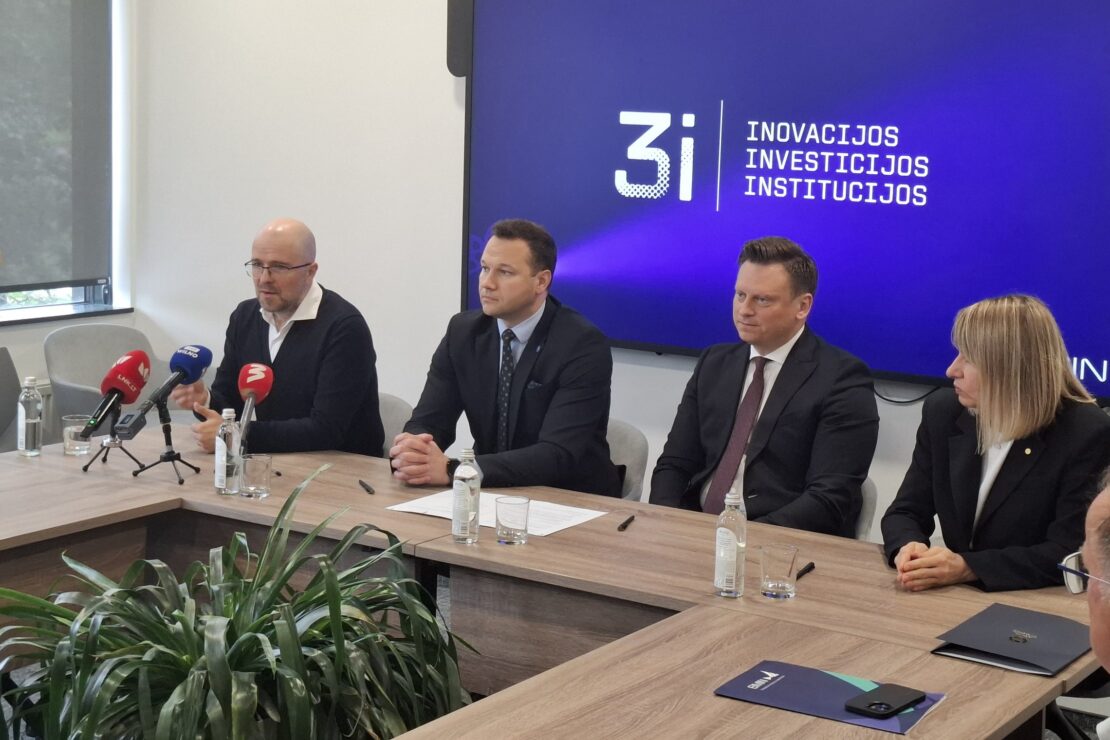
“Through this memorandum, we are bringing together the state, the municipality and the business community so that, by 2030, Lithuania can attract larger international productions and greater investment, while creating the conditions for high-value creative industries to grow more rapidly.”
Project could be granted national importance status
Together with the Ministry of Culture, the Ministry of the Economy and Innovation will seek to have the film studio recognised as a project of national importance.
The Ministry will also review the strategy of the Lithuanian Exhibition and Congress Centre LITEXPO with a view to creating the conditions necessary for the project to be implemented.
Under the agreement, Vilnius City Municipality will prepare an urban development and socio-economic study, draw up the necessary spatial planning documents and help accelerate the project’s implementation.
“The rapid growth of Lithuania’s audiovisual content production sector has exposed a critical infrastructure gap,” said Vilnius Mayor Valdas Benkunskas.
“Vilnius currently lacks a film studio of sufficient scale that meets modern international standards and can support a stable and competitive production process throughout the year. A new studio would strengthen Vilnius’s position in the Baltic and Nordic region, attract more international productions and create better opportunities for local creators and Lithuanian talent.”
Public and private partners to support development
The Lithuanian Confederation of Industrialists will represent the project’s interests nationally and internationally. It will also advise on opportunities to secure public investment from Lithuanian and international funding sources.
“Without a large-scale film studio in the region, Lithuania is missing out on high-value projects and investment,” said Raminta Radavičienė, Director General of the Lithuanian Confederation of Industrialists.
“The Vilnius film studio project would help close this gap and strengthen the competitiveness not only of the creative industries, but of the Lithuanian economy as a whole. Most importantly, the project is based from the outset on cooperation between the state, the city and business – a partnership that is essential for achieving lasting progress.”
The Baltic Film & Creative Tech Cluster will seek to attract private investors, provide expert advice and analysis throughout the project’s development, and bring together additional partners capable of contributing to its implementation.
Audiovisual sector reaches record turnover
Lithuania’s audiovisual sector, encompassing film, television series, advertising and animation, generated a record turnover of €208 million in 2025.
Since 2017, the sector has grown by an average of 19 per cent a year – nearly four times faster than Lithuania’s gross domestic product.
“Lithuania’s audiovisual sector is one of the country’s fastest-growing high-value industries,” said Romanas Matulis, Director of the Baltic Film & Creative Tech Cluster.
“Our research shows that a modern film studio could double the size of the sector, attract significantly larger international film and television productions, and create hundreds of new jobs.”
The planned studio would provide the infrastructure required for year-round production, strengthen Lithuania’s position in the international audiovisual market and create new opportunities for investment, innovation and creative talent.