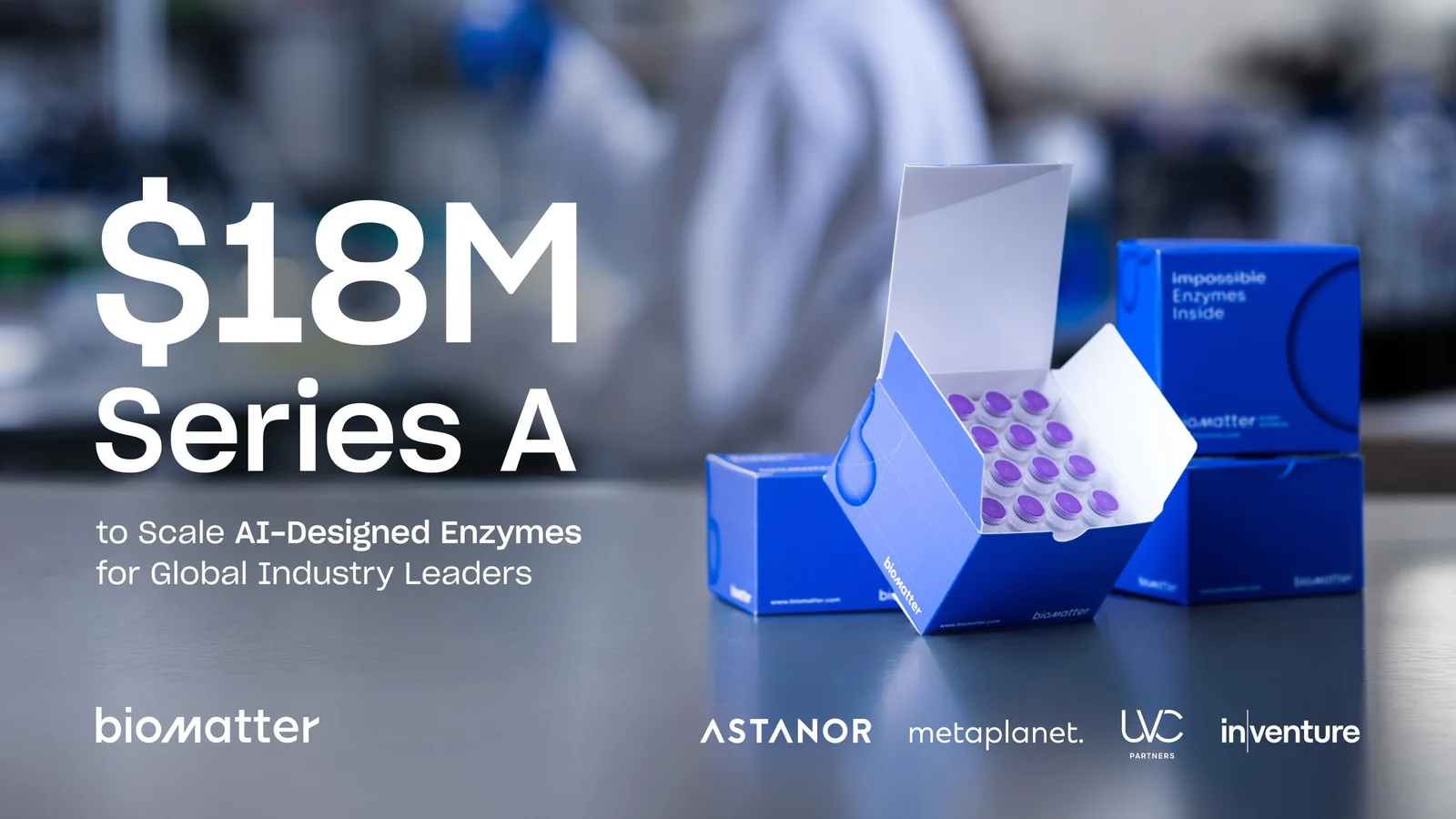
Vilnius-based biotechnology startup Biomatter, which originated at Vilnius University, has raised $18 million in Series A funding. The investment will support the development of a new enzyme design and testing centre in Vilnius, as well as the company’s expansion in the United States.
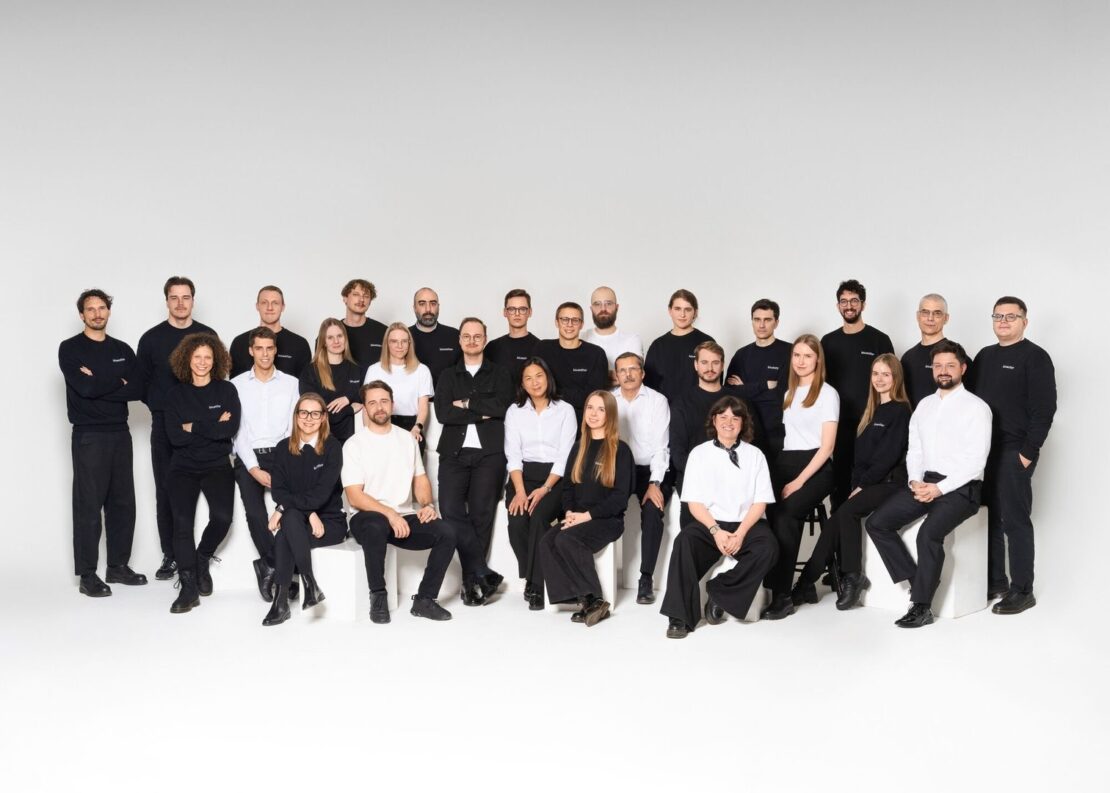
Founded in 2018, Biomatter uses AI to design new enzymes, including ones that do not exist in nature. Its technology has applications across pharmaceuticals, diagnostics, agriculture and industrial biotechnology. The funding round was led by international venture capital firm Astanor, which specialises in agrifood technologies. Existing investors UVC Partners, Inventure and Metaplanet also participated.
From university research to commercial applications
Biomatter’s story began at Vilnius University’s Life Sciences Centre, where a team of researchers developed the technology that later became the foundation of the company. Since then, the startup has created more than 50 customised enzymes for over 25 companies operating across Europe, the United States and Japan. Its technology is already being used in commercial products. One example is the SuperScript V reverse transcriptase, manufactured by Thermo Fisher Scientific. Working with the company, Biomatter improved the enzyme’s resistance to oxidation, allowing the reagent to remain stable at room temperature for up to six months. This makes transportation and storage easier, as it does not require special refrigeration conditions. Biomatter’s clients include major international companies such as AstraZeneca, BASF, Kirin Holdings, Neogen, Sanofi and Tereos. Their activities span biopharmaceuticals, diagnostics, agriculture and industrial biotechnology.
A new enzyme development centre in Vilnius
A significant share of the newly raised investment will go towards establishing a 2,000-square-metre enzyme development and testing centre in Vilnius, scheduled to open in 2027. The facility is expected to accelerate the company’s research and development processes. While conventional enzyme engineering can take months or even years, Biomatter has already reduced this timeframe to just a few weeks. The new centre is expected to shorten it further, potentially to just a few days, also support the expansion of Biomatter’s sales team and operations in the United States, where approximately half of its customers are based. The company will continue developing its AI-powered enzyme design platform and the specialised database that supports it.
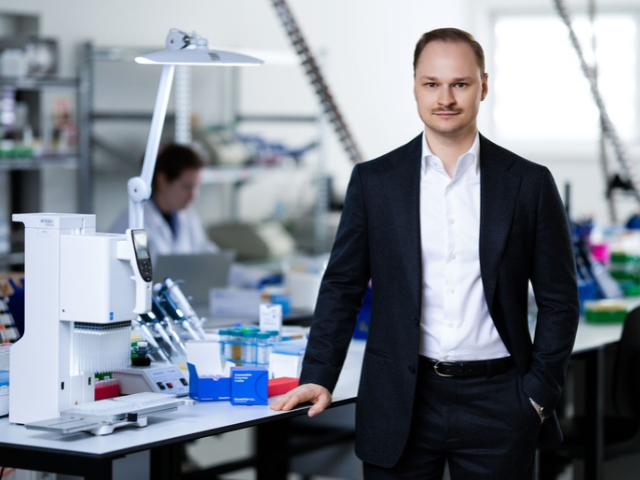
“Our goal is to make ordering a custom-designed enzyme as simple as ordering any reagent from a catalogue, even when the enzyme with the required functionality does not yet exist,” says Laurynas Karpus, CEO and co-founder of Biomatter.
Designing enzymes beyond what nature offers
Unlike conventional enzyme engineering, which typically starts with an enzyme found in nature, Biomatter‘s AI models are designed around the chemical reaction a customer needs to achieve. The approach is based on years of accumulated experimental data, including information on enzymes whose structures differ significantly from naturally occurring ones. This illustrates how AI can help create entirely new biological tools rather than simply improve existing ones. The company’s progress reflects the growing potential of Lithuania’s life sciences sector, where scientific research is increasingly translated into commercially viable technologies with applications in global industries.