The Lost Shtetl, the Jewish history museum opened in Šeduva just over six months ago, has received international recognition. The museum’s exhibition design has been honoured with the prestigious iF Design Award.
Presented since 1954, the iF Design Awards are among the world’s most important design accolades, attracting more than 10,000 entries from across the globe each year. The international jury recognised The Lost Shtetl in the Interior Architecture discipline, within the Art and Culture Exhibitions and Installations category. The award was presented at a formal ceremony in Berlin.
“The museum is already attracting many visitors, but we believe this award will help an even broader international audience discover it – especially those interested in innovations in design and in design’s ability to tell history in a meaningful way. We are very pleased that the museum’s interior design, created by Ralph Appelbaum Associates, has been noticed and recognised: an interactive space that helps visitors draw closer to a world that no longer exists today,” says Dr Jolanta Mickutė, Jewish history specialist and Head of the Education Department at The Lost Shtetl.
Created by an International Team of Experts
According to Dr Mickutė, the award highlights the work of a large international team and confirms that the museum’s narrative, architecture and interior design come together as a single, coherent experience.
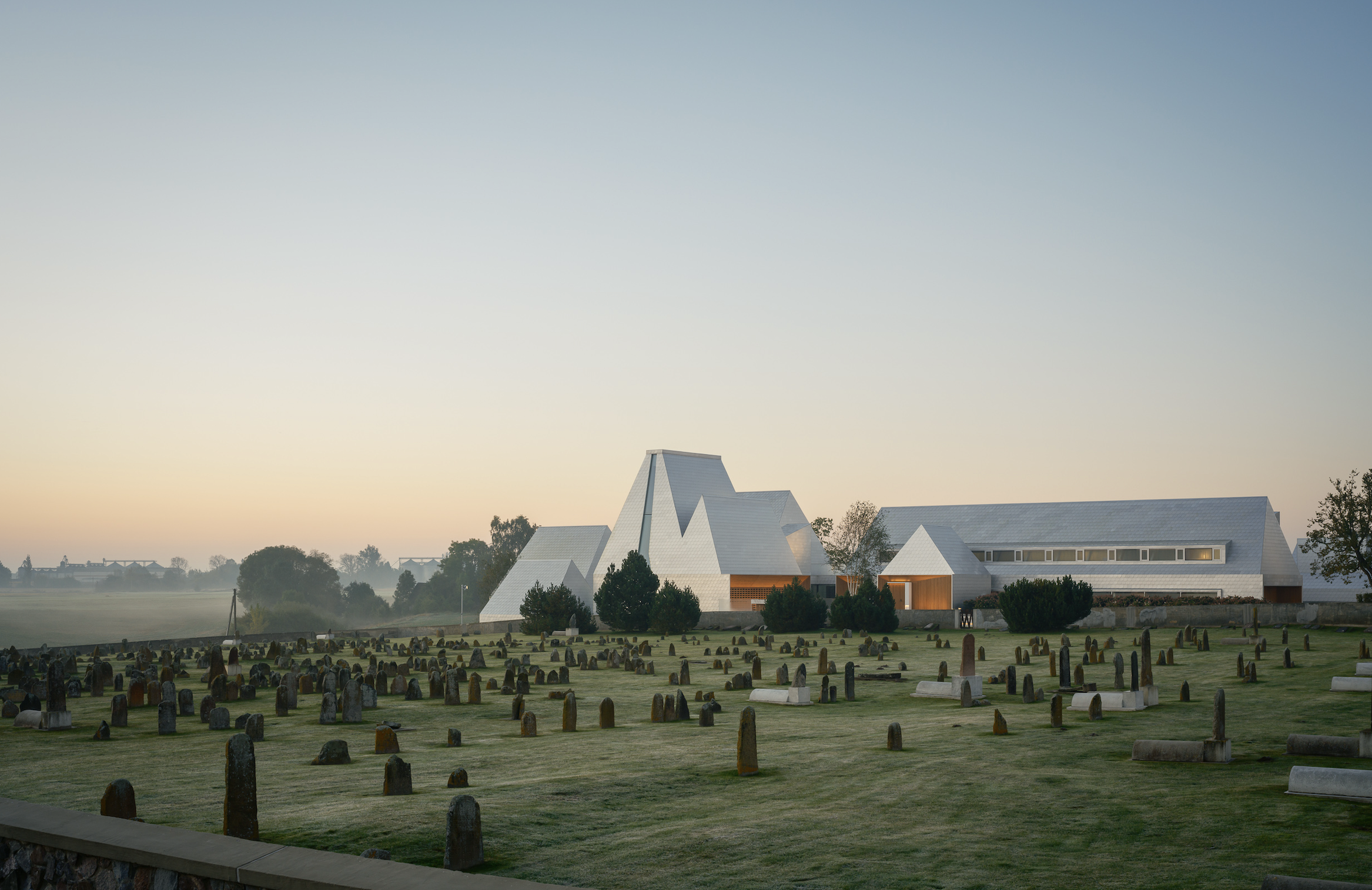
The Lost Shtetl was initiated and founded by YouthAid Foundation, a philanthropic organisation registered in Switzerland. Over almost a decade, more than 30 companies from eight countries contributed to the project. The architectural vision was led by Rainer Mahlamäki and the Finnish studio Lahdelma & Mahlamäki Architects.
The exhibition design was created by Ralph Appelbaum Associates, one of the world’s leading designers of museums and narrative environments. The company has collaborated with institutions including the United States Holocaust Memorial Museum and the British Museum.
Opened last September, The Lost Shtetl is the largest and most modern museum dedicated to Jewish history in the Baltic States. Its story is rooted in the history of one small Lithuanian town, yet it opens a much wider window onto the vanished world of Eastern European shtetls – small Jewish towns that once shaped the cultural, religious and social landscape of the region.
At The Lost Shtetl, exhibition design does more than present information. It helps preserve and honour what remains of a destroyed world: names, objects, photographs and testimonies.
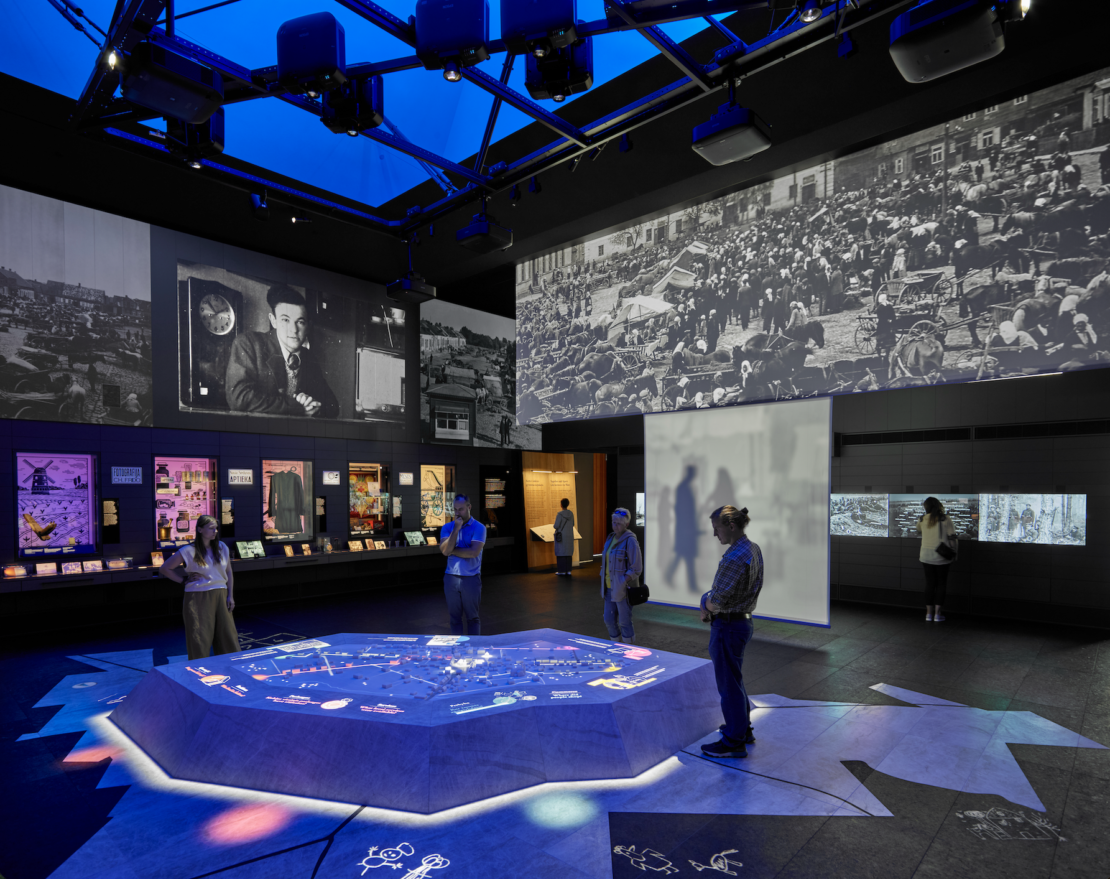
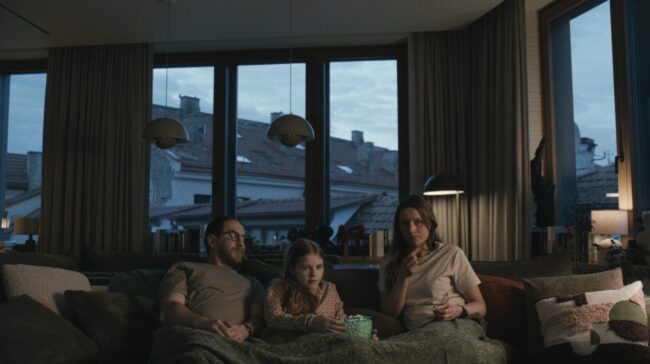
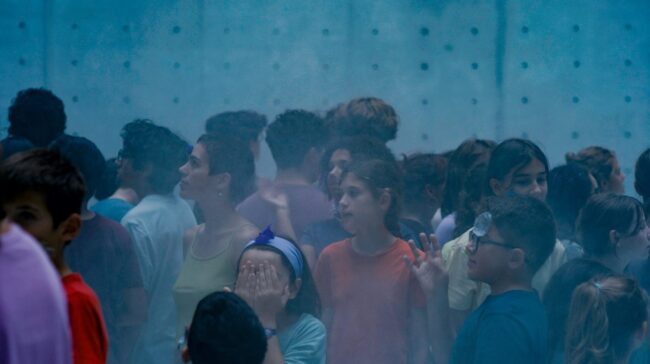
The museum’s interactive galleries evoke different places within a shtetl. Visitors encounter history not only through text and images, but also through sensory experience – sound, scent and touch. In this way, the design creates more than a setting for exhibits: it reconstructs the atmosphere of the shtetl itself and allows visitors to sense what Jewish life was like in a small Lithuanian town.
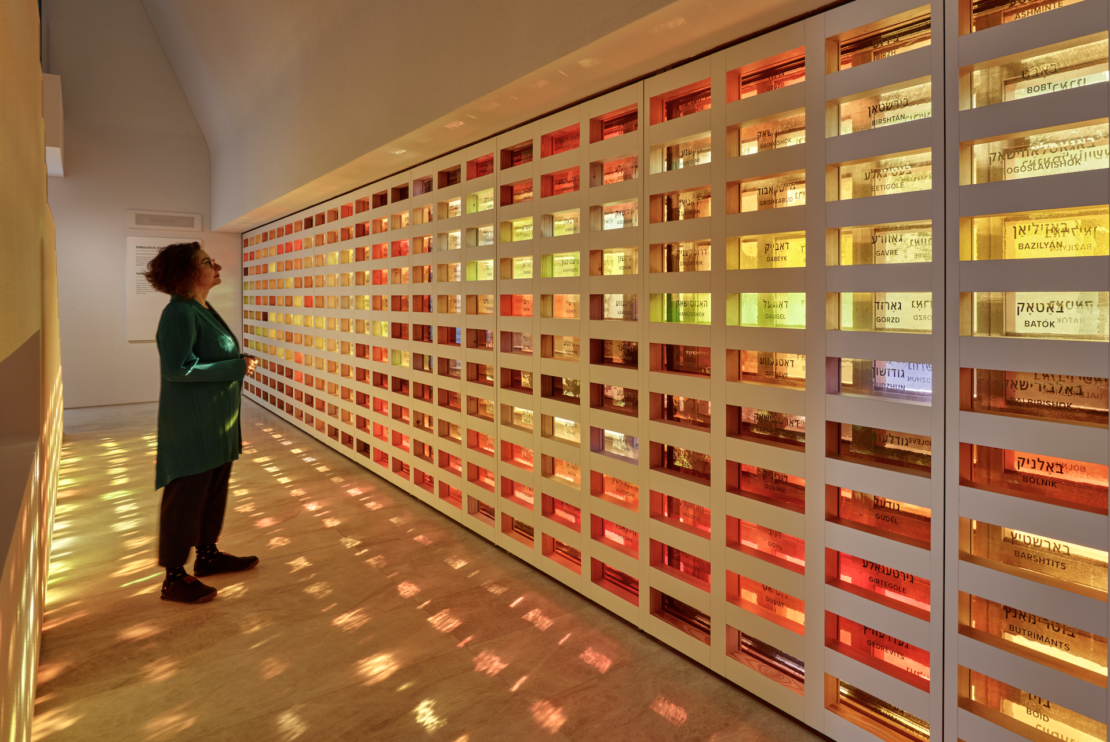
Among the museum’s most distinctive installations is a memorial composition made of 594 hand-blown coloured-glass elements, engraved with the names of 297 lost shtetls. The work stands as a tribute to all of Lithuania’s lost Jewish towns.
Another striking feature of the exhibition is an impressive Torah ark, a contemporary interpretation of the Aron Kodesh — the holiest space in a synagogue, where Torah scrolls are kept. Made from nine layers of laser-cut glass and illuminated from the edges, the installation slowly “breathes” with changing light, as if recreating something that has disappeared. Inspired by the Great Synagogue of Valkininkai, the work is dedicated to the memory of the vanished religious life of Šeduva’s Jewish community.
Free Admission During the Museum’s First Year
“We see that visitors are interested not only in the history told by the museum, but also in its architecture. Our architectural tours attract considerable interest. Yet the museum’s strength lies precisely in the fact that the architecture, exhibition design and narrative content were created together and work as a whole. Here, everything — space, image, sound and history — speaks with one voice, which can only be heard by coming here,” says Dr Mickutė.
The 3,000-square-metre museum contains 10 exhibition spaces. A Park of Remembrance has been created around the museum, and Šeduva’s old Jewish cemetery has been restored. At present, tens of thousands of daffodils are blooming around The Lost Shtetl. The flower bed is dedicated to the memory of Jewish children murdered during the Holocaust.
During its first six months of operation, the museum has welcomed around 45,000 visitors from Lithuania, other European countries, the United States, Australia, South Africa and Israel. The museum team hopes that the new tourism season will further expand its international audience.
During the museum’s first year, visitors can experience the exhibition, educational activities and professional guided tours free of charge. Advance registration is recommended.