The year 2025 became another landmark in the history of Lithuanian cinema – a year in which Lithuanian filmmakers not only collected awards but firmly reaffirmed their reputation for quality, creativity and courage on the international film scene. Lithuanian creators travelled to the world’s most prestigious festivals, secured invitations and recognition, and attracted international production partners. At the same time, Lithuania itself received historic recognition when the European Film Academy included the Curonian Spit in its European Film Heritage Treasures list – the first such honour in the country’s history.

Lithuanian Brilliance at the Tampere Film Festival
The 55th Tampere Short Film Festival in Finland was one of the most significant events of the year for Lithuanian cinema. Lithuania was named Country of Focus, receiving special attention for its film culture and artistic voice – a distinction granted to only a few countries each year. In 2025, Lithuania became the epicentre of world short film, presenting three curated programmes comprising around thirty films and showcasing the full breadth of contemporary Lithuanian filmmaking.
The first programme, Short Films from Lithuania: The New Wave, focused on a new generation of directors. It featured works by Vytautas Katkus – Places, Community Gardens and Cherries – alongside Laurynas Bareiša’s shorts By the Pool, Dummy and Caucasus. Both filmmakers are now recognised as leading voices in contemporary Lithuanian cinema, a status reaffirmed by their reception in Tampere.
The second programme, Lithuanian Experimental and Poetic Cinema, explored Lithuanian avant-garde and visual poetry. Highlights included Rūta Petronytė’s Echoes of the Lake, Dovilė Šarutytė’s Sleepers, Eglė Mikalajūnaitė’s The Wind in Between and Tomas Žalakevičius’s Colourless Days. A key highlight was a 16 mm retrospective of cult filmmaker Artūras Barysas, featuring restored prints of Tai, kas po stalu and Jausmai.
The third programme, Lithuanian Women Filmmakers, was among the festival’s stand-out sections, presenting six author-driven works: Marija Stonytė’s One Life, Birutė Kapustinskaitė’s Mothers, Milda Augustaitytė’s Number One, Jorūnė Greičiūtė’s It’s Alright, Skirmanta Jakaitė’s The Juggler and Eglė Davidavičė’s The One Who Knows.
The Lithuanian–Estonian co-production Tangled Wool (dir. Aušrinė Kurgonaitė) was selected for the international competition. Lithuanian professionals were also strongly represented in the industry programme: the Lithuanian Film Centre and Lithuanian Shorts organised the discussion New Baltic Narratives with producers Marija Razgutė, Klementina Remeikaitė and Rasa Miškinytė, while producer and critic Gabrielė Cegialytė served on the international jury.
Cannes – The Highest Stage
The 78th Cannes Film Festival marked an unprecedented presence for Lithuania, both on screen and within its professional programmes.
A major milestone was Two Prosecutors, directed by Sergei Loznitsa, which was selected for the main competition – the first time a Lithuanian co-production reached this section. The film included significant Lithuanian creative contributions from production designer Jurij Grigorovič, sound designer Vladimir Golovnitski, editor Danielius Kokanauskis, and actors Vytautas Kaniušonis, Nerijus Gadliauskas, Valentin Novopolskij, Dmitrij Denisiuk, Vygandas Vadeiša, Valerijus Jevsejevas and Lukas Petrauskas.
Lithuanian talent was also recognised in Cannes’ talent development initiatives. Director Eglė Razumaitė became the first Lithuanian selected for La Résidence du Festival de Cannes, which admits only twelve emerging filmmakers annually. Producer Klementina Remeikaitė was selected for Producers on the Move 2025, organised by European Film Promotion.
Lithuanian projects were further showcased in Goes to Cannes, where the Tallinn Black Nights Film Festival selected Oblivion (dir. Danielius Minkevičius) and Danka (dir. Dovilė Gasiūnaitė). Marija Razgutė participated as a mentor in the impACT Lab programme, while Kęstutis Drazdauskas presented Black List during an AI-focused forecasting session and Greta Akcijonaitė showcased Cold.
Lithuanian Cinema at the Warsaw Film Festival
At the 41st Warsaw International Film Festival, five films with Lithuanian involvement were selected for competition. Highlights included the world premiere of Karolis Kaupinis’s Hunger Strike Breakfast (prod. Marija Razgutė), the co-production Solomamma (dir. Janicke Askevold), documentaries Under the Red Light (dir. Joris Skudra, prod. Justė Michailinaitė) and War on Art (dir. Andrzej Miękus, prod. Erika Volkmann and Rasa Miškinytė), as well as Two Prosecutors following its Cannes premiere.
Record Presence at the Tallinn Black Nights Film Festival
The Tallinn Black Nights Film Festival saw a record-breaking Lithuanian presence, with twenty films screened, including seven world premieres. At the opening ceremony, actor Juozas Budraitis received a Lifetime Achievement Award. Lithuanian films appeared across fiction, documentary, youth and short film sections, underscoring the diversity and growing international visibility of the country’s cinema.
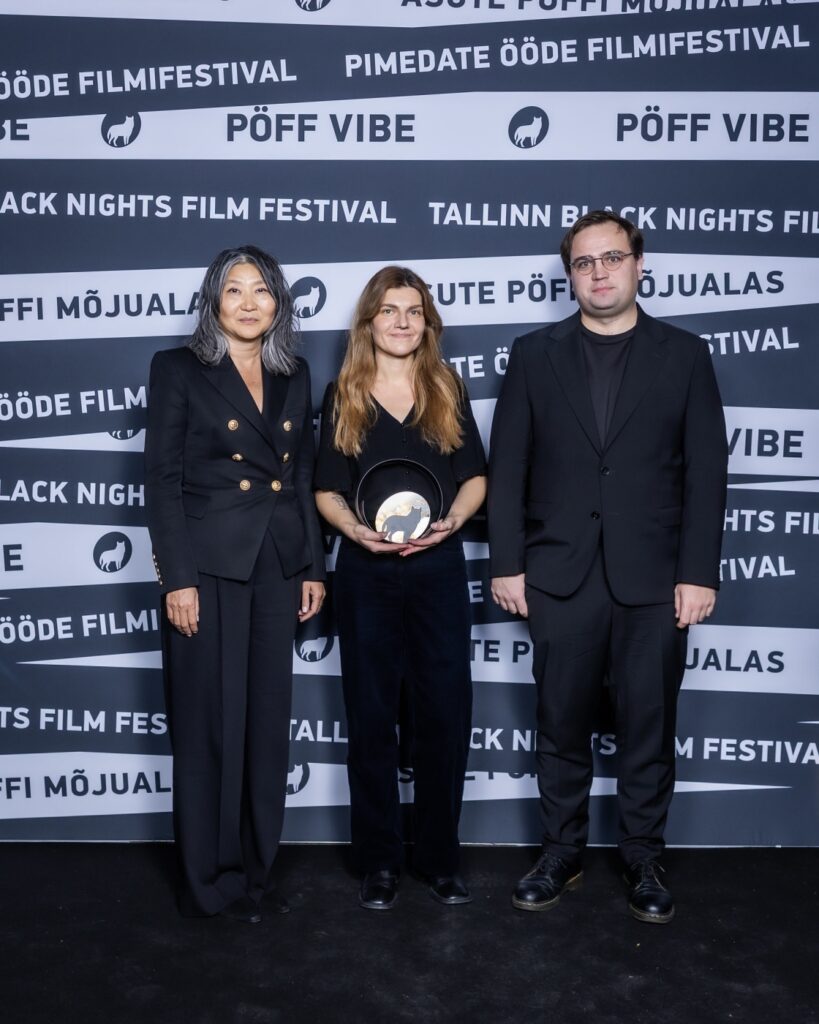
Photo credit: Lithuanian Film Centre
Lithuania as an International Co-production Partner
The year also marked a significant expansion in international co-productions. Lithuania has firmly established itself as a trusted creative partner within European and global cinema.
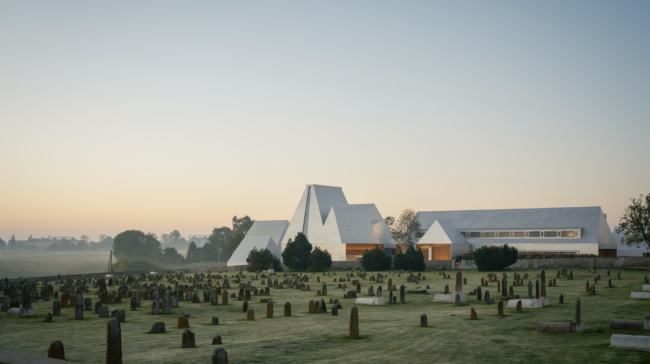
The Croatian–Slovenian–Lithuanian co-production Sandbag Dam premiered in the Berlinale Generation 14plus section, where Lithuanian actor Šarūnas Zenkevičius was named a European Shooting Star 2025. Solomamma – a Norwegian, Latvian, Lithuanian, Danish and Finnish co-production supported by the Lithuanian Film Centre and Artbox – premiered in Locarno’s main competition and became one of the most discussed Baltic films of the summer.
Hunger Strike Breakfast, a Lithuanian–Latvian–Czech co-production supported by the Lithuanian Film Centre, was highlighted by Cineuropa as one of Europe’s most powerful political projects of 2025.

Another key development was the launch of the Vilnius Film Fund, designed to attract international productions. The fund operates alongside Lithuania’s established tax incentive scheme, offering up to a 30 per cent rebate on eligible production expenditure incurred in Lithuania.