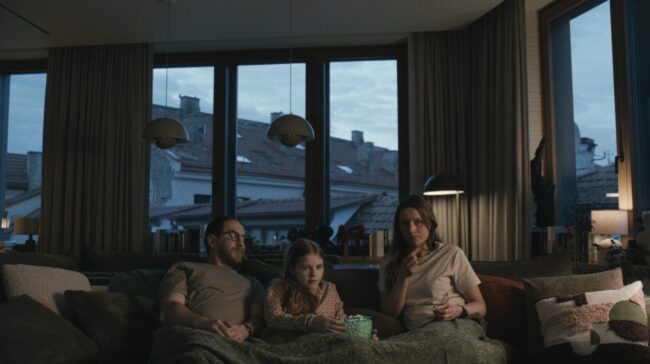
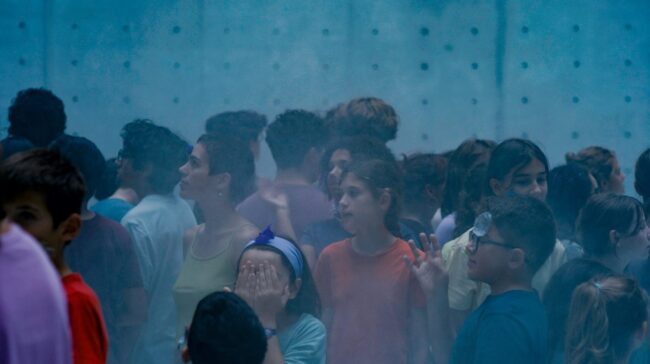
Lithuanian artist and composer Lina Lapelytė is presenting a major participatory project at Tate Modern, transforming the gallery’s Turbine Hall into a space for collective movement, sound and experimentation.Running from 25 July to 31 August 2026, the large-scale commission forms part of UNIQLO Tate Play, Tate Modern’s free programme of artist-led projects and creative activities for visitors of all ages.
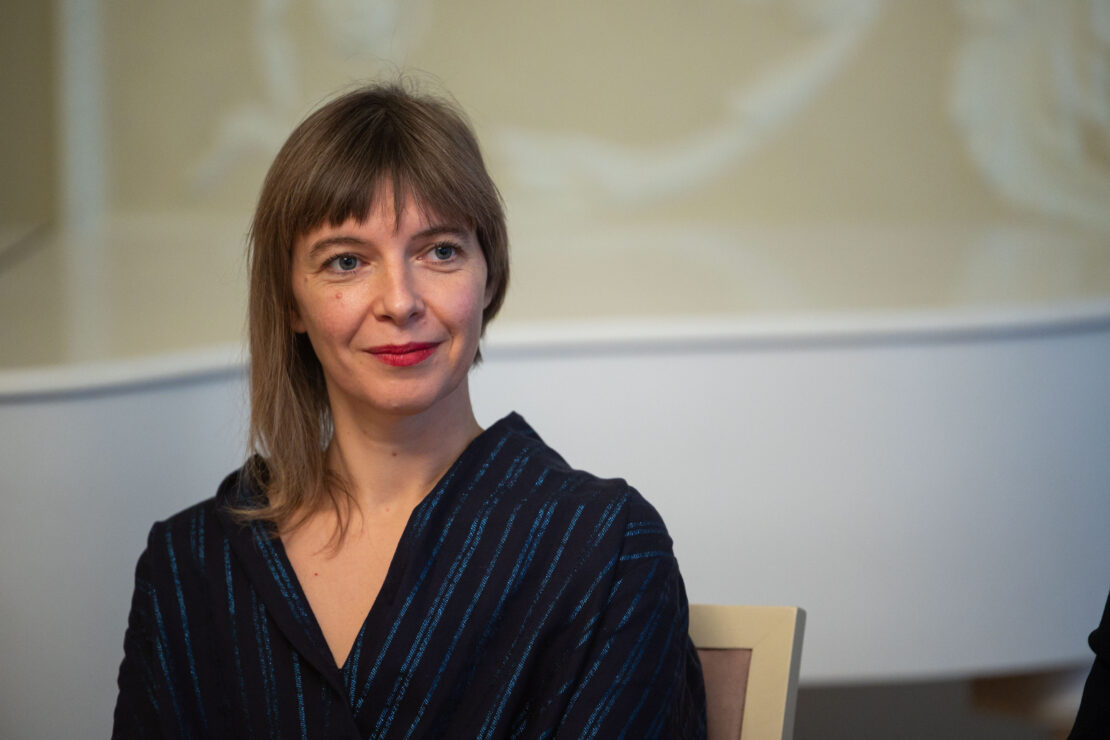
Rather than presenting an artwork intended to be viewed from a distance, Lapelytė invites the public to become an active part of the work. Visitors move through a maze-like arrangement of barriers while responding to a series of simple actions, including walking, stamping, jumping and singing.
Accompanied by a specially created soundscape, these individual movements gradually develop into a shared choreography. The work changes continuously depending on how many people participate, which routes they choose and how they interpret the instructions.
The result is not a fixed performance but a collective composition created in real time. Each visitor contributes a small sound, gesture or rhythm, while the interaction of the wider group produces an evolving musical and physical experience.
A new role for the audience
Lapelytė’s project challenges the conventional relationship between artist, artwork and audience.
In a traditional gallery setting, visitors usually observe a completed work. Here, the public helps to produce it. The artist creates the framework, sound environment and conditions for participation, but the final form emerges through the actions of the people inside the installation.
The Turbine Hall plays an important role in this experience. Its monumental scale allows large numbers of participants to move through the space simultaneously, while visitors on the surrounding levels can observe the changing patterns below.
The distinction between performer and spectator therefore becomes fluid. A person may initially watch the work from a distance before entering the installation and becoming part of the performance.
By using familiar movements rather than complex dance or musical techniques, the project remains accessible to people without specialist artistic training. Participation is based on listening, responding and becoming aware of the actions of others.
Music as a collective experience
Lapelytė’s artistic practice spans contemporary music, performance, visual art and theatre. Originally trained as a classical violinist and composer, she has developed an interdisciplinary approach that frequently explores the human voice, group behaviour and unconventional forms of performance.
Her work often brings together professional performers and people with little or no formal musical experience. Instead of focusing exclusively on technical precision, she examines how different voices, bodies and individual characteristics can contribute to a shared artistic experience.
This approach allows music to function not simply as something performed for an audience, but as a social activity created through participation.
The Tate Modern commission continues Lapelytė’s interest in the ability of sound to connect people. Individual actions may appear simple in isolation, but together they create a more complex composition shaped by cooperation, chance and improvisation.
International recognition
Lapelytė has become one of the most internationally recognised Lithuanian contemporary artists working across music and performance.
She is particularly well known as one of the creators of Sun & Sea (Marina), developed together with filmmaker and director Rugilė Barzdžiukaitė and writer Vaiva Grainytė.
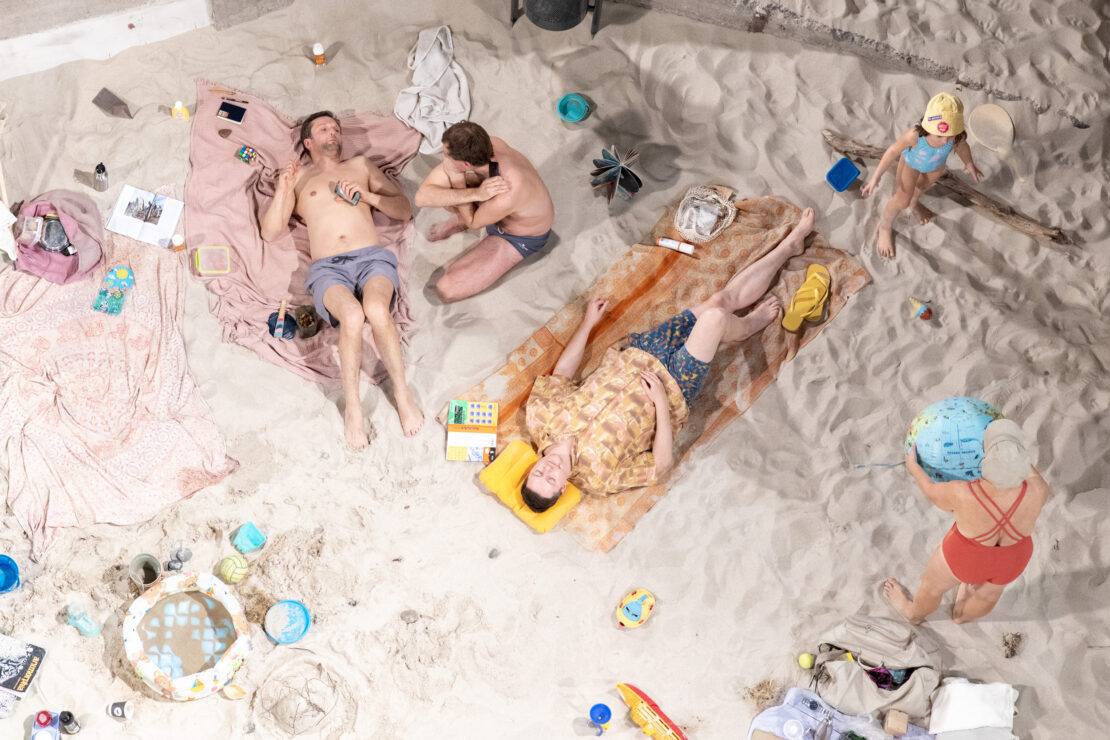
The opera-performance transformed an indoor space into an artificial beach populated by holidaymakers singing about everyday life, consumption, environmental anxiety and climate change. Presented as Lithuania’s national pavilion at the 2019 Venice Art Biennale, the work received the Golden Lion for Best National Participation.
Lapelytė also collaborated with Barzdžiukaitė and Grainytė on Have a Good Day!, an opera centred on supermarket cashiers whose personal experiences and inner lives were presented through song.
Although the Tate Modern project differs in format, it continues themes that appear throughout Lapelytė’s work. Ordinary movements become artistic material, individuals contribute to a wider composition, and the boundary between everyday behaviour and performance is deliberately blurred.
Lithuanian contemporary art on a global stage
A commission in Tate Modern’s Turbine Hall represents a significant international platform for a Lithuanian artist.
The hall is one of the most prominent spaces in contemporary art and has hosted ambitious installations and performances by some of the world’s leading artists. Its scale allows creators to develop projects that would be difficult to realise in a conventional exhibition space.
Lapelytė’s participation also reflects the growing international visibility of Lithuanian contemporary art. In recent years, Lithuanian artists have attracted particular attention for work that combines performance, music, theatre, installation and social observation.
These projects often move beyond traditional artistic categories and invite audiences to experience ideas physically, collectively and emotionally.
Based on information published by Tate Modern.