Lithuania’s space industry is growing at an impressive pace – far beyond expectations. Twice as many Lithuanian companies as originally planned are now participating in European Space Agency (ESA) programmes, and the sector is signing international contracts worth hundreds of millions of euros.
Twice the Growth, Ahead of Schedule
Between 2022 and 2025, 44 new Lithuanian companies submitted applications to ESA programmes – nearly double the target for 2025. Seventeen of these businesses not only applied but also secured ESA funding.

To fuel this momentum, the government has allocated an additional €5.5 million to ESA programmes. From 2026 to 2028, total investment will reach €14.5 million – a 62% increase compared to the previous funding period.
From Start-Ups to Space Missions
According to Eigirdas Sarkanas of the Innovation Agency’s SpaceHub, the sector’s rapid development comes not only from leaders but also from new entrants:
ESA Business Incubator and SpaceHub LT have helped companies with no prior space background to enter the market. In just two years, six start-ups were selected and funded through the incubator.
Among the success stories:
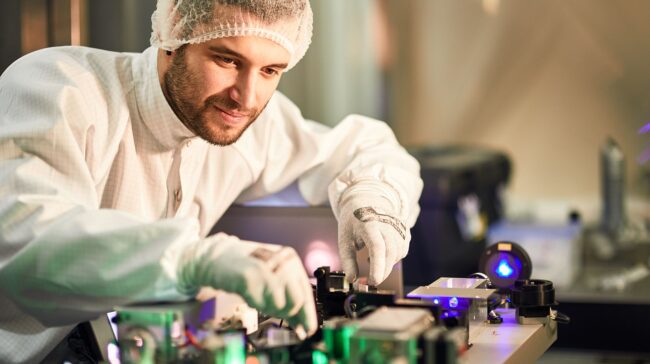
- Integrated Optics launched a laser into orbit for the University of Vienna.
- Bioanalysis Systems is developing a diagnostic tool for use in zero gravity.
- Super Garden is creating ultra-light, nutrient-rich foods for space missions.
Jobs and Investment on the Rise
In 2021, Lithuania’s space sector employed 206 specialists. That number is growing each year, creating jobs sustained not by subsidies but by real commercial contracts.
The biggest breakthrough came in April 2025, when Kongsberg NanoAvionics signed a €122.5 million contract with US company SpinLaunch – the largest deal in Lithuania’s space history.

International Partnerships Strengthen Position
Lithuania is also building strong global ties:
- In June 2025, cooperation agreements were signed with Japan’s space agency JAXA and innovation platform Cross U.
- A deal with the Italian Space Agency (ASI) focuses on lasers, satellites, defence, and security.
“These initiatives confirm Lithuania as a serious ecosystem player in the international arena,” Sarkanas said.
Dual-use solutions are becoming central:
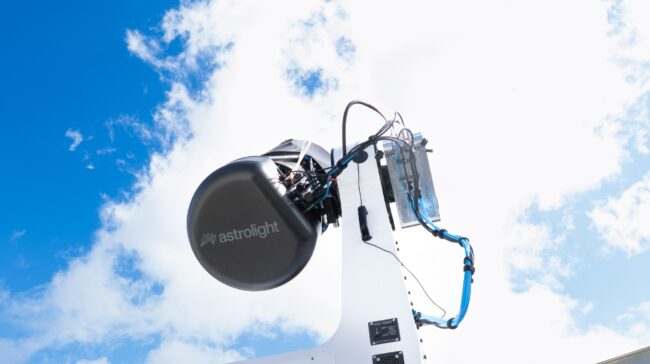
- Astrolight tested laser communications with the Lithuanian Navy.
- Geomatrix and Coetus are developing satellite data services for agriculture, environmental monitoring, and critical infrastructure.
“When satellites are used not only for experiments but also for solving real public-sector challenges – that’s a sign of a mature ecosystem,” Sarkanas added.
Looking Ahead: Strategic Projects
The next few years will be crucial. Lithuanian companies are preparing to join major European projects such as IRIS², ISOS, and HydrON. Sarkanas sums it up: “Space is no longer a distant metaphor – it is an economic and security factor. Lithuania has the tools to stay in this orbit.”
Source: Innovation Agency of Lithuania