Lithuanian space technology startup Blackswan Space has been selected as one of the key technology partners in the European space mission ASTRAL — the first project of its kind in Europe to demonstrate in-orbit satellite refuelling.
During the mission, a critical RPO (Rendezvous and Proximity Operations) subsystem developed by Blackswan Space will be tested in real space conditions. The technology enables satellites to autonomously detect one another, approach safely, dock, and transfer fuel in orbit. According to the Innovation Agency, this milestone is significant not only for the company, but for Lithuania’s entire space ecosystem.
“Autonomous satellite servicing is a future niche of the space market, and the ASTRAL mission will be the first of its kind in Europe. Blackswan Space’s participation is a strong recognition and proof that Lithuania’s space sector is developing solutions that may soon become a critical part of the global space value chain,”
says Eigirdas Sarkanas, SpaceHub expert at the Innovation Agency.

Planned for launch by 2028, the mission aims to demonstrate safe docking and refuelling of satellites using multiple propellants, from xenon to nitrous oxide. This could significantly extend satellite lifetimes, reduce replacement costs, and enhance manoeuvrability for both civil and defence applications.
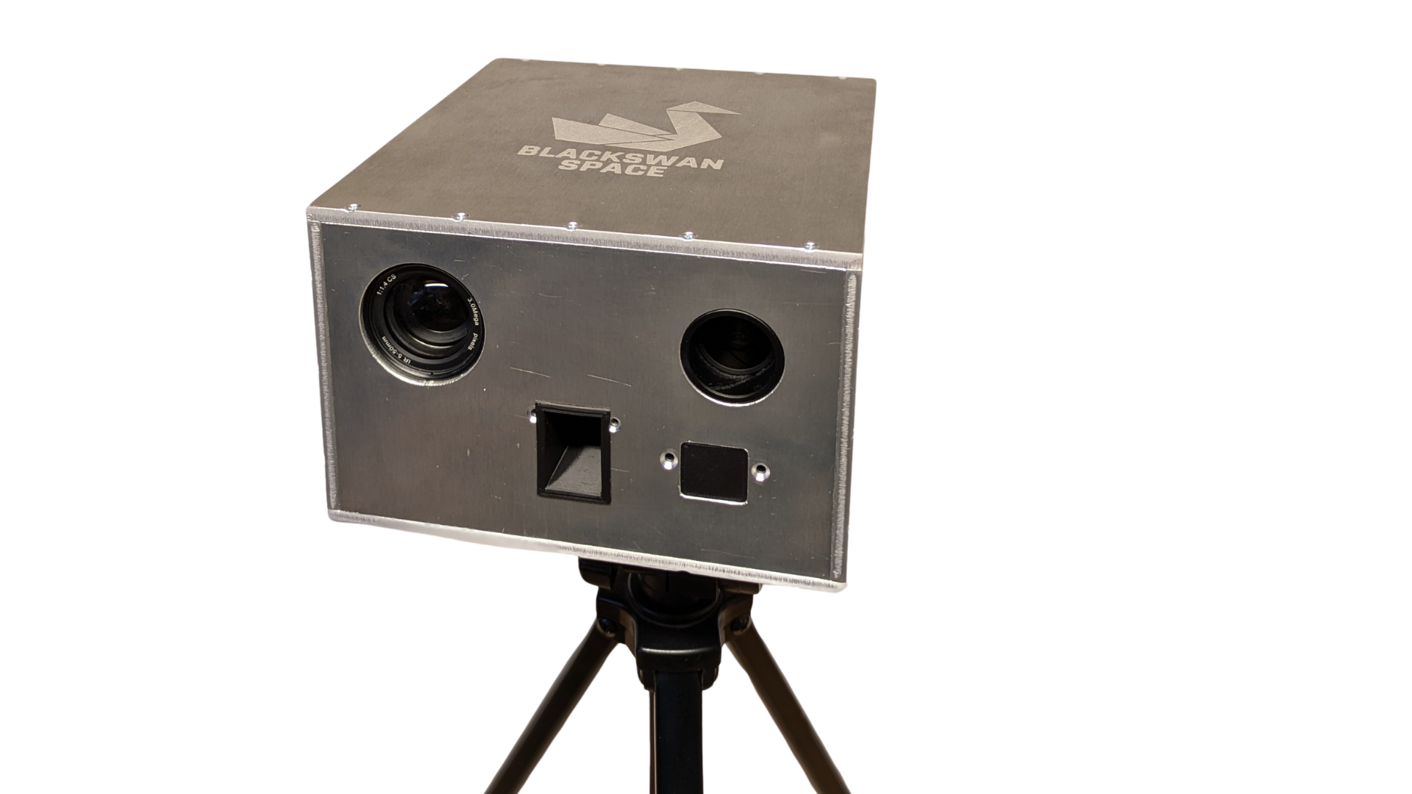
A core element of the mission is the RPO Kit developed by Blackswan Space, combining optical and laser sensors with an in-house machine-learning algorithm to enable fully autonomous navigation and docking.
“ASTRAL is the right ambition at the right time. It helps Europe secure strategic positions in next-generation space technologies, and we are proud to contribute. From the very beginning, our autonomous navigation systems were developed with such missions in mind,”
says Marius Klimavičius, Founder and CEO of Blackswan Space.
The mission will mark the first real in-orbit demonstration of the Lithuanian technology, which until now has been tested only in laboratories and simulations.
The ASTRAL project is coordinated by Orbit Fab (USA/UK) and brings together partners from the UK, Austria, Lithuania and other countries. The mission is funded by the European Space Agency (ESA) and national space agencies, with major support through ESA’s ARTES programme and Lithuanian funding via ESA GSTP.