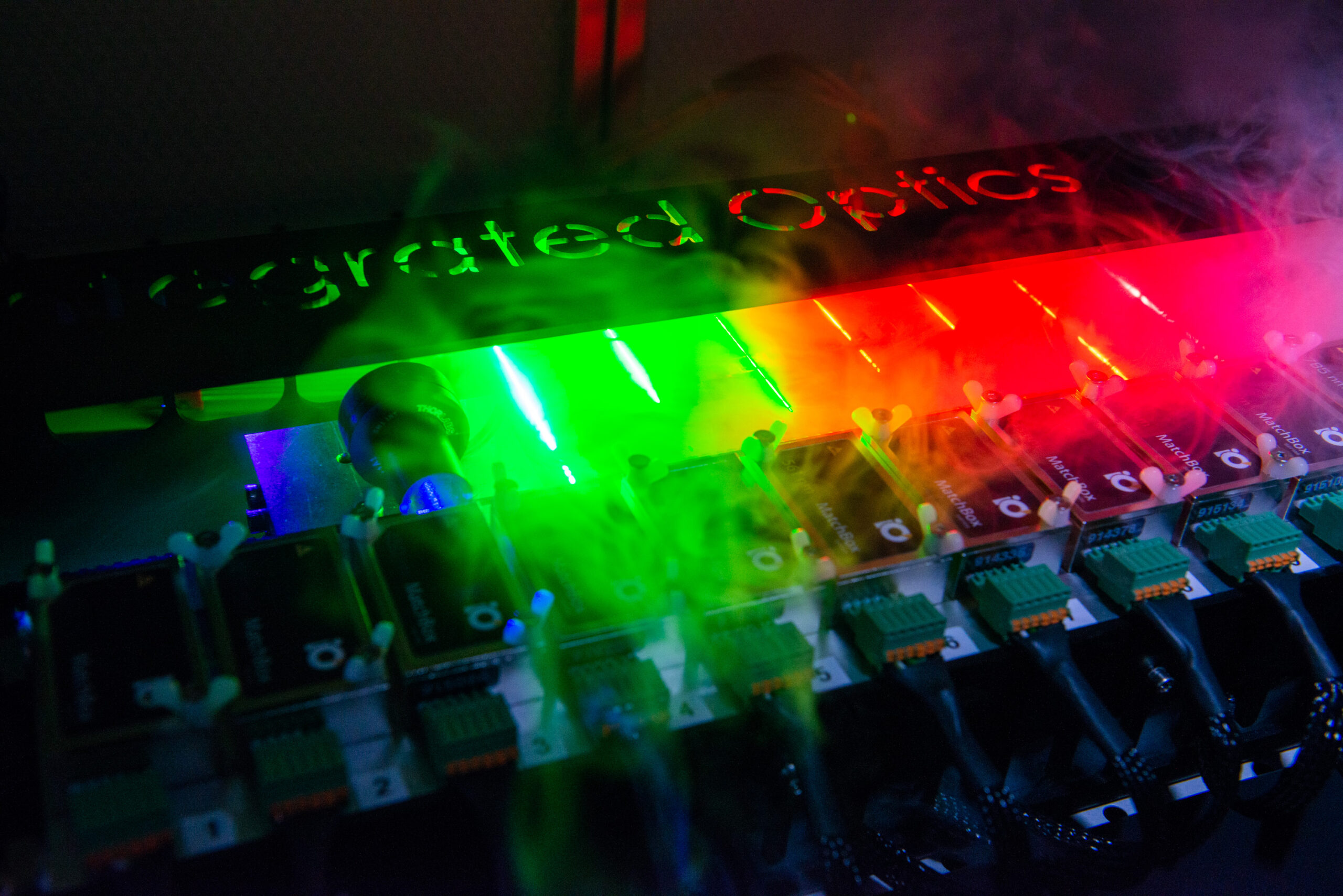
The first Lithuanian laser in space, contributions to Mars atmosphere missions, and joint projects with the European Space Agency (ESA) in quantum technologies – these are among the achievements of Integrated Optics, a Lithuanian laser company. Its compact lasers have opened doors to space, supported by the Innovation Agency.
Compactness and proven reliability led a University of Vienna mission to choose an Integrated Optics laser.
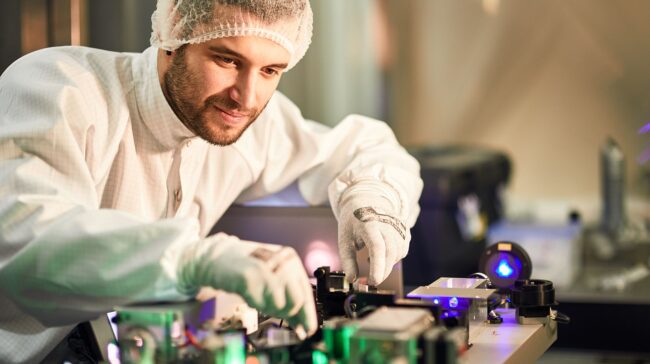
“When we talk about space technologies, every extra gram of a device significantly increases costs, so extremely efficient and compact solutions are required. The same applies in the field of quantum computing – one of the barriers there is the size of optical instruments.
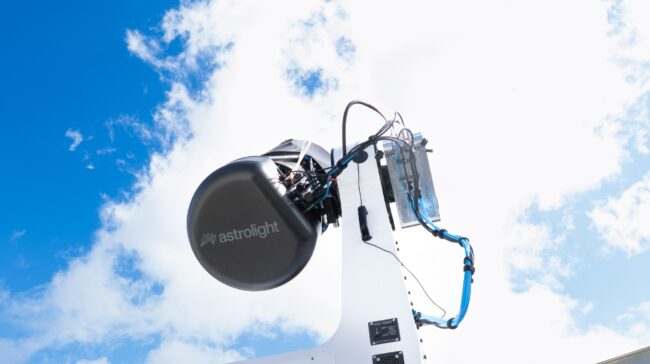
Our laser, which is the smallest on the market, is perfectly suited for quantum computation experiments in space. In the future, if everything goes according to plan, another of our lasers will head to Mars to study its atmosphere using a special LiDAR instrument,” says Evaldas Pabrėža, CEO of Integrated Optics.
Toward Quantum Computing Breakthroughs
Quantum computing – one of the company’s main focus areas – is becoming a global race among the U.S., China, and Europe. Quantum computers promise immense power but also pose new cybersecurity risks. Lithuanian lasers are used to develop cryptographic solutions to protect against them.
“Right now, we are implementing a large-scale project with ESA, through which we aim to move from the ‘sandbox’ phase – that is, pilot projects – to real, applicable quantum cryptography solutions. We already have a detailed vision and a clear model that we are working to turn into a functional prototype. This may take around a year and a half,” says E. Pabrėža.
Integrated Optics received €575,000 in ESA funding for this work, coordinated with the Innovation Agency.
“A strong photonics and optics sector provides a solid foundation for Lithuania’s space industry. The fact that Lithuanian companies are being included in important ESA and other international projects demonstrates their innovative potential,” says Eglė Elena Šataitė, head of Space Hub LT.
Expanding Horizons
The company is implementing two innovation projects worth over €1 million, helping it transitions to circular economy principles and join major global exhibitions such as Photonics West and Laser World of Photonics.
“Our work is interdisciplinary – combining optics, mechanics, electronics, robotics, and computing. Developing future technologies always involves uncertainty and risks, so institutional support is crucial,” notes E. Pabrėža.
Producing around 1,000 lasers per year, mostly exported, Integrated Optics serves life sciences, materials analysis, and microscopy, with growing roles in space, quantum, and defence sectors.
“Lasers and optical components are essential to many high-tech systems. Our main challenge right now is to align our business models for products designed for ‘Earth’ and those for ‘space’. Once we find the right formula – we’ll share it,” says E. Pabrėža.
Based on the press release by the Innovation Agency