As artificial intelligence reshapes industries worldwide, Lithuania is positioning itself as a key player in this rapidly evolving landscape. With a potent mix of forward-thinking regulation, robust government backing, and a burgeoning ecosystem of AI-driven startups, the country is poised to become a competitive European AI hub.
Cultivating an AI-friendly environment
Lithuania’s commitment to AI is far from new. In 2019, the country became the second EU member state to release a national AI strategy, setting its sights on regional leadership and deeper integration into the global AI ecosystem. Today, the country is laser-focused on crafting a regulatory framework that nurtures AI innovation.
With the EU rolling out its landmark AI Act, Lithuania seeks to align itself with broader European goals while carving out space for local innovation to flourish. The country has already taken concrete steps in implementing EU regulation, designating the Communications Regulatory Authority as its AI watchdog. Meanwhile, Innovation Agency Lithuania, a public body responsible for fostering the Lithuanian innovation ecosystem, has been empowered to assess and monitor AI conformity.
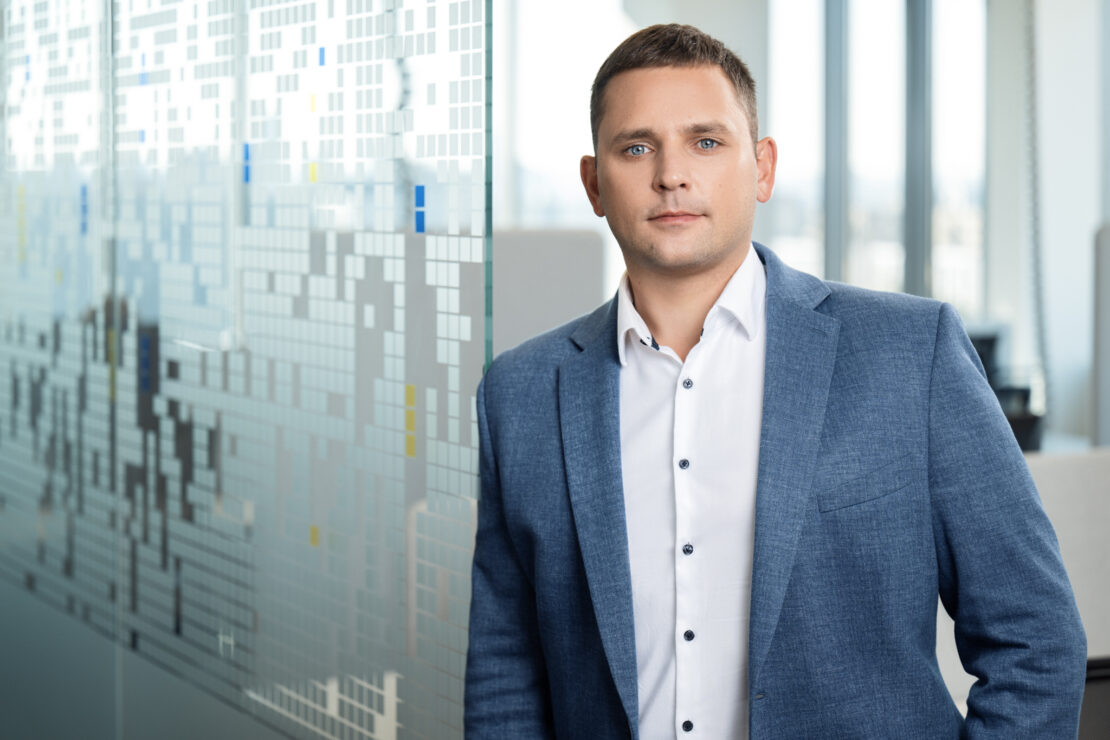
According to Martynas Survilas, Head of the Agency’s ICT Lab, providing the most favourable environment for AI development hinges on a multi-faceted approach:
“We are implementing a multi-pronged strategy: channelling substantial funding into innovative product development, offering support to businesses grappling with legal challenges and AI solution testing, and showcasing our ecosystem’s achievements on the global stage.”
One of Lithuania’s standout initiatives is the planned AI sandbox. This regulatory pilot environment will provide AI companies with a controlled yet supportive setting to test their technologies, fostering experimentation without the immediate pressure of full regulatory compliance.
“By creating this AI sandbox, we are essentially building a bridge between innovation and regulation,” Survilas explains. “It is about giving our businesses a head start in complying with the AI Act while accelerating their path to market. Our goal is to ensure that regulation becomes a catalyst, not a barrier, to innovation.”
Backing words with action
Lithuania is not just talking the talk when it comes to AI – it is backing its commitment with decisive action. The country’s Ministry of the Economy and Innovation has rolled out substantial financial support mechanisms to fuel AI growth.
Last year saw the launch of a €15 million funding call for startups working on cutting-edge technologies, including AI, blockchain, and robotic process automation. And that is just the tip of the iceberg – an additional €110 million has been earmarked for the digitalization of public services, with AI solutions set to play a pivotal role in this transformation.
When it comes to Lithuania’s AI focus areas, Survilas points to a strategic approach:
“Lithuania’s greatest potential lies not in building foundational AI models, but rather in creating generative AI applications that leverage our strengths in data management and app development. This is particularly evident in sectors like life sciences, CleanTech, and AgriTech. From early cancer diagnostics to AI-driven renewable energy solutions and smart agricultural systems – these are the areas where Lithuania is poised to make its mark.”
A growing AI ecosystem
Lithuania’s AI ecosystem is showing promising growth, with homegrown startups making strides in the sector. This year alone, AI-driven Lithuanian startups have seen significant success. Vilnius-based healthtech startup Spike, which helps healthcare and digital health businesses leverage data from wearable sensors, smartwatches, and IoT devices, has secured a $3.5 million seed investment to advance its technology. Unmanned Defense Systems, a Lithuanian company at the intersection of AI and defence technology, raised €3.2 million to further its work on AI-integrated battlefield management systems. Then there was also Pixevia, which secured €1.5 million to develop AI-managed stores, showcasing Lithuania’s potential to lead in AI-driven retail innovation.
Gintarė Verbickaitė, Head of Unicorns Lithuania, an association of local startups, notes that the applications of AI across Lithuanian startups are diverse and impactful:
“AI is not just a buzzword here – it is becoming integral to how our most successful startups operate. We are seeing companies employ AI managers, dedicate entire teams to AI solutions, and develop AI-powered products in addition to their core offerings. Take GPS tracking software developer Gurtam, for instance. Its cloud-based telematics platform flespi, launched just last year, is already being used by over a million devices.”

Lithuania’s budding AI prowess is not going unnoticed by international players. Case in point: CAST AI, an American cloud computing optimization platform, chose Lithuania as its key base for expansion outside the US back in 2019. Today, the majority of CAST AI’s software development now happens in its Lithuanian office.
“Last year, the company completed 2 major investment rounds, securing $55 million in total,” notes Verbickaitė. “With whispers of unicorn potential, CAST AI’s journey could be a harbinger of Lithuania’s future as a major AI hub.”
Building on solid foundations
Lithuania’s AI ambitions are built on robust fundamentals of tech talent and innovation. The country boasts a thriving tech startup scene, with over 800 startups across various sectors, many of which are increasingly weaving AI into their solutions.

But perhaps Lithuania’s greatest strength lies in its human capital. According to Eurostat, the country leads the EU in attracting young talent to the ICT sector, with its pool of tech specialists growing by an impressive 13% annually. As of 2023, over 70,000 professionals were employed in the country’s ICT industry, providing a deep well of expertise to drive AI innovation forward. And as Lithuania continues to invest in its AI ecosystem and nurture innovation through supportive policies, the country is poised to not just participate in the AI revolution but to help lead it.