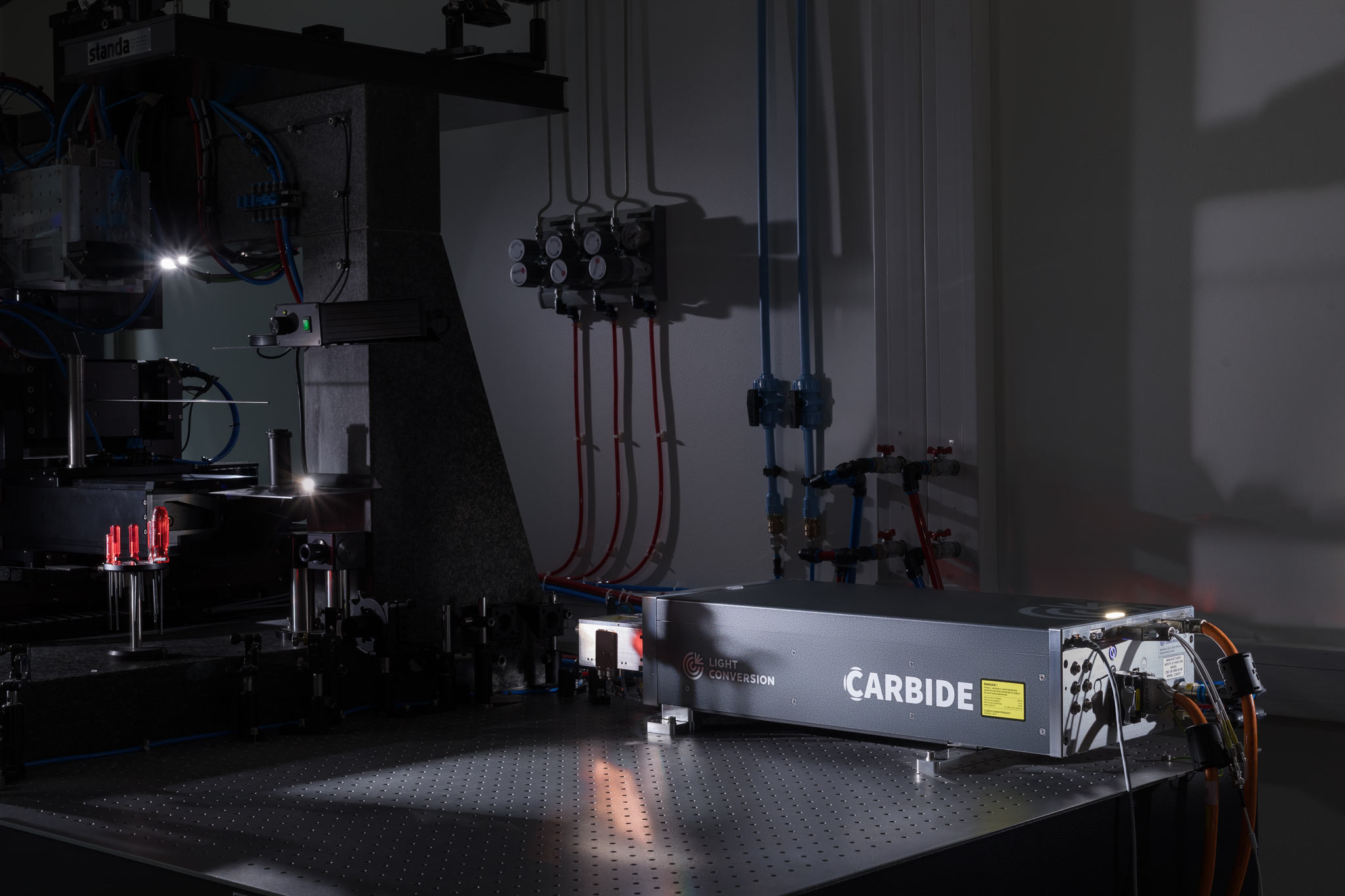
Lithuania’s laser sector has long punched above its weight, but few companies illustrate that better than Light Conversion, the Vilnius-based maker of ultrafast laser systems whose products are used in laboratories and industrial settings around the world.
The company says it has installed more than 10,000 laser systems worldwide, employs more than 800 people, and operates a 17,500 sq m production and R&D base in Vilnius. Its technologies are used by all of the world’s TOP 50 universities and, together with EKSPLA, it developed the SYLOS 3 system for ELI-ALPS in Hungary – one of Europe’s most advanced high-intensity laser platforms.
Yet Light Conversion’s importance lies not only in the systems it sells, but in the standards it imposes on the industrial network around it. In specialised manufacturing, the competitiveness of the lead company depends on the capability of its suppliers. That is why the perspective of Mantas Bortkevičius, chief executive and owner of Ekstremalė, matters. His company has worked with Light Conversion for more than a decade as a manufacturing partner, giving him a practical view of how high-precision demands are transmitted through the supply chain
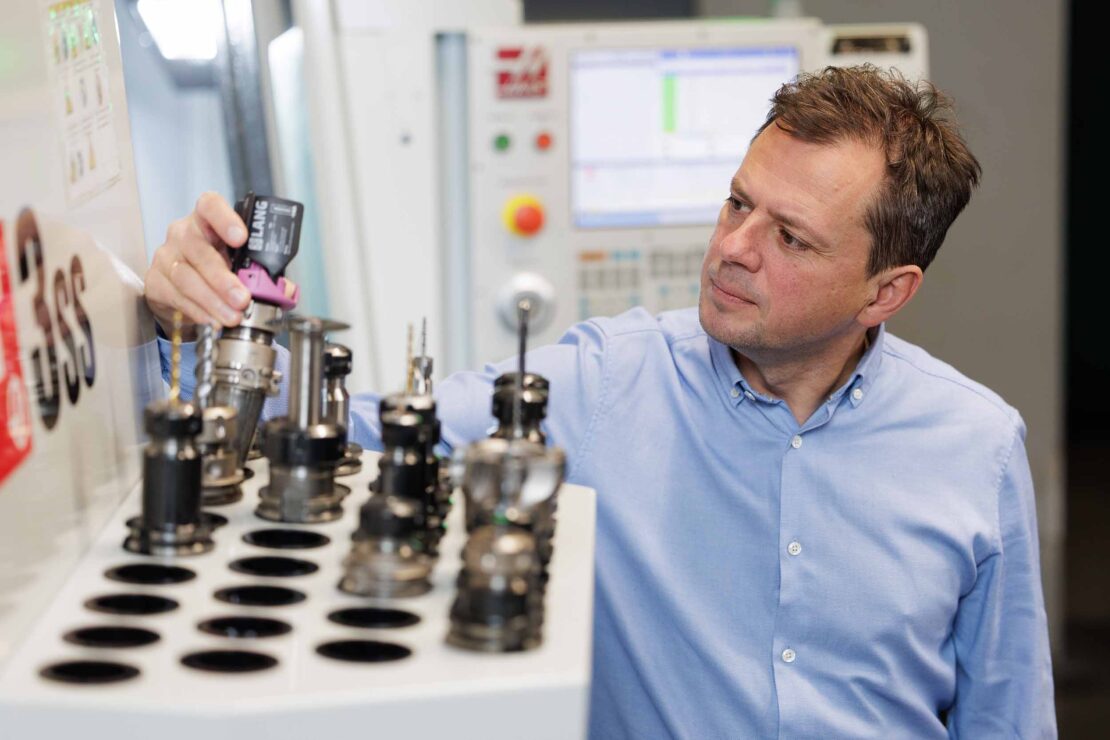
“In the laser industry, quality is never isolated. The performance of a laser depends directly on the quality of every single component inside it.”
That is the central industrial fact. Ultrafast laser systems depend not only on advanced optical design, but on the repeatable quality of machined components, clean production processes and the ability of suppliers to work within narrow tolerances over long periods of time. As Bortkevičius puts it: “Many suppliers in the market can achieve high precision at once. Fewer can maintain it for years. That consistency becomes the real test.”
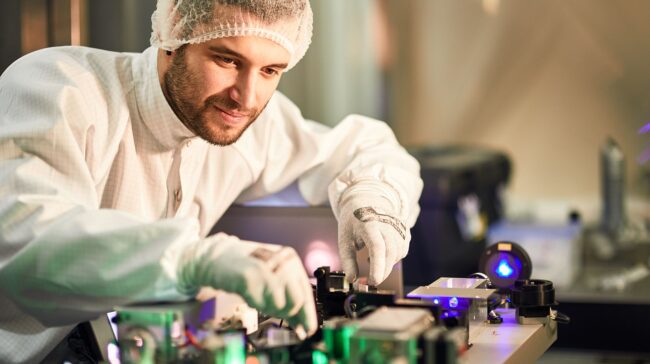
This is where Light Conversion’s influence becomes clear. Its requirements force suppliers to improve metrology, process control, cleanliness and reproducibility. In laser manufacturing, microscopic contamination, burrs or loose particles are not minor flaws but technical risks. Surface treatments such as anodising, passivation or powder coating must be executed not for appearance, but for durability, corrosion resistance and long-term stability.
Bortkevičius argues that one reason the relationship works is that Light Conversion understands manufacturing deeply. Because it develops and prototypes in-house, components reach suppliers already refined, optimised and technically validated. That reduces wasted iteration and shortens development cycles, while raising expectations across the wider supply chain. “Light Conversion raises the quality bar and we keep up with it 100 per cent.”
Lithuania’s laser sector did not become internationally competitive through research alone, nor through one company alone. It did so by building a supply chain capable of supporting technologies with very little tolerance for error. On that measure, Light Conversion’s significance lies not only in what it produces, but in the industrial standards it has helped make routine across part of Lithuania’s manufacturing base.