Lithuania is celebrating not only 36 years of restored independence – but also a quieter, telling milestone: 60 years of lasers. It’s a double anniversary that captures the country’s modern trajectory – from political liberation to technological specialisation – and helps explain why Lithuania is now widely described as a “laser nation”, particularly in ultrashort-pulse lasers.
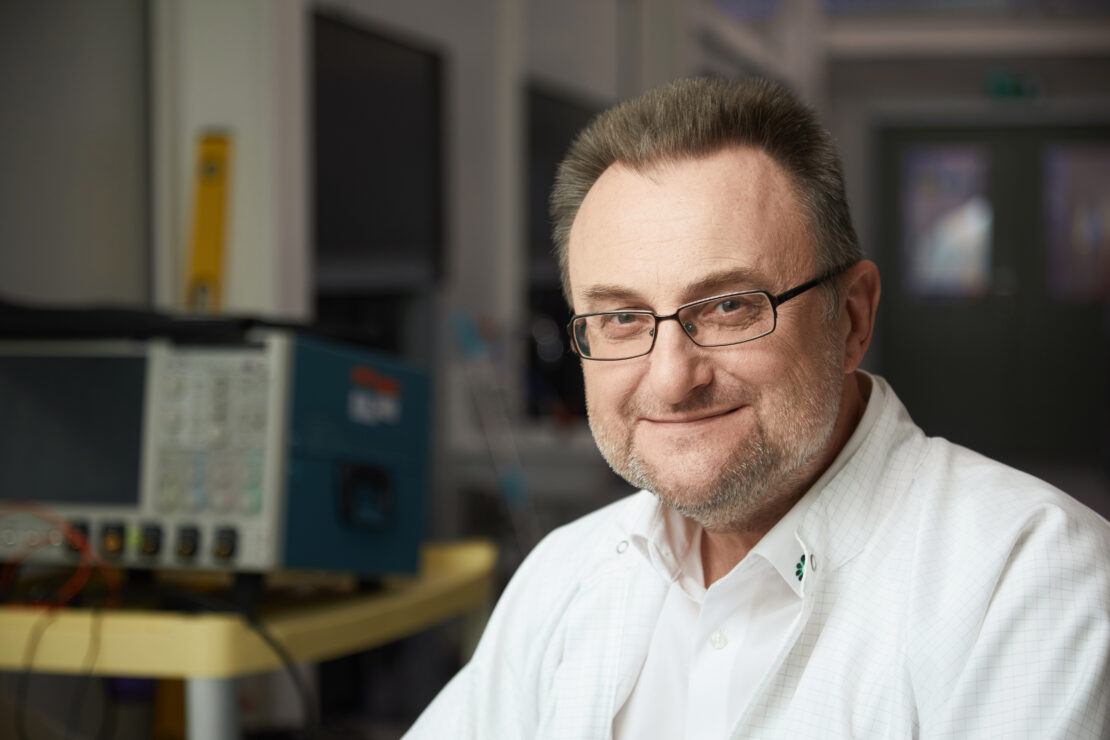
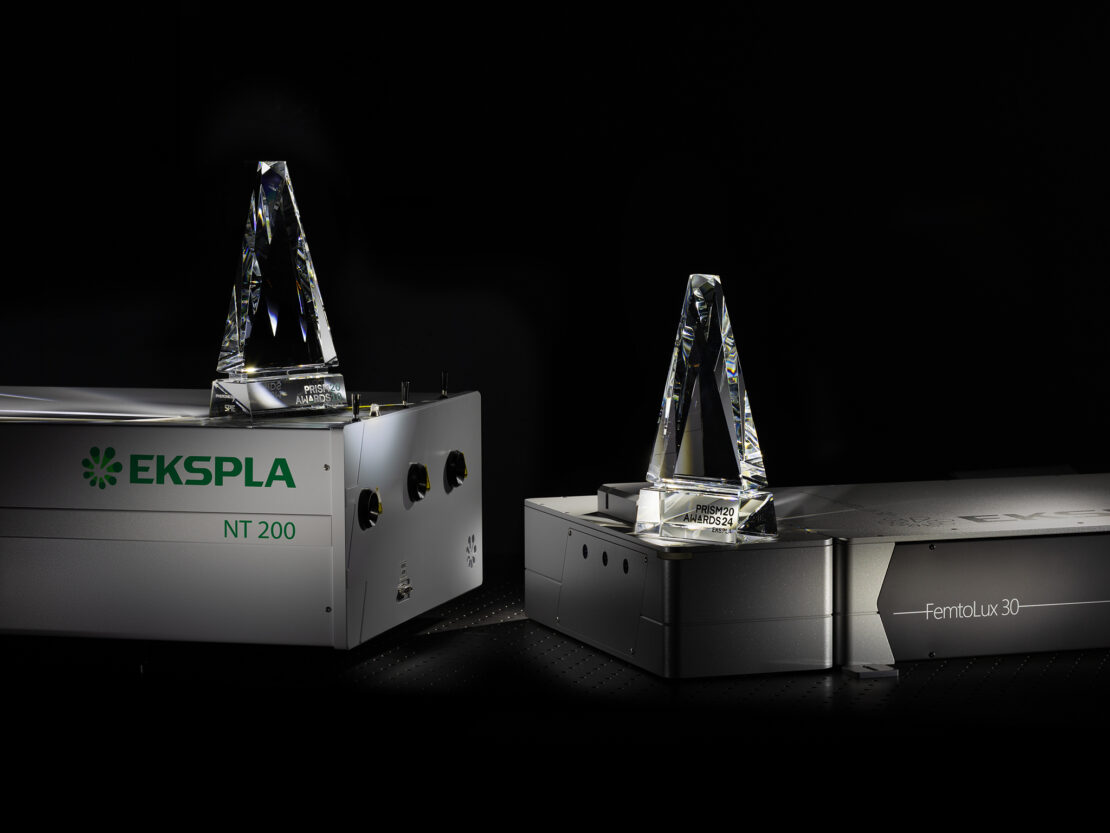
To explore that journey, we spoke with Kęstutis Jasiūnas of EKSPLA – one of Lithuania’s flagship laser makers and a partner behind SYLOS 2A and SYLOS 3, among the world’s most powerful high-repetition-rate ultrafast laser systems, installed at ELI-ALPS in Hungary. EKSPLA is also one of the very few companies worldwide to have received the “Photonics Oscar” twice.
The company has built a reputation for demanding, non-standard systems – and for unusual scientific depth for an industrial firm: a team of roughly 140, including more than 20 PhDs, and an R&D group of around 30.
“We count 60 years from the moment a laser was first used in Lithuania for scientific research,” Jasiūnas says. “It’s a symbolic starting point – the moment our laser journey began.”
An early start – and an even earlier instinct
Lithuania’s laser success did not begin with a factory. It began with an unusually fast decision to build talent.
Jasiūnas points to 1962 as the first inflection point. Only a couple of years after lasers were demonstrated internationally, Professor P. Braždžiūnas sent doctoral students to Moscow to study the new field of quantum electronics. The significance is not nostalgia – it is timing: in frontier technologies, countries that enter early and keep continuity of know-how often end up owning the niche.
The people who returned helped shape a sustained research base. Jasiūnas names Professor Algis Petras Piskarskas and E. Maldutis among the figures who pushed the field forward in Lithuania.
By 1966, lasers were no longer an abstract promise. They had become working instruments. Early experiments at Vilnius University – associated with Professor J. Viščakas and his then postgraduate researcher (later professor) Juozas Vidmantis Vaitkus – helped establish laser research as a practical capability in Lithuania.
The moment the lab met the market
For all the scientific groundwork, the sector’s confidence was ultimately shaped by one blunt test – selling something to the outside world.
Jasiūnas calls 1987 the sector’s commercial break: a laser made at a Physics Institute pilot facility was exhibited in Munich and sold to West Germany. “It was the moment when lasers began moving from laboratories into the global market,” he says.
That example would matter even more after 1990.
Independence – and the brutal economics of the 1990s
Lithuania’s independence brought freedom – and an abrupt funding cliff.
“Yes, a lot of people left – it was a difficult time,” Jasiūnas says. But for those who stayed, the response was practical rather than romantic. “A group appeared who decided to make a living from what they knew,” he recalls. “There was almost no funding for science, so some scientists began to build instruments and sell them – this became a real route to survival.”
Out of that survival mode came something more durable: companies that began exporting, hiring and professionalising. Jasiūnas points to names that became the backbone of the ecosystem – Standa, Eksma Optics and EKSPLA – as well as the supplier base that grew around them. In other words, the sector that now looks like a national specialism was, in the 1990s, simply a way of staying afloat.
Japan – the market that opened the door
Every export-led industry has a first serious overseas customer. For EKSPLA – and, by extension, for Lithuania’s laser credibility – that market was Japan.
“Japan was very important, especially for EKSPLA,” Jasiūnas says. “Our first serious sales were there. In July 1993 we shipped two lasers to Japan – that was a big step.”
The reliance was extreme by today’s standards. “Until 1998, around 70–80 per cent of our sales were Japan,” he says.
Why Japan? In the early years of independence, many Western buyers were cautious about sourcing high-precision equipment from a newly independent, post-Soviet state. Japanese customers, he argues, were less distracted by politics and more focused on performance – they bought what worked.
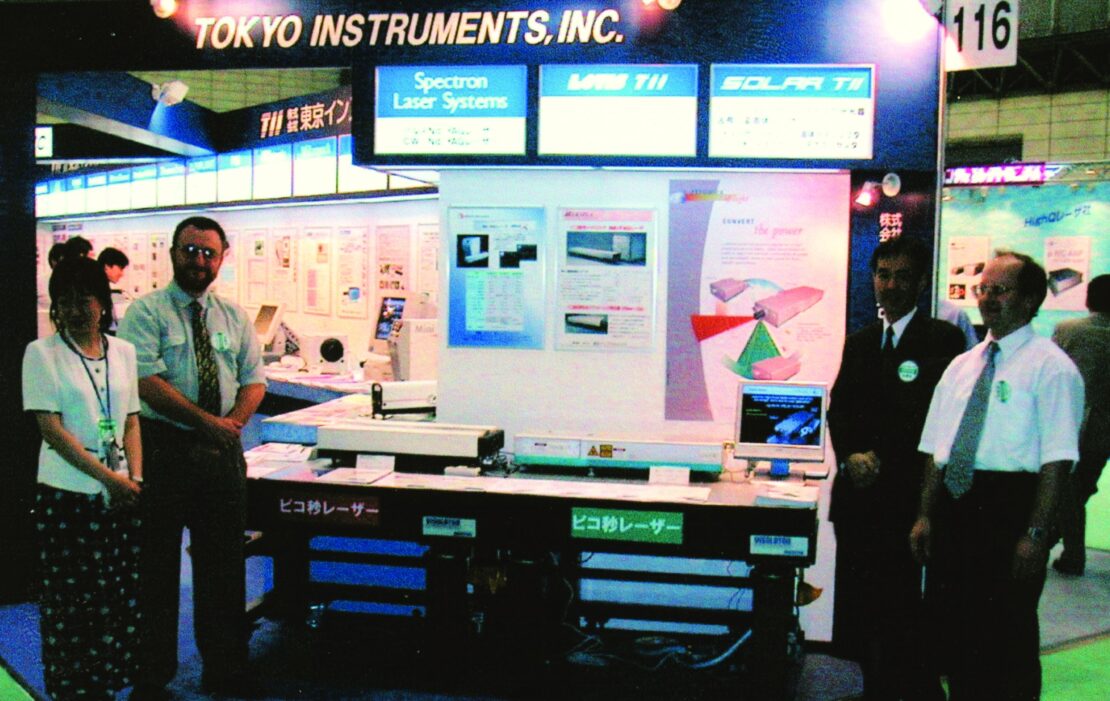
Those early sales became a passport. “Those Japanese references later helped us open other markets,” he says. “In 1995 we had our first sale in the United States and began expanding more broadly.”
In high-precision photonics, credibility is cumulative: one respected customer becomes a reference, then a base, then a pipeline.
The niche where Lithuania is unusually strong
When outsiders hear “Lithuanian lasers”, they often assume mass production. The reality is more specialist – and more lucrative.
“We are among the strongest in ultrashort-pulse lasers,” Jasiūnas says, describing a segment where performance requirements are unforgiving and reliability is part of the value proposition. “It’s not a mass market,” he adds, “but it’s high-value technology where Lithuania has built a real advantage.”
He argues that the edge is not just technical – it is operational. “We don’t forget the instrument after the sale,” he says. “We help customers maintain it, service it and solve operational issues.” In research labs and precision manufacturing, that service culture can be decisive.
From science tool to industrial infrastructure
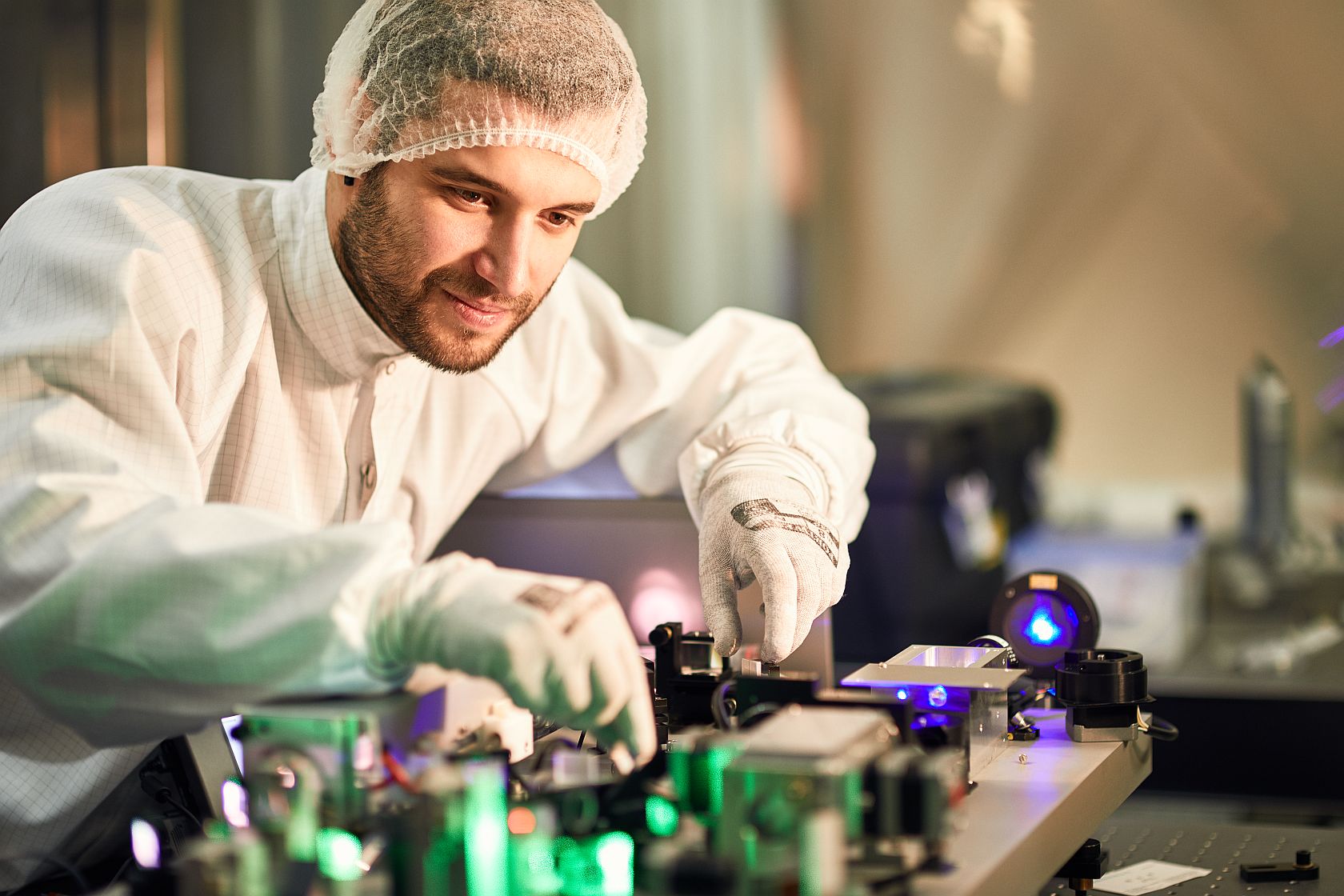
Ultrashort-pulse lasers were once largely confined to academic laboratories. That is changing, Jasiūnas says, as applications spread into industry – particularly electronics and semiconductor manufacturing, where precision, repeatability and minimal thermal damage matter.
And there is another pillar that makes Lithuania’s cluster harder to replicate: optical components. As local laser manufacturers grew, domestic suppliers expanded to meet demanding requirements – and today that supply chain feeds not only Lithuanian firms but the wider global photonics industry.
Inside EKSPLA – a company built like a lab
EKSPLA’s own structure reflects the national pattern: a business built on deep science.
Jasiūnas describes an organisation that spans generations, from early founders to younger engineers and researchers. “We have over 20 PhDs,” he says, and he notes that the company supports employees who pursue doctoral studies.
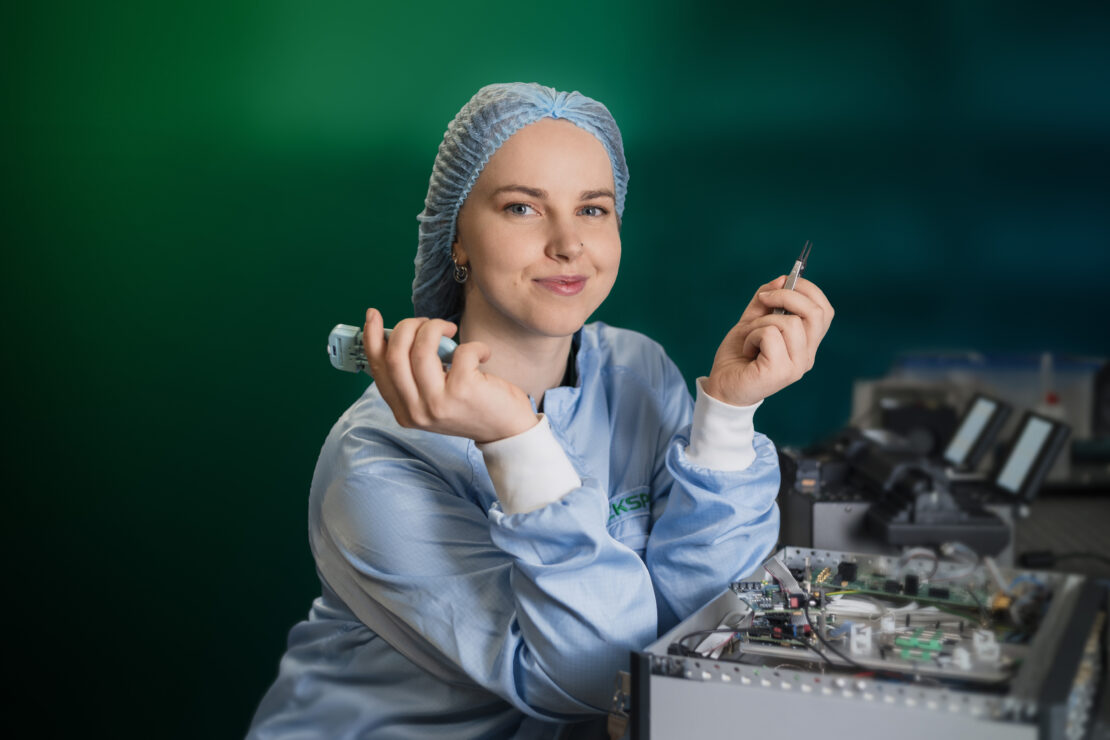
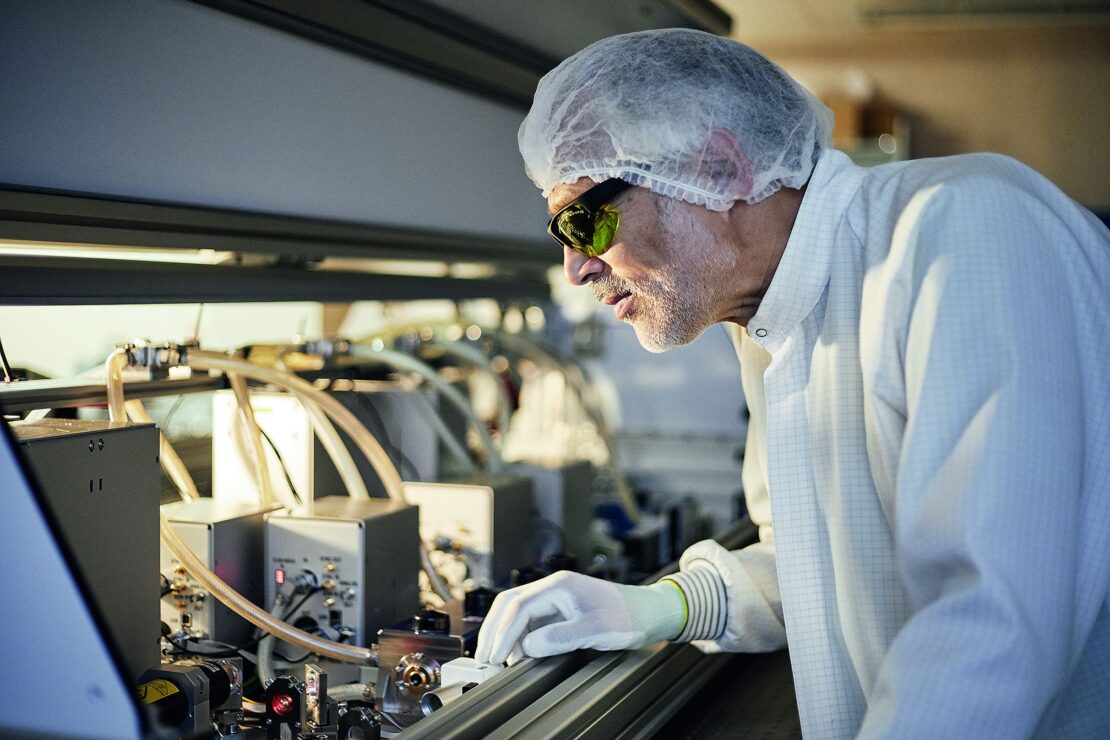
Its R&D group – around 30 people – does what many industrial teams do not: it attends conferences, publishes papers and prototypes new technologies that later become products. “Sometimes we joke that we’re like a small research institute inside the company,” he says.
The next frontier – fusion and the energy problem
Looking ahead, Jasiūnas sees the ultrashort-pulse market continuing to expand as industrial demand grows. But he also points to a more ambitious driver: fusion energy.
Global investment in fusion – the pursuit of “artificial suns” – has surged. In some approaches, lasers are critical enabling technology, requiring high power and ultrashort pulses to reach extreme intensities. Lithuanian companies, he says, are increasingly being invited to contribute to such projects.
He links this to a broader constraint that will shape advanced economies over the next decade: electricity demand. Data centres and AI training are pushing consumption higher. If fusion breaks through at scale, demand for advanced laser systems could expand sharply.
A success story – without the fairy tale
Even now, Jasiūnas resists the clean arc of a “national miracle”.
“It was never – and still isn’t – smooth sailing,” he says. “But that’s normal when you build high technology.”