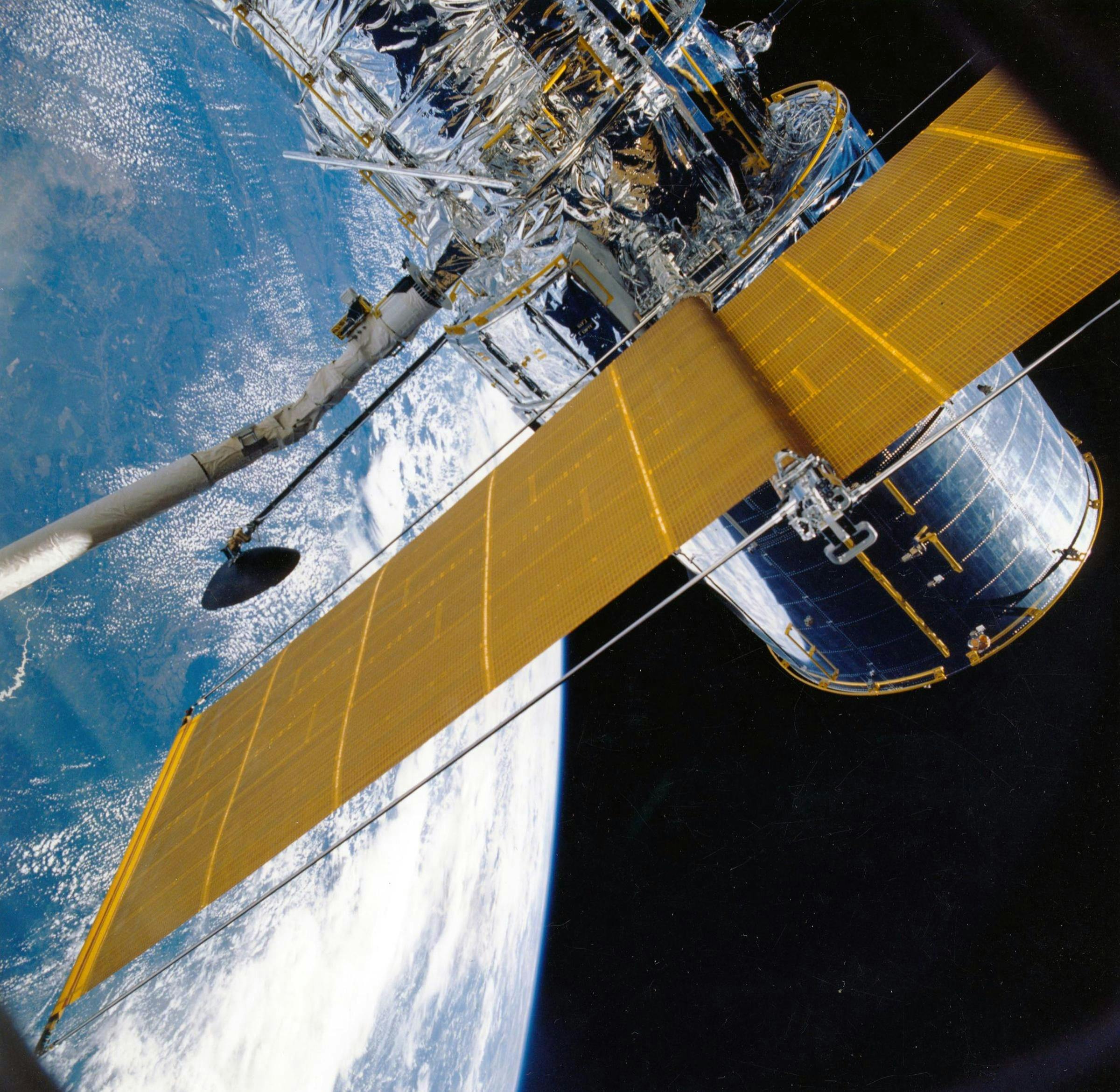
Delta Biosciences, a Lithuania-based chemistry company focused on pharmaceuticals for extreme environments, is preparing to launch a long-term space medicine mission to the International Space Station (ISS) in collaboration with the European Space Agency (ESA). Scheduled for early 2026, the mission will validate radioprotective medicines and radiation-resistant excipients designed to preserve pharmaceutical stability during long-duration spaceflight.
The experiment will run for nearly three years—aligning with the expected timeline of humanity’s first missions to Mars—and addresses a critical challenge in human exploration: ensuring that essential medicines remain safe, effective, and reliable when resupply from Earth is no longer possible.

Addressing Pharmaceutical Stability in Space
Medicines used today are developed for terrestrial conditions. In orbit and beyond, however, exposure to elevated levels of ionizing radiation can accelerate pharmaceutical degradation, reduce efficacy, and in some cases generate harmful byproducts. Despite its importance, long-term in-orbit data on medication stability remains limited.
According to Dr. Angelique Van Ombergen, ESA’s Chief Exploration Scientist, this gap represents a key challenge for future exploration:
“Experiments assessing how medication is impacted by the space environment are limited so far, and this experiment will provide new insights for ESA and the wider space community into how we can protect astronauts and extend the shelf life of medications in space—a key requirement for long-term missions beyond Low Earth Orbit.”
Delta Biosciences is among a small number of companies globally working at the intersection of chemistry, life sciences, and spaceflight to address this problem. Its approach is based on designing medicines with radiation resistance built in from the outset, rather than adapting formulations after degradation has already occurred.
From Laboratory Design to Orbital Validation
The ISS mission represents a major transition from laboratory research to validation in real space conditions. Approximately 100 chemical molecules—including Delta Biosciences’ proprietary compounds, partner molecules, and widely used reference medicines—will be deployed in multiple locations aboard the ISS, each exposed to different radiation environments.

By retrieving samples at regular intervals and comparing them with ground-based controls, the mission will generate detailed degradation profiles of pharmaceutical compounds under authentic space radiation.
“Medicines are designed with terrestrial logic, but space changes everything,” said Dominykas Milašius, Co-Founder of Delta Biosciences. “Radiation, extreme temperatures, and the lack of resupply push pharmaceuticals to their limits. We are rethinking space medicine from first principles.”
Building a Platform for Space Medicine
In parallel with developing its own radioprotective solutions, Delta Biosciences is expanding its role as an integration partner for international collaborators seeking to test pharmaceutical and chemical payloads in orbit. This reflects the company’s growing expertise in experiment design, payload qualification, and long-duration life sciences missions in space.
“We are a chemistry company for the new space age,” Milašius added. “This mission builds radiation resistance and extended efficacy for astronauts directly into pharmaceutical development, and its outcomes will also benefit patients and emergency responders on Earth.”
Impact Beyond Spaceflight
While the mission is driven by the needs of astronauts, its findings are expected to translate into tangible benefits on Earth. Improved understanding of radiation-driven degradation and excipient-based stabilization could support the development of more durable medicines for oncology, emergency medicine, and healthcare delivery in remote or resource-constrained environments.
As Dr. Christiane Hahn, ESA’s Science Lead for Biology, noted:
“This experiment will provide critical data on how pharmaceuticals degrade under space radiation and offer insights for countermeasure development for maintaining astronaut health on long-duration missions.”
Establishing Flight Heritage for the Future
The upcoming ISS mission represents a critical milestone for Delta Biosciences, providing long-term flight heritage in a field where operational experience is essential. It also establishes a foundation for future missions with broader scientific scope and deeper international collaboration.
As human exploration moves beyond low Earth orbit, pharmaceutical resilience will become a foundational requirement alongside propulsion and life-support systems. Through this mission, Delta Biosciences is helping define how medicines are designed, tested, and validated for deep space—while ensuring those advances ultimately serve people on Earth.
Based on the press release by Delta Biosciences