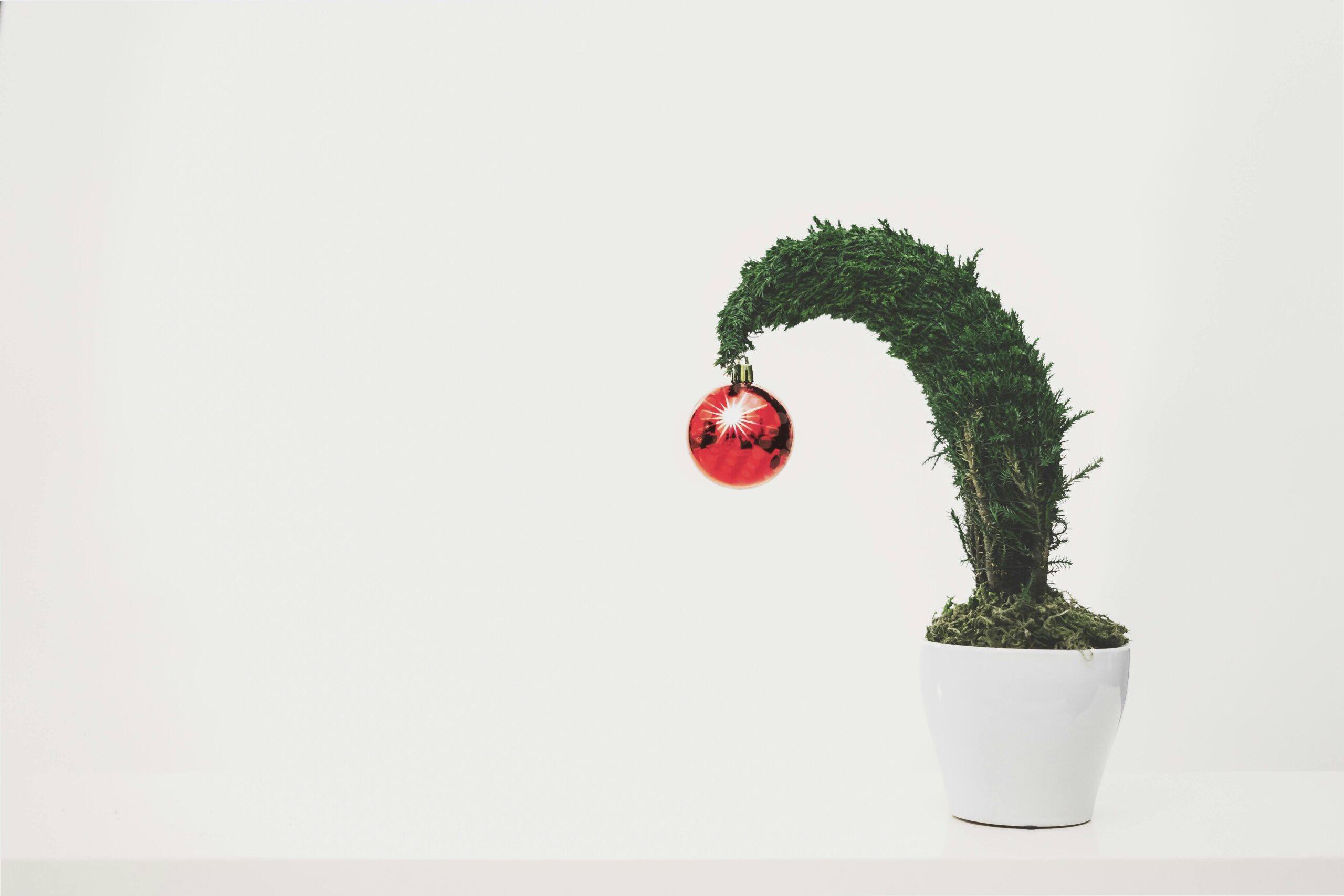
When it comes to Christmas trees, some people purchase one neatly boxed from a store, others opt for a potted tree, and a few take an axe in hand to search for the perfect evergreen in a nearby forest. However, the latter option is illegal in Lithuania—cutting down a tree or branches in someone else’s forest without permission can result in fines of up to €300. This leaves people with a choice: buy an artificial tree, a natural one, or explore alternative festive options.
Artificial Trees Need 20 Years to Offset Their Environmental Impact
According to Dr Daina Kliaugaitė, Associate Professor at the Kaunas University of Technology’s Institute of Environmental Engineering (KTU APINI), most artificial Christmas trees are made from polyvinyl chloride (PVC), a type of plastic classified as Group 3, which has a low recyclability rate.
“Recycling PVC is particularly challenging, as toxic fumes are released during both recycling and incineration. If an artificial tree is made entirely of other plastics, such as polyethene (PE) or polypropylene (PP), it is easier to recycle. However, artificial trees are often manufactured using multiple types of plastic or even metal components, which significantly complicates recycling,” explains Dr Kliaugaitė.

Unfortunately, most artificial Christmas trees sold in Lithuania are made from PVC or a PVC-PP combination, with metal parts mimicking the trunk. These elements make artificial trees one of the least environmentally friendly holiday options.
“The production of artificial trees consumes significant energy resources. If the product is transported from China, additional pollution arises from transportation and packaging materials. As a result, artificial trees leave a carbon footprint roughly 10 times larger than that of natural trees. The environmental damage caused during production can only be justified if the tree is used for at least 10 to 20 years,” says Dr Kliaugaitė.
Natural Trees Are More Environmentally Friendly
The carbon footprint refers to the amount of greenhouse gases emitted annually due to human activity, which allows us to measure the environmental impact of different choices, including holiday traditions. Artificial Christmas trees generate approximately 40–50 kg of CO₂ equivalent emissions, whereas the carbon footprint of a natural tree can be as low as zero.
“Research shows that live Christmas trees produce significantly fewer greenhouse gas emissions than artificial ones, especially if they are disposed of responsibly after use. While I’m unaware of similar studies conducted in Lithuania, American research reveals that a natural tree purchased from a farm and later shredded for mulch—used to protect soil from erosion and eventually decompose into fertiliser—has a carbon footprint of 0 kg CO₂ equivalent,” explains Dr Kliaugaitė.
How to Properly Dispose of a Christmas Tree?
After the festive season, natural Christmas trees should not be thrown into mixed municipal waste bins or left beside them. Instead, they should be taken to designated collection points or green waste composting sites. Laurynas Virbickas, Director of the Kaunas Regional Waste Management Centre and an alumnus of KTU APINI’s Sustainable Management and Production Master’s programme, highlights that natural tree collection points, set up in major cities after the holidays, ensure a more sustainable disposal process.
“From these collection points, the trees are transported to green waste facilities, where they are turned into compost, mulch, or biofuel. This also prevents visual pollution. However, it’s essential to ensure the trees are completely undecorated, with no ornaments, plastic wrapping, or fabric coverings,” he explains.
Creative Alternatives to Traditional Trees
For those who want to celebrate the holidays without causing environmental harm, KTU APINI researchers recommend exploring unconventional solutions.
“You could decorate a tree outdoors or create one from branches. My family, for example, has been using a tree trimmed from a friend’s hedge for five years now. There are also many creative ways to craft an alternative tree using everyday items or renewable, reusable materials. At KTU APINI, we haven’t decorated a traditional Christmas tree for years. Instead, we opt for more innovative and sustainable solutions,” shares Dr Kliaugaitė.