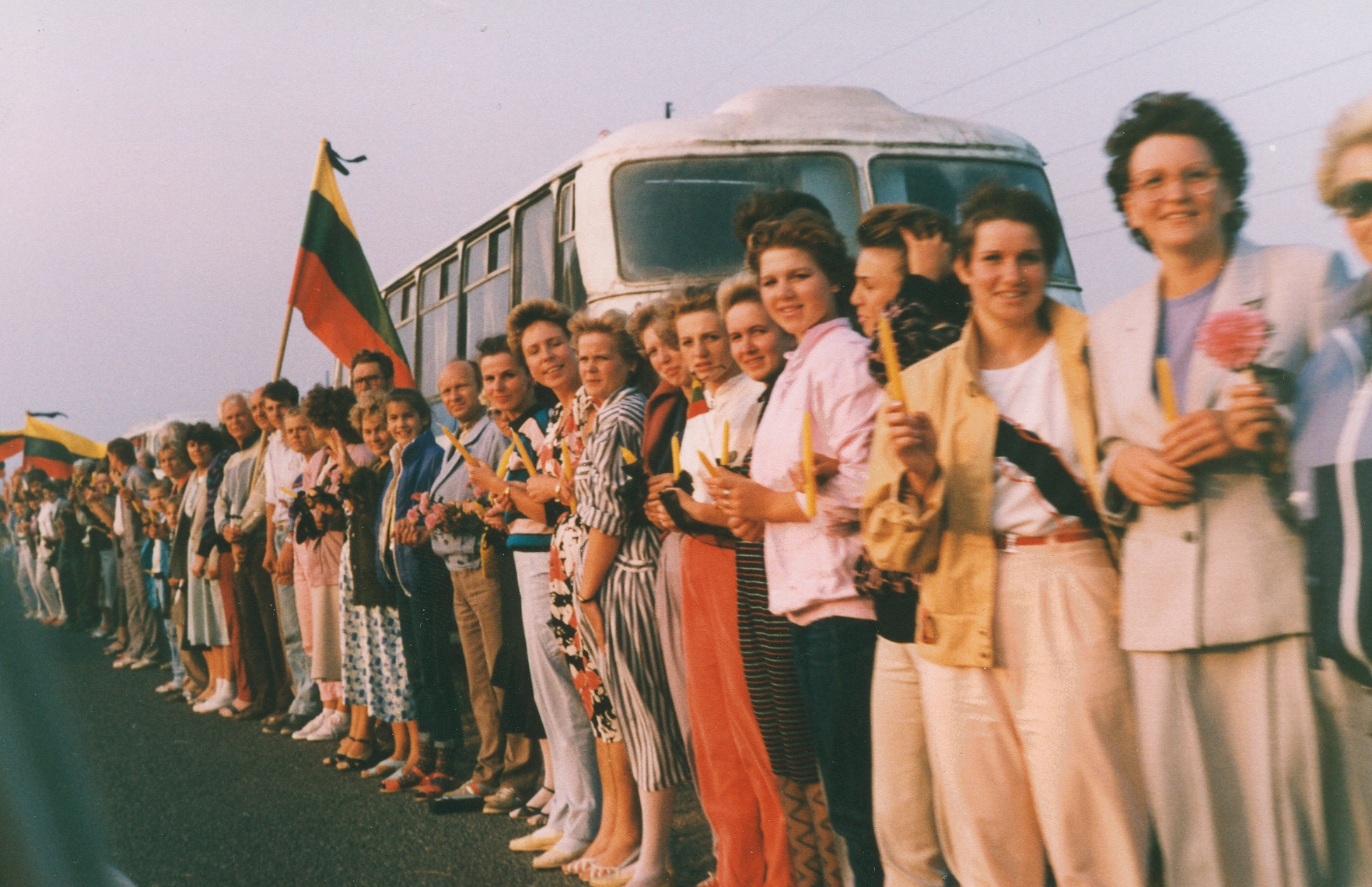
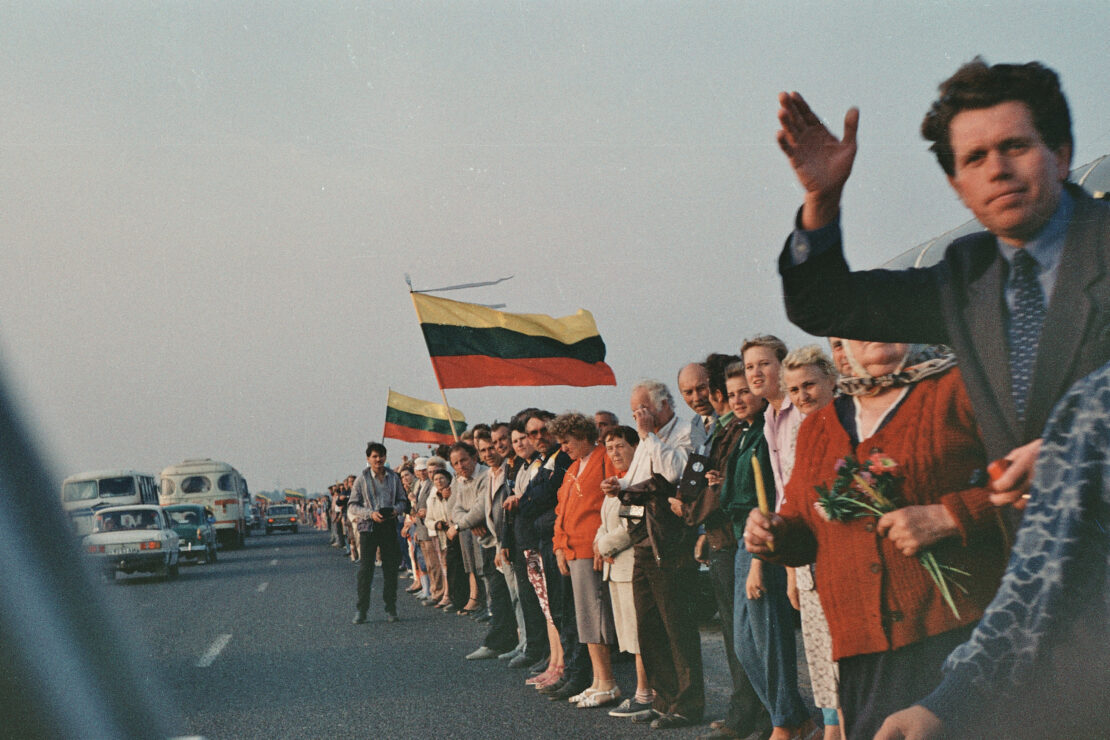
On 23 August 1989, at 7 p.m., people across Lithuania, Latvia and Estonia joined hands to form the Baltic Way – a human chain linking the three Baltic capitals.
At its southern end in Vilnius, the chain reached Gediminas Castle Tower. From Gediminas Hill, the Lithuanian section descended towards Cathedral Square, followed the River Neris, crossed the Green Bridge and continued past the then Pedagogical Institute (now part of Vytautas Magnus University) and along Ukmergės Street towards the north of the country. From there, the route passed through Ukmergė and Panevėžys before reaching Latvia and continuing through Riga to Tallinn.
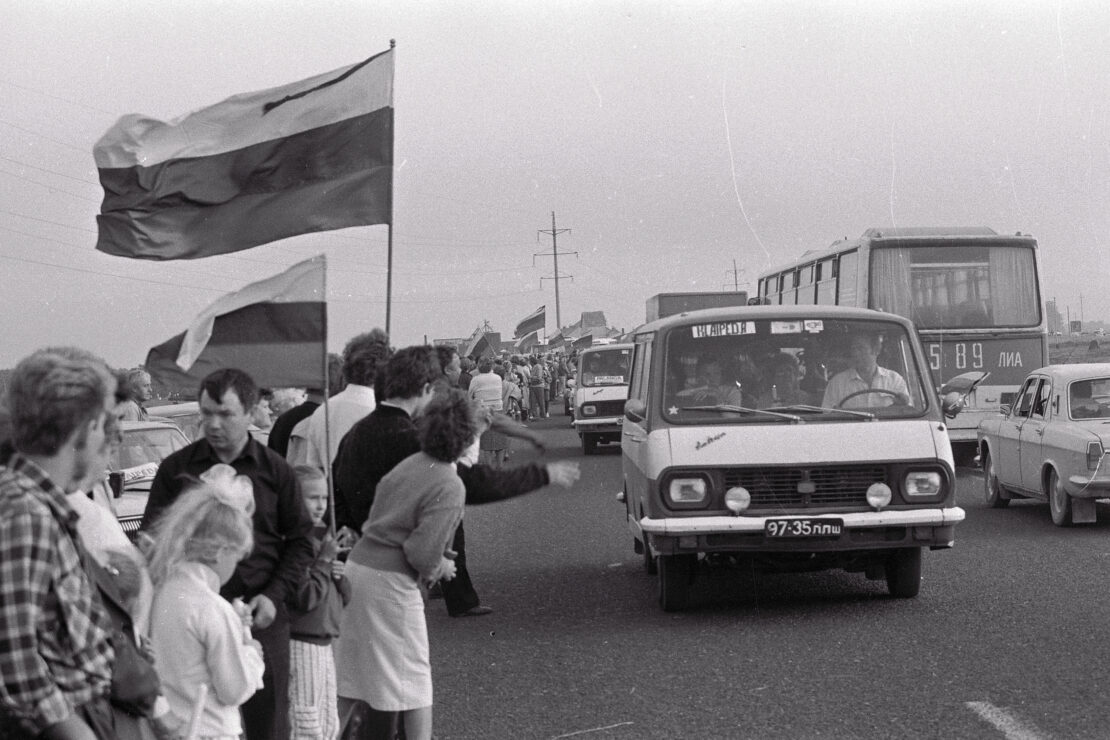
The entire chain extended for more than 600 kilometres. Around two million people are estimated to have taken part, although contemporary estimates vary. For approximately fifteen minutes, participants stood hand in hand along streets, roads and highways across the three Baltic states.
The date was deliberately chosen. Exactly fifty years earlier, on 23 August 1939, Nazi Germany and the Soviet Union had signed the Molotov–Ribbentrop Pact. Its secret protocols and subsequent German-Soviet agreements divided parts of Central and Eastern Europe into spheres of influence. In 1940, the Soviet Union occupied and annexed Lithuania, Latvia and Estonia.
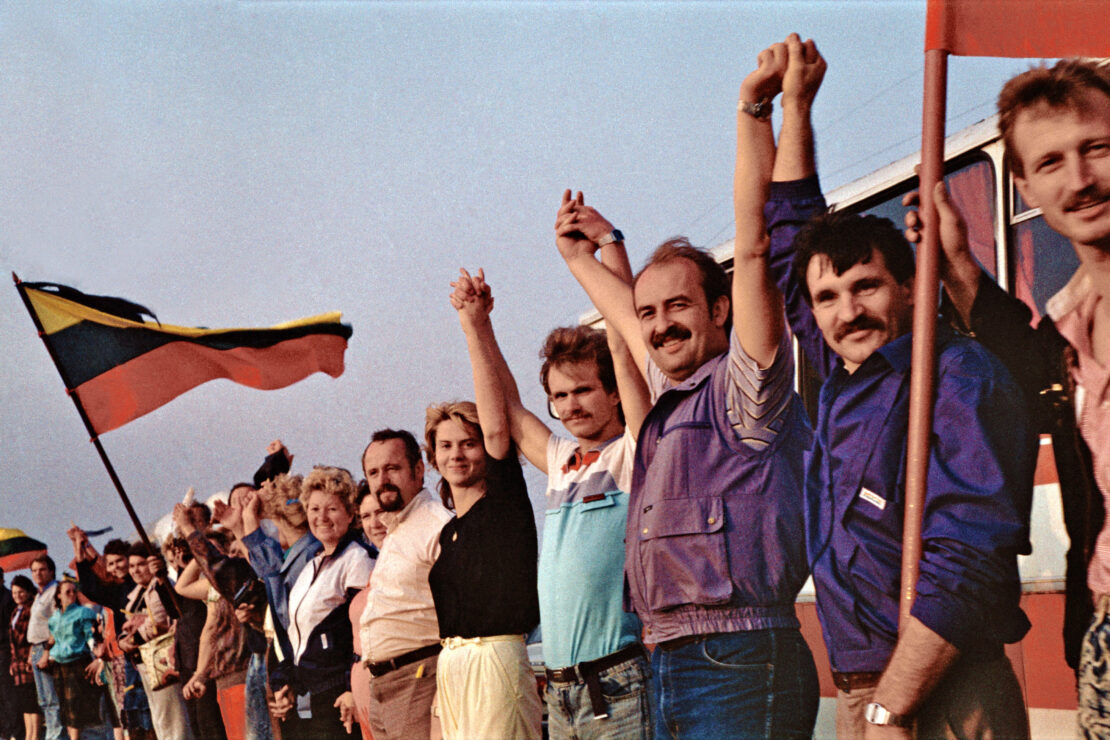
By the late 1980s, public movements in all three Baltic states were increasingly calling for political change and the restoration of independence. The Baltic Way was organised jointly by Sąjūdis in Lithuania, the Popular Front of Latvia and Rahvarinne in Estonia. One of its central aims was to draw attention to the secret agreements of 1939 and to demonstrate public support for restoring the independence of the Baltic states.
The scale of the event required extensive coordination. In Lithuania, the roughly 220-kilometre route was divided into sections assigned to different cities and districts. Participants travelled from across the country to their designated locations, including sparsely populated stretches between Vilnius and the Latvian border.
The political landscape changed rapidly afterwards. On 11 March 1990, Lithuania adopted the Act on the Re-establishment of the State of Lithuania, restoring the exercise of the sovereign powers of the Lithuanian state. Estonia restored its independence on 20 August 1991, while Latvia completed its restoration process on 21 August 1991.
In 2026, another anniversary links the Baltic Way with the restoration of Baltic statehood: 35 years have passed since Lithuania, Latvia and Estonia were admitted to the United Nations on 17 September 1991.
The experience of occupation and the restoration of independence remains an important part of Lithuania’s political memory. It also provides part of the historical context for Lithuania’s current support for Ukraine and its emphasis on sovereignty, territorial integrity and the right of nations to determine their own future.
The Baltic Way has also received international recognition. In 2009, documentary records relating to the event were inscribed in UNESCO’s Memory of the World International Register.
The Baltic Way brought significant international attention to the Baltic states and their shared struggle for freedom. The peaceful demonstration became a powerful example of civic mobilisation and non-violent resistance, inspiring democratic movements elsewhere and forming part of the broader political transformation taking place across Europe at the end of the Cold War.
More than three decades later, the Baltic Way remains one of the clearest examples of co-creation between Lithuania, Latvia and Estonia. It reinforced a shared sense of purpose and solidarity and helped mobilise public support for political change. This unity became an important force in the movements that ultimately led all three Baltic states to restore their independence.