The year 2025 marks the 150th anniversary of the birth of Mikalojus Konstantinas Čiurlionis – Lithuania’s genius composer, painter, and visionary. His jubilee has evolved into far more than a national celebration; it has become an international cultural phenomenon. What follows is a glimpse of the most remarkable events honouring Čiurlionis’ enduring legacy.
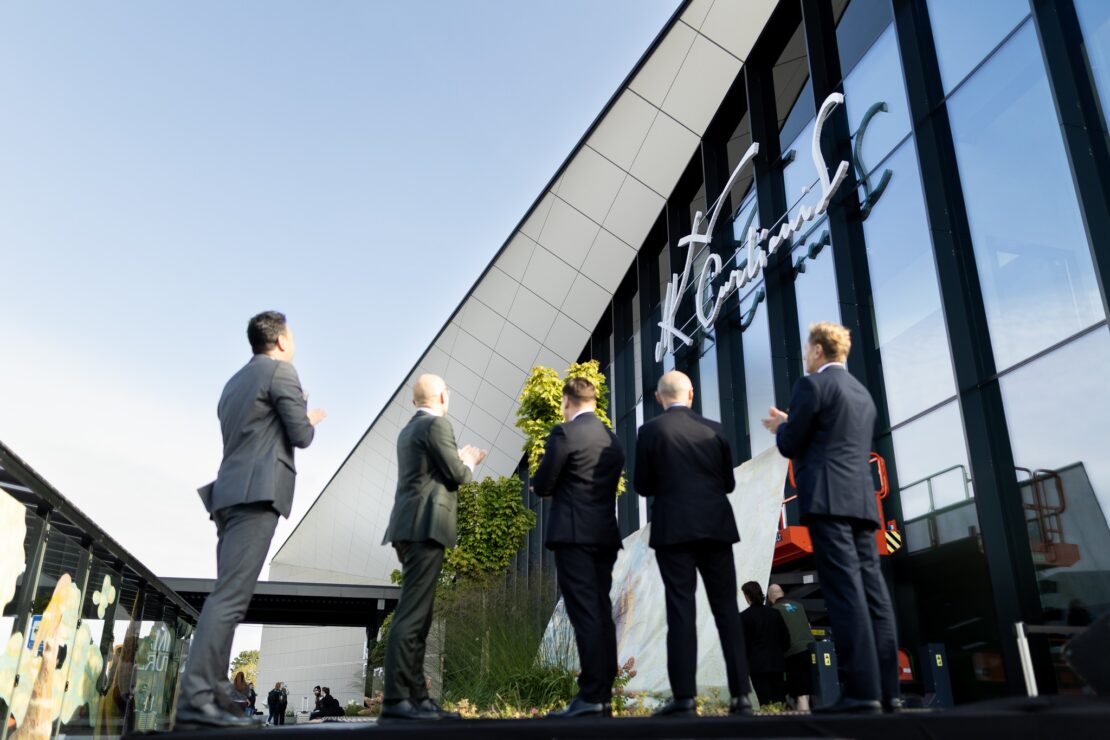
Lithuania ushered in the year with a momentous gesture: Vilnius Airport was renamed Vilnius International Čiurlionis Airport, inviting travellers to pass through gates bearing the name of the artist who united earth and sky. More than a change of name, it is a symbolic declaration – Čiurlionis is Lithuania’s cultural signature.
One of the year’s most significant moments came with the opening of a special exhibition at UNESCO Headquarters in Paris. Čiurlionis’ anniversary was included in UNESCO’s official list of commemorations for 2024–2025 – a recognition of the highest order and a powerful sign that his art has become part of the shared cultural heritage of humankind. The exhibition presented Čiurlionis’ paintings, musical manuscripts, and interactive soundscapes, inviting global audiences to discover him as an artist who fused music, image, and philosophical vision into a single creative universe.
Another symbolic summit was reached when NASA astronaut Jonny Kim, speaking from the International Space Station, sent a greeting into orbit by transmitting a fragment of Čiurlionis’ symphonic poem The Sea. For the first time in history, the work of a Lithuanian composer was heard in space – a moving gesture underscoring how Čiurlionis’ art transcends the boundaries of Earth and reflects the universal consciousness of culture.
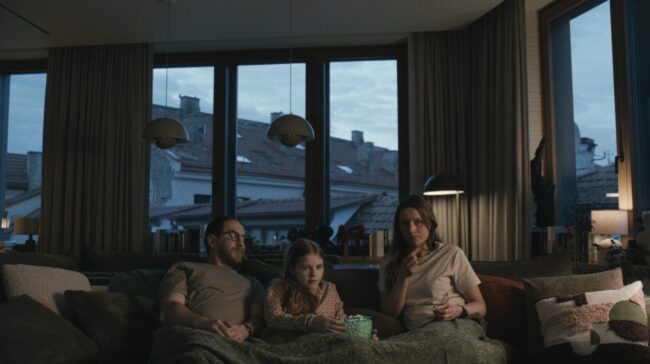
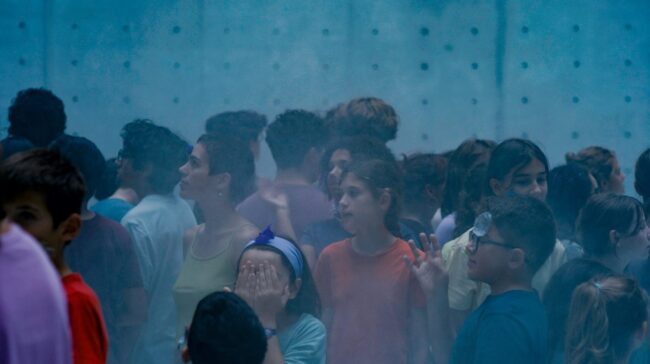
At the Venice Immersive 2025 programme, audiences experienced Creation of the Worlds, a virtual reality journey inspired by Čiurlionis’ music and imagery. The work became one of the festival’s highlights, featured in competition and acclaimed by outlets such as The Guardian and Variety. Directors Kristina Buožytė and Vitalijus Žukas noted that Čiurlionis’ art offers a perfect platform for contemporary media – his “visible music” invites exploration of spiritual experience in a virtual dimension.
In Japan, plans were announced for a major Čiurlionis retrospective at the National Museum of Western Art in Tokyo, scheduled for spring 2026. It will be the first comprehensive presentation of his work in Japan – a country where visual poetry and spiritual aesthetics hold deep cultural significance. Simultaneously, Japanese institutions launched a public campaign at EXPO 2025 Osaka, presenting Čiurlionis as “the creator of the union between sound and image.” Throughout the six-month event, the Baltic Pavilion devoted extensive space to the artist, featuring a sound installation with reinterpretations of his music and immersive VR sessions.

Across the Atlantic, the Kennedy Center’s Millennium Stage in Washington, D.C. hosted a concert titled Čiurlionis in Glass. The programme combined Čiurlionis’ compositions with contemporary works inspired by his musical and visual language. The event affirmed his position as a creative force whose influence extends far beyond the realms of musicology and art history – inspiring new forms and voices within the American cultural landscape.
In the autumn, the Čiurlionis Quartet embarked on a concert tour of Canada, performing in Toronto, Ottawa, Montreal, and Niagara-on-the-Lake. The tour, held both in Lithuanian community venues and major concert halls, introduced North American audiences to the golden repertoire of Lithuanian classical music.
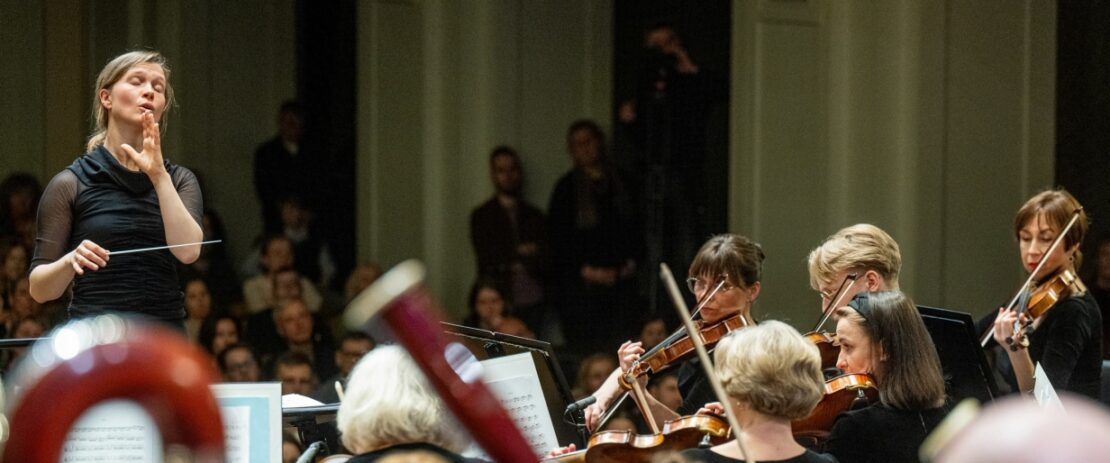
Another milestone was achieved by conductor Mirga Gražinytė-Tyla and the Lithuanian National Symphony Orchestra with their project Čiurlionis Code II. Recorded at the Lithuanian National Philharmonic and streamed via Deutsche Grammophon Stage+ – one of the world’s most prestigious classical music platforms – it marked the first-ever video release by a Lithuanian orchestra on this international stage. The programme featured Čiurlionis’ The Sea, Britten’s Four Sea Interludes, and Self Portrait with Čiurlionis, a contemporary work written for Trio Agora.
Across Finland, Čiurlionis’ jubilee was celebrated with characteristic creativity. In Helsinki’s Kallio Church, the organ concert Čiurlionis 150 allowed northern audiences to experience the monumental power of his musical spirit. Meanwhile, students of the Pop & Jazz Conservatory launched a daring project, Čiurlionis Lives On!, transforming his symphonic poems In the Forest and The Sea into heavy-metal compositions – a bold artistic fusion that declared Čiurlionis’ music timeless and ever-renewing.
In Zagreb, the Lithuanian Embassy organised a concert and art exhibition at the Vatroslav Lisinski Concert Hall, where musical performances were accompanied by reproductions of Čiurlionis’ paintings enhanced with interactive projections.
A similar initiative took place in Moldova, where the Chișinău Organ Hall hosted a multimedia concert, Music and Colours: Čiurlionis, uniting sound, image, and light installations – a vivid demonstration of how Baltic culture can be re-imagined through the lens of technology.
The Lithuanian Cultural Season in Italy opened in Rome with an inaugural concert at the Presidential Palace, featuring Čiurlionis’ works performed by his great-grandson Rokas Zubovas and the Italian string ensemble Quartetto Eos.
In Tallinn’s Kadriorg Palace Museum, the programme Lossimuusika: Unda, unda… inundare – ČIURLIONIS 150 brought together cellist Glebas Pyšniakas and pianist Rokas Zubovas. The pairing of Čiurlionis’ music with works by contemporary Baltic composers revealed the continuity between past and present, and the living pulse of the artist’s influence.

That same spirit of ascent was echoed in the Lithuanian mountaineering expedition “The Brave Ones”. On Čiurlionis’ birthday, the climbers scaled Mount Kazbek in the Georgian Caucasus, symbolically returning the artist to the mountains he had once seen and described more than a century ago. Sixteen mountaineers, led by Dainius Babilas, carried out this voluntary mission, raising seven flags at the summit – each bearing an image from Čiurlionis’ paintings: The Sun in Aries, The Mountain, My Path, The Fairy Tale, The Castle Fairy Tale, The Serpent’s Sonata, and The Message. It was a silent dedication to an artist whose work, like the mountains themselves, inspires humanity to rise higher.
The international celebrations of Čiurlionis’ 150th anniversary have become a magnificent phenomenon – not merely a chain of commemorations, but a dialogue between cultures. From the UNESCO exhibition to the VR project in Venice, from organ music in Helsinki to museum halls in Japan, one message resounds everywhere: Čiurlionis belongs to the world. His art – uniting sound, light, and vision – speaks an eternal language, woven from the shared codes through which we, as humans, perceive and imagine the world.