“It feels really good to be part of the Lithuanian music scene. When I started taking my first steps as a professional drummer at the age of 15, I was blown away by the support from more experienced peers who showed great patience and encouragement toward me as an aspiring musician.” Dominykas Babikis, drummer with rock band, ba.
This is the first part of a two-part series on the history and evolution of Lithuanian popular music. Part 1 explores the roots of the scene and its raise after independence. Part 2 will continue with the key figures and spaces shaping its future.
A heroic history
Lithuanian rock music, in all its myriad forms, has come a long way since the early days following Independence. Talking with Dovydas Bluvsteinas, one of the architects of everything rock, punk, post-punk and alternative in Lithuania, it could be argued that the music was not only the soundtrack, but one of the driving forces behind the rejection of Soviet reality in the late 1980s/early 1990s.
Among the largest informal gatherings to predate the Independence demonstrations was the first proper Lithuanian rock festival, Lituanika, held in Vilnius in 1986. Alongside the healthy contingent of local kids thirsty for their first taste of punk and rock, you would find working families, even old age pensioners. All were unified by this spirit of a nascent revolutionary moment, so clearly embodied in the naive energy of loud music made from homemade guitars and amps.
In those early years, organisers and musicians would have to circumvent the strict rules governing not only the music but the gathering of people through the creative labeling of gigs as the meetings of “music clubs”. Then slowly, through sheer determination and industriousness, touring showcases for local bands like 1987’s epochal “Rock Marches” started happening, with bands like Antis beginning to make their presence felt.
After a period of relative inactivity during the early years of independence, when artists were forced to adjust to a difficult if liberating new reality, the music scene re-emerged with force. Leading the charge, alongside Antis, were bands like Foje and Bix (the latter’s claim to fame was a celebrated support slot for Nirvana). And one of the focuses of this scene was the nightclub Kablys in Vilnius. Owned by a friend of one of the members of Antis, and provided at very generous rates, the venue became home to what became an incubator for many celebrated local bands, the somewhat ironically titled “Worst band” competition.
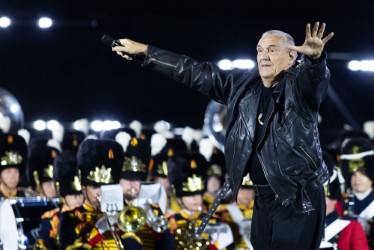
In the intervening period between then and now, the scene has only grown. Of course, it’s been in fits and starts. Labels have emerged and disappeared, bands been and gone. These days the scene is large enough to sustain multiple summer festivals across various genres, there’s the pop festivals Granatos and Aludarių Diena, Kilkim Žaibu (a metal festival), and for those with more esoteric and alternative tastes, Braille Satellite.
Proudly Lithuanian and proudly international from the get go
And although the local scene is proudly Lithuanian in its independent and poetic spirit, it has never been slow to embrace wholeheartedly global sounds and artists. In fact, one of the most famous, and indeed, important pop bands of the last twenty years had at its centre, Erica Jennings, a native of Ireland, whose father was a seasoned diplomat who had been posted to Lithuania. Her group, Skamp, composed of singer Jennings, Viktoras Diawara, the multi-instrumentalist son of a Malian playwright and Lithuanian mother, and Vilius Alesius, a local rapper, was formed by the latter two whilst they were still 17 year old students at the Lithuanian international Vasario 16-osios Gymnasium in Germany.
As Erica explains, the group were very much self-starters: “When we started out, we were trying to get ourselves played on radio stations because they had a lot of music shows back then. We were singing in English, French, German, and Lithuanian, and it was like hip-hop, rock, funk, soul, jazz. So it was very confusing for everybody. But we were very young, and our listeners were also our age, and they understood it. We were connected with them. We played everywhere, any opportunity we got.
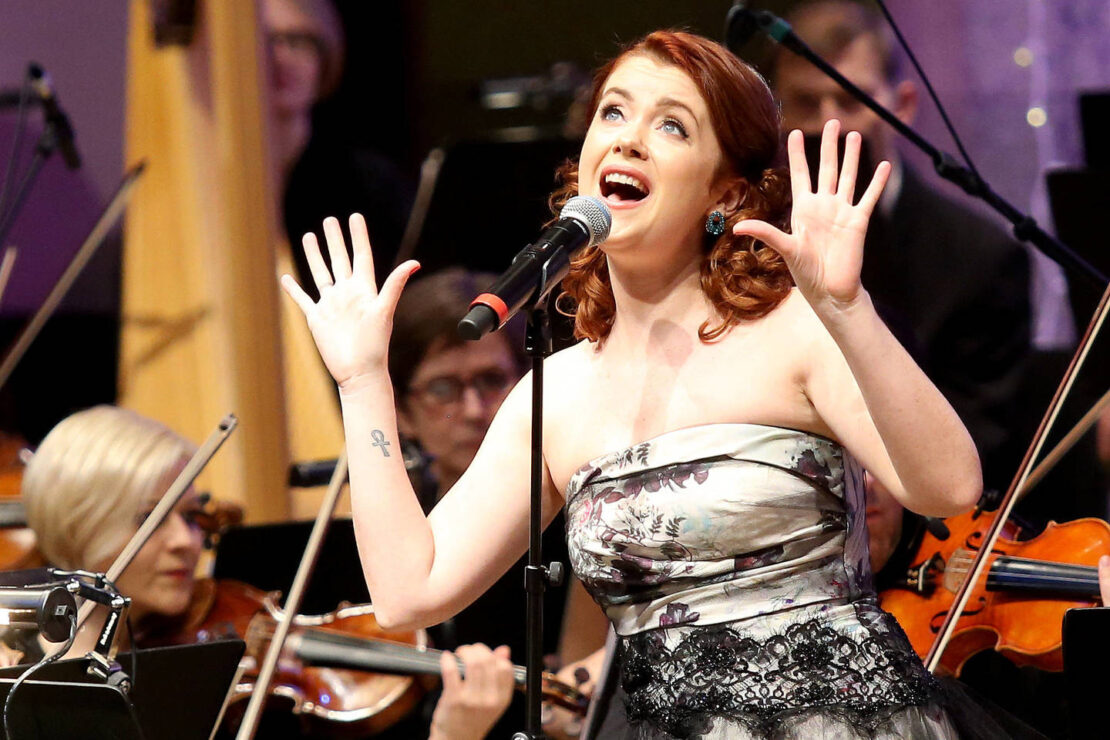
We made a video but didn’t have any money to edit it. We filmed it at my parents’ house ourselves. Then we borrowed a car and drove to Germany where their friend had gotten a job at a video company. They worked through the night to edit our video. Totally guerrilla marketing 2.0! When they came back, we had our video. But then we were like, “Okay, now how are we going to get the video shown?” So we came up with this idea – make your own merchandise. We made our own stickers and T-shirts, then literally called the TV station. We’d seen they did competitions but needed something to give away as prizes. We said, “Yeah, we’ve got this merch, maybe we can come on and do a competition.” They were like, “Yeah, sure, why not?”
That’s how we got our video played, got interviews, and it went like that, little by little, as well as playing everywhere we could. Then in ’98, we got a chance – one of the guys said, “Okay, we’ll put you on the summer compilation.” That was our hip hop version of “Summertime” – Gershwin’s “Summertime” with a rap section. The song was originally in French and English, and when people first heard it, they didn’t think it was local. But he said, “Okay, we’ll put it on the summer compilation.” And that’s where everything changed.”
Skamp’s multi-cultural sound was to prove a hit with a generation of teenagers eager to embrace Western influences after years of Soviet cultural domination. The band went on to record an astonishing 10 albums in 10 years, also representing Lithuania in Eurovision with what remains one of their biggest anthems, “You got style.”
In the years since Skamp’s indefinite hiatus began in 2018, the group members have involved themselves in building families, working on separate projects and contributing towards the further development of the scene. Of particular note here is Viktoras Diawara’s involvement in the establishment of the Loftus venue, a multi-purpose art and event space in Vilnius. In recent years it has been carrying the baton of new music promoters by hosting a “best new band” competition. By doing so, it’s keeping alive the spirit of Kablys.
So what does Jennings think of the scene now?
“It’s much healthier now. There’s a really thriving rock scene, which I’m very happy about because there wasn’t really one then. There’s a huge live scene now. The only problem is there’s still not a lot of smaller venues. When we started, there were no 1000-capacity venues, so we filled that niche. But there’s still a need for smaller venues. You have venues that just started, but they’re just like pub gigs. You need those places like you have in Dublin – 300, 400 capacity venues. That’s what I see missing. But the scene is growing and there are a lot of young bands, so I’m sure more venues will appear to serve this new generation. It’s all good.”