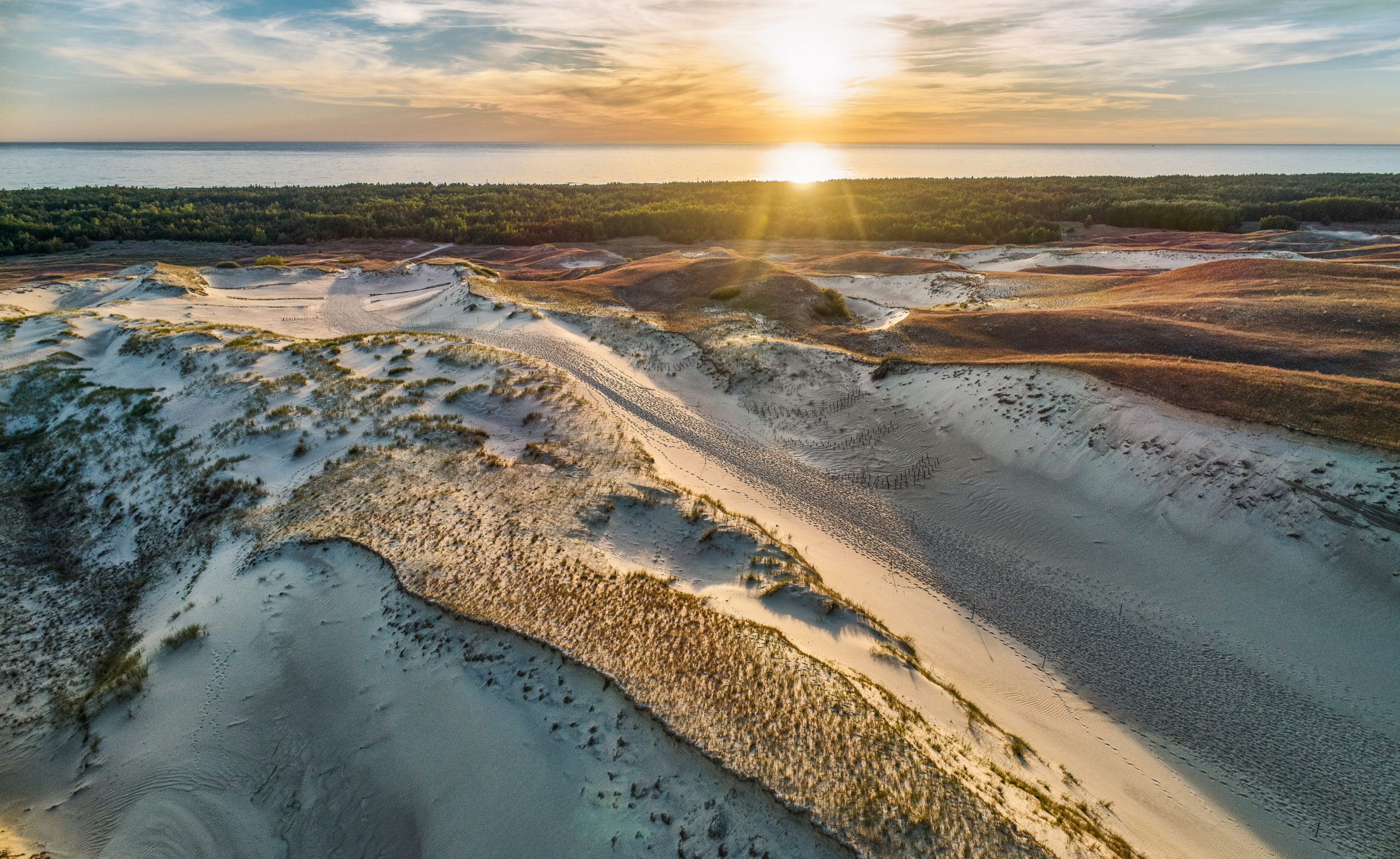
The Curonian Spit has been officially recognised by the European Film Academy as one of the Treasures of European Film Culture—a prestigious list that celebrates locations of exceptional cultural significance to European cinema.
In its latest announcement, the Academy added eleven new sites, including the Curonian Spit, which has inspired generations of filmmakers with its breathtaking landscapes and unique atmosphere. This marks the first time Lithuania, along with Bulgaria, Malta, and Slovenia, has been included in the list, which now features 60 iconic sites across Europe.

Among them are such cinematic landmarks as:
- The Trevi Fountain in Rome, immortalised in classics like Roman Holiday (1953) and La Dolce Vita (1960),
- The Ingmar Bergman Museum on the Baltic island of Fårö,
- And the famed Notting Hill bookshop in London, featured in the 1999 romantic comedy Notting Hill.
“The Treasures of European Film Culture list features everything from film museums and studios to striking architectural landmarks and natural settings that have left a mark on European cinema. The Curonian Spit now joins this remarkable group, recognised for its unique blend of nature and human heritage that forms a distinctive cultural landscape,” said Laimonas Ubavičius, Head of the Lithuanian Film Centre.
“Being part of this list is not only an international honour—it also comes with the responsibility to preserve and protect this vital piece of Lithuania’s natural and cultural heritage as a continuing part of European film.”
A Longstanding Source of Creative Inspiration
Designated a UNESCO World Heritage Site in 2000, the Curonian Spit has long captivated travellers, artists, and filmmakers. German writer Thomas Mann first visited Nida in 1929 and was so taken with the area’s natural beauty and distinct atmosphere that he later built a summer house there with his family.
Long before its cinematic recognition, the Curonian Spit had been celebrated in painting and photography. Its traditional landscape—fishing villages, forests, and sand dunes—embodies a way of life deeply connected to nature.
In the 20th century, the region became a powerful source of inspiration for Lithuanian filmmakers. The critically acclaimed film Feelings (Jausmai, 1968), directed by Almantas Grikevičius and Algirdas Dausa, used the Spit as a symbolic setting to reflect Lithuania’s post-war reality and geopolitical challenges. Screenwriter Vytautas Žalakevičius, along with other celebrated filmmakers like Arūnas Žebriūnas and Henrikas Šablevičius, frequently returned to the Curonian Spit in search of cinematic inspiration.
In a different tone, A Small Confession (Maža išpažintis, 1971) by Algirdas Araminas, portrayed the Spit as a metaphor for youthful freedom. The now-iconic line, “Benai, plaukiam į Nidą!” (“Ben, let’s sail to Nida!”), has since become a cultural catchphrase symbolising the Neringa resort.
An Honour and a Legacy
In celebration of this recognition, the Lithuanian Film Centre, in collaboration with the European Film Academy and the Municipality of Neringa, will host a special ceremony in summer 2025. During the event, a commemorative plaque will be unveiled, marking the Curonian Spit’s official status as a Treasure of European Film Culture.