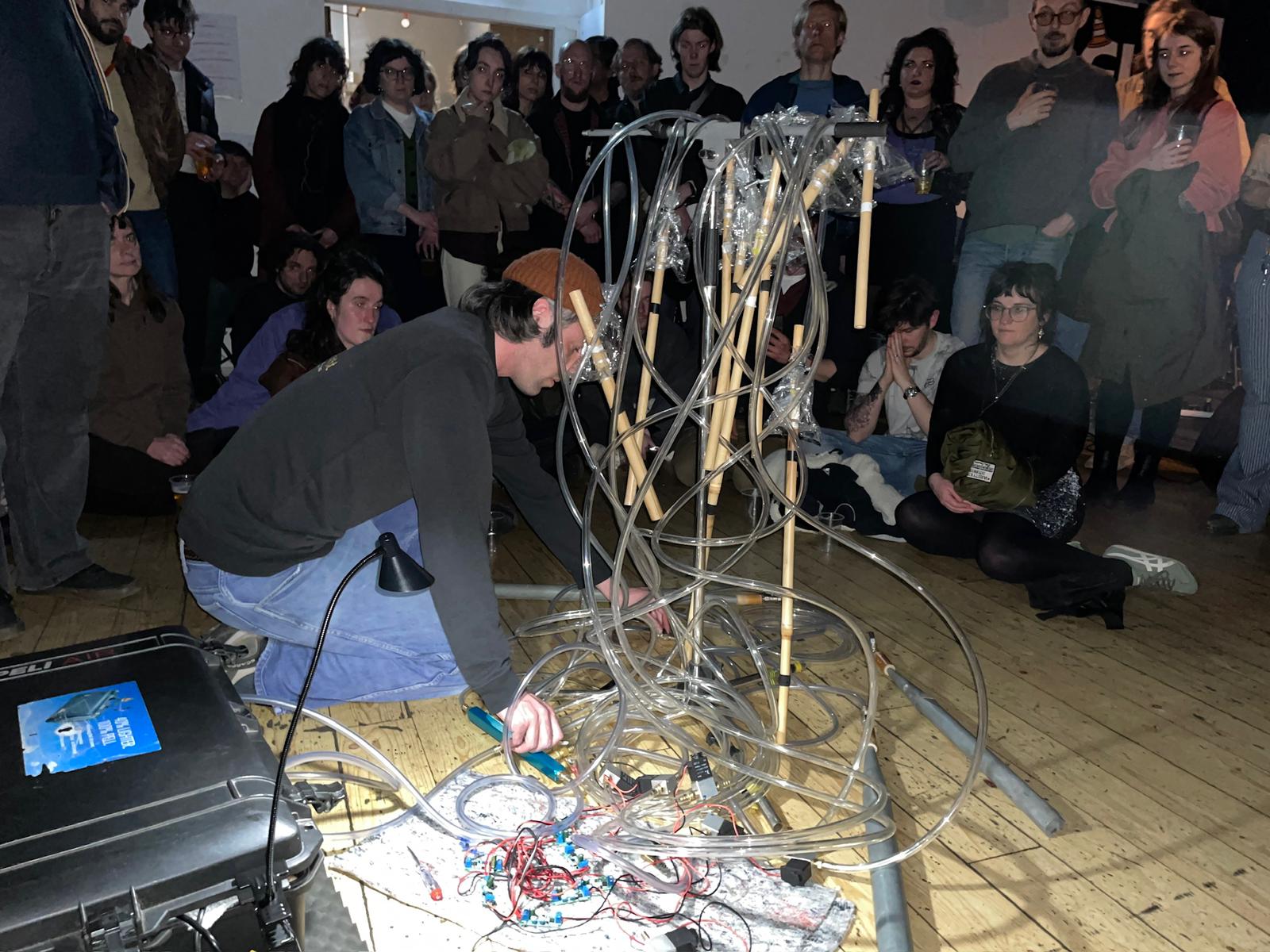
To say that the experimental music and performance art scene in Vilnius (and by extension Lithuania) is in rude health would be an understatement. With the launch and growth of hubs and communities like Sodas 2123 and Studium P, as well as the legacy and continued success enjoyed by the Braille Satellite experimental music festival, the scene has never been so expansive, diverse and international. It’s here that you can find the joy, chaos, and endless spirit of inquiry that unrestricted expression allows to flourish. If we are looking for the purest expression of that Lithuanian co-creating spirit, it’s here.
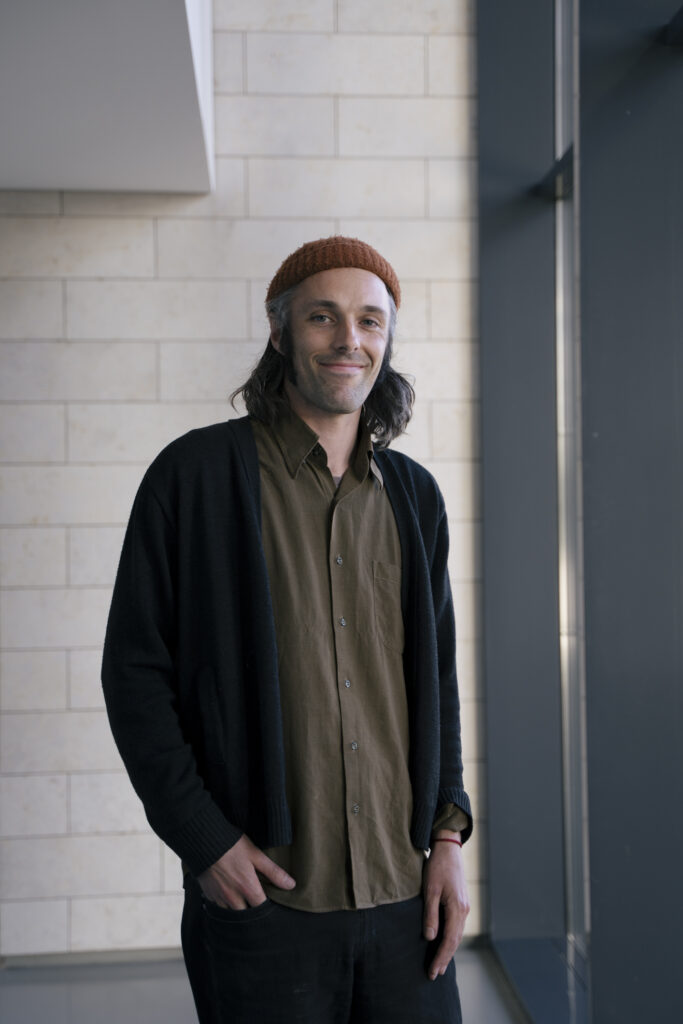
This article is the second in a two-part series, following on from our conversation with Radvilė Buivydienė, Director at Music Information Centre Lithuania. Here, we continue by talking to Sholto Dobie, a Scottish emigre and sound artist, who is a member of the city’s influential Studium P collective, and Director of the Jauna Muzika (new music) festival. Tireless advocates of experimental sound, they have been instrumental in putting local artists on a global stage, via concerts at London’s prestigious Cafe Oto venue, and festivals of Lithuanian experimental music abroad.
Sholto Dobie, a Scottish sound artist and curator, moved from London to Vilnius during the pandemic in 2020. He has since established himself as a leading figure in the Lithuanian sound art ecosystem, this year taking up the position of Director of the Jauna Muzika (new music) festival, which brings together leading lights in the local scene and international artists.
Sholto, how did you end up in Vilnius?
I originally came for personal reasons, and when I arrived I didn’t know anybody. It was during the first wave of the pandemic. I started visiting Sodas 2123 (a popular art venue and part of a larger arts hub). The crowd was very very international and welcoming and pretty soon I’d volunteered to work behind the bar. From there I moved to the kitchen, where I was working with a Spanish guy. Our Tortilla Friday’s were pretty legendary. And when the people in the community found out I made music, they invited me to perform, and that’s how that started.
Things changed at Sodas but by then, I’d been invited to Studium P, the art hub where I currently live and work. The one constant here is Simonas Nekrošius, who put it together, and although the community has changed over the years, he’s like the glue and the core of it all. It’s great because our building is right in the centre of the city, but because it’s rent controlled, it’s affordable. Since then, the community has just grown organically. And I’ve been able to introduce people I know from back in the UK, like the people at Cafe Oto (an internationally renowned venue for experimental music in London) to local artists, and vice versa, and it’s all just worked. People love what’s going on here, so it’s not just Lithuanians going to London, but London artists coming here.
That brings me to my next question, what distinguishes the local experimental scene?
Commitment, community and creativity. There’s artists like Simonas Nekrošius and Arma Agharta, as well as organisers like Matas Labašauskas, who have worked really hard over the past 10-15 to put the country on the map. And you have this amazing crop of creators now like Augustė Vickunaitė, Kamilė Dambrauskaite, and Adomas Palekas, all very talented and adventurous artists who are active in Vilnius and throughout Europe and keep the flame burning bright. Too many names to mention, so sorry if I’ve forgotten anyone.
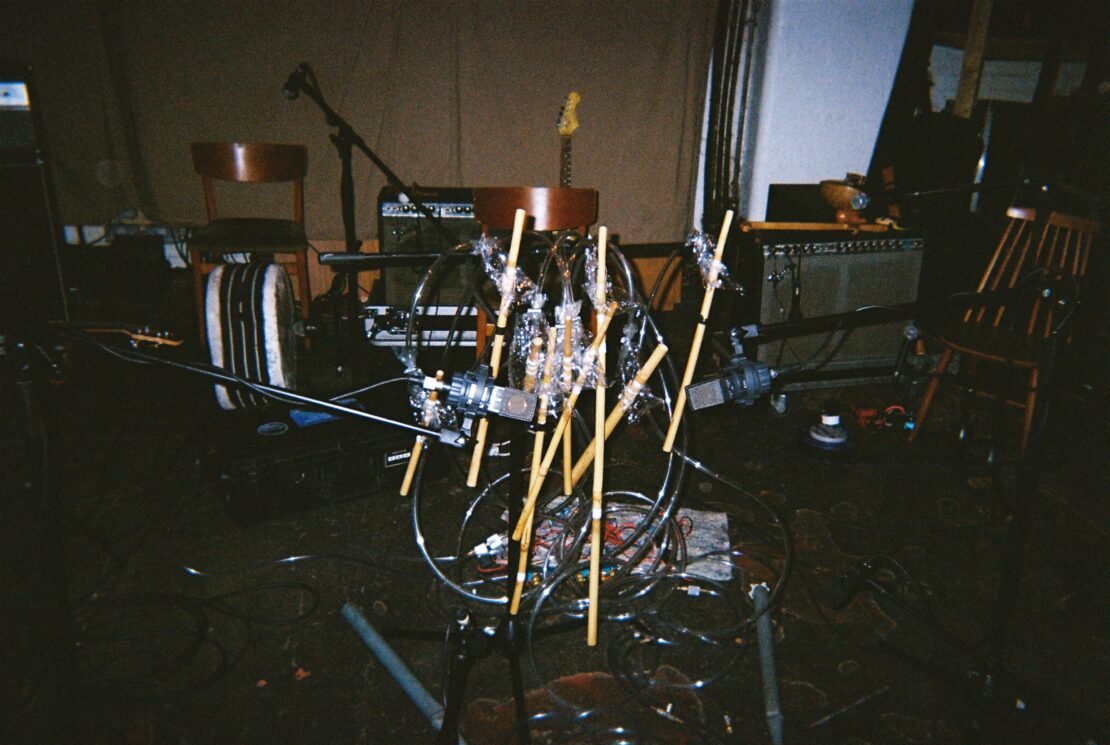
The other thing that struck me is the amount of space that’s available. In London you literally have to fight for every inch. So, I used to work at the
Horse Hospital in London, an artist led not-for-profit art venue in London, and it was a continual battle for its survival in its location. Here, there’s so much more access and affordable space for artists to take a chance and explore their ideas. Just last week we had three Chinese sound artists from Beijing who made a point to visit Vilnius, as they’d heard so much about it, and when they left they said it was their favourite city for art. In front of the usual places like Berlin and London.
How do you think the outside world views the experimental music scene here?
For four or five years, I’ve had artists from the UK, and elsewhere in Europe, visit Vilnius. But they don’t just fly in and fly out, but spend days getting to know the place and people. And there are, like, so many little micro connections which have come out as a result. Sometimes recordings and releases, or just people who have stayed in touch or reciprocated invitations to go somewhere else. Cafe Oto is a good example of this. Everyone from here knows everyone who works at Cafe Oto, because they’ve all been here to do different things over the years. This is a more sustainable model than just getting exposure. It’s how you grow culture and sustain it. We’re forming a community, or rather that community is happening because there is this spirit that’s being shared. And artists from all over are feeling it and being drawn to Vilnius. I saw that during Jauna Muzika, we had a mix of local and international, with the artists working together. And it felt great, and the audiences are changing also, I can see that they are attentive and they really listen.
To learn more about Lithuania’s lively experimental music scene, visit https://www.mic.lt/en