For Daumantė Strelčiūnienė, knitting is not just a pastime but a way of life. She knits everywhere – in the car, in cafés, even while travelling. Once, she even picked up her needles while gazing at the Eiffel Tower. What once surprised those around her is now taken for granted. Over time, Daumantė has inspired countless others to knit as well. She is convinced that knitting is an integral part of Lithuanian identity – a tradition only temporarily forgotten.
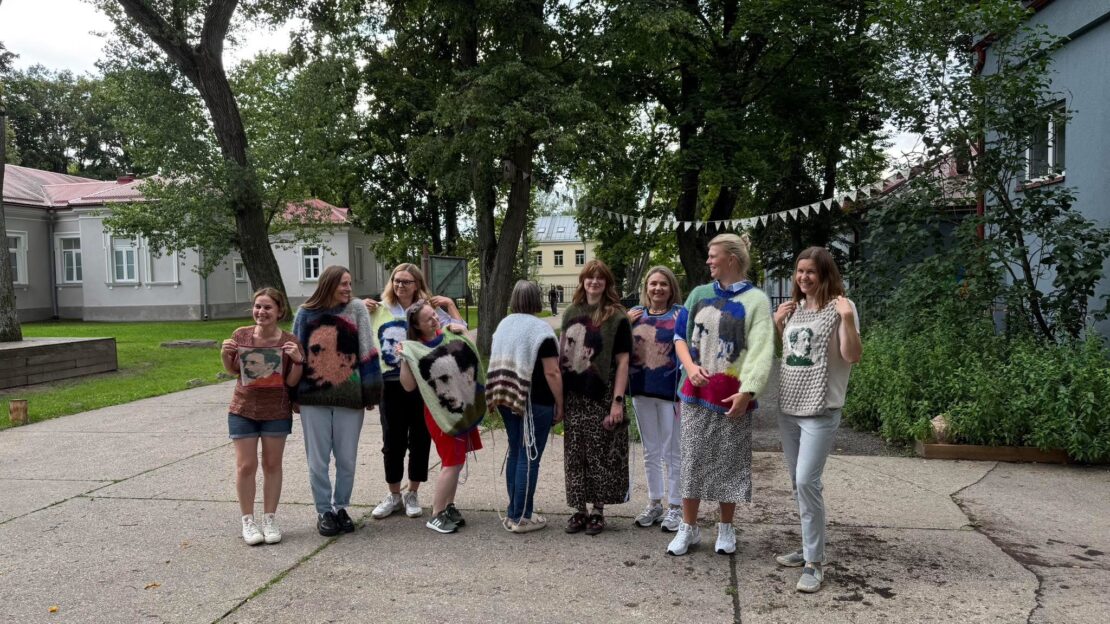
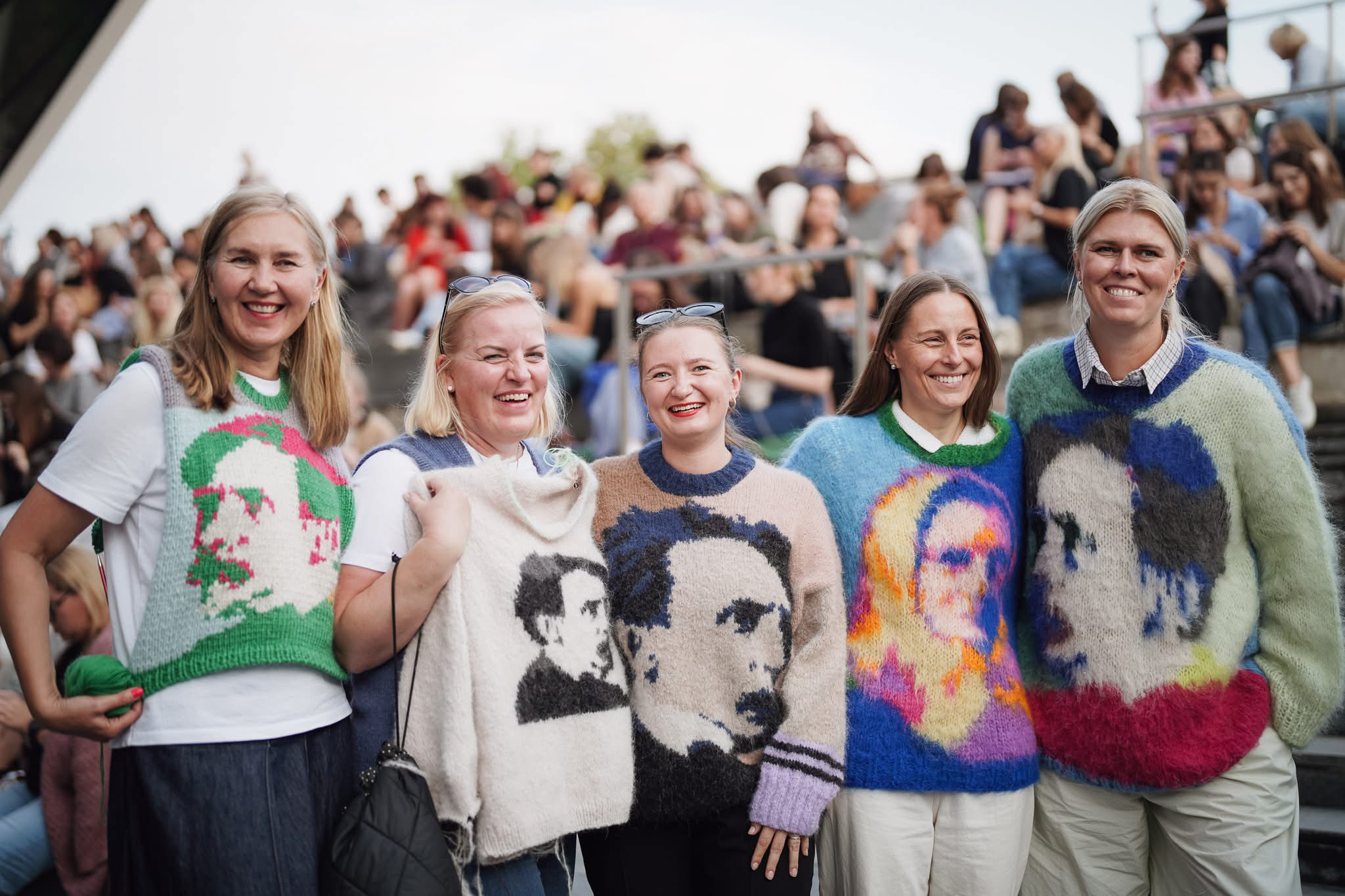
In Vilnius, she founded a knitting club that unites like-minded people from all over Lithuania. This year, the community has decided to celebrate the birthday of one of the country’s greatest artists, Mikalojus Konstantinas Čiurlionis, in a special way: by visiting the museum in Kaunas dressed in handmade jumpers decorated with the artist’s portrait.
“It looks like we’re about to break a record. At first, we planned for 80 jumpers, but now the number has already passed 900,” Daumantė says with pride.
More Than Just Knitting
The idea of jumpers featuring Čiurlionis’ portrait grew out of three years of community activity.
The Vilnius gatherings attract people from across Lithuania: men and women, minority groups, and even newcomers from abroad. But the meetings are about much more than wool and needles.
“In truth, there isn’t always much knitting – the projects often rest on the table. What matters most is conversation. We share experiences, we debate, and people find a safe space where they feel recognised and understood. Of course, when technical questions arise, help is always close at hand. For example, a left-handed beginner once struggled until she met another left-handed knitter who showed her the right technique,” Daumantė explains.
From a Single Portrait to a Nationwide Project
The Čiurlionis project began when one member, Gintarė, brought to a meeting a knitted portrait of the Lithuanian writer Žemaitė – and later one of Čiurlionis. The idea caught fire. Together, the community decided to honour Čiurlionis’ 150th anniversary by knitting jumpers with his likeness.
With Gintarė’s chart as a guide and the group’s enthusiasm as fuel, the initiative took off.
“The Čiurlionis theme became so captivating that even people who had never knitted so much as a scarf volunteered to make a jumper,” Daumantė laughs.
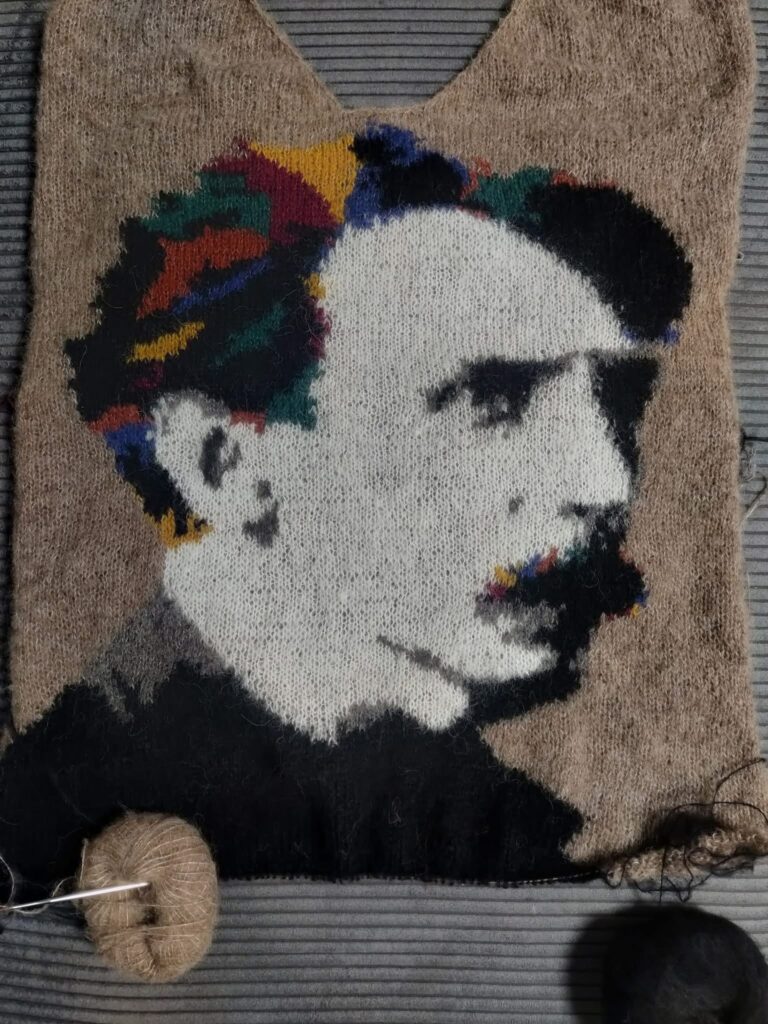
But the project is not only about producing jumpers or sharing photographs online. It also has an educational side: the knitters will visit the National M. K. Čiurlionis Art Museum in Kaunas to explore the artist’s creative world more deeply.
Knitting as a Marker of Identity
The knitting community meets at Miesto laboratorija café in Vilnius. The events are free, with only one request – to buy a cup of coffee as thanks for the use of the space.
For Daumantė, knitting is both therapy and a sustainable practice:
“For the past five years, I haven’t bought a single knitted item – I make everything myself. I use only pure, natural yarns. My principle is simple: everything must be able to return to nature.”
Besides clothing, she knits towels and dishcloths. While unusual in Lithuania, this is common practice in Scandinavia.
Her travels in the Nordic countries have only strengthened her conviction that knitting belongs at the heart of national identity.
“In Norway, the knitting tradition is alive – every hotel has knitting magazines, and everyone knits. It’s truly part of who they are. Latvia carefully preserves its mitten-knitting heritage. Lithuanians traditionally knitted work clothes, socks and mittens, but we’ve forgotten that this too is our heritage. I want to revive this memory,” she says.
She points out that even in the 19th century, Lithuanian periodicals carried articles on handicrafts, showing that the craft has always been valued.
Hand-Knitted Clothes Last Longer
Knitting, Daumantė insists, helps her relax – and incorporating traditional Lithuanian patterns brings particular joy. She sees the community’s activities as a real, lived alternative to empty slogans.
“While large organisations talk about integrating vulnerable groups into society, we simply do it. We’re open to anyone who wants to join.”
What excites her most is the number of young people now joining the community, motivated by sustainability.
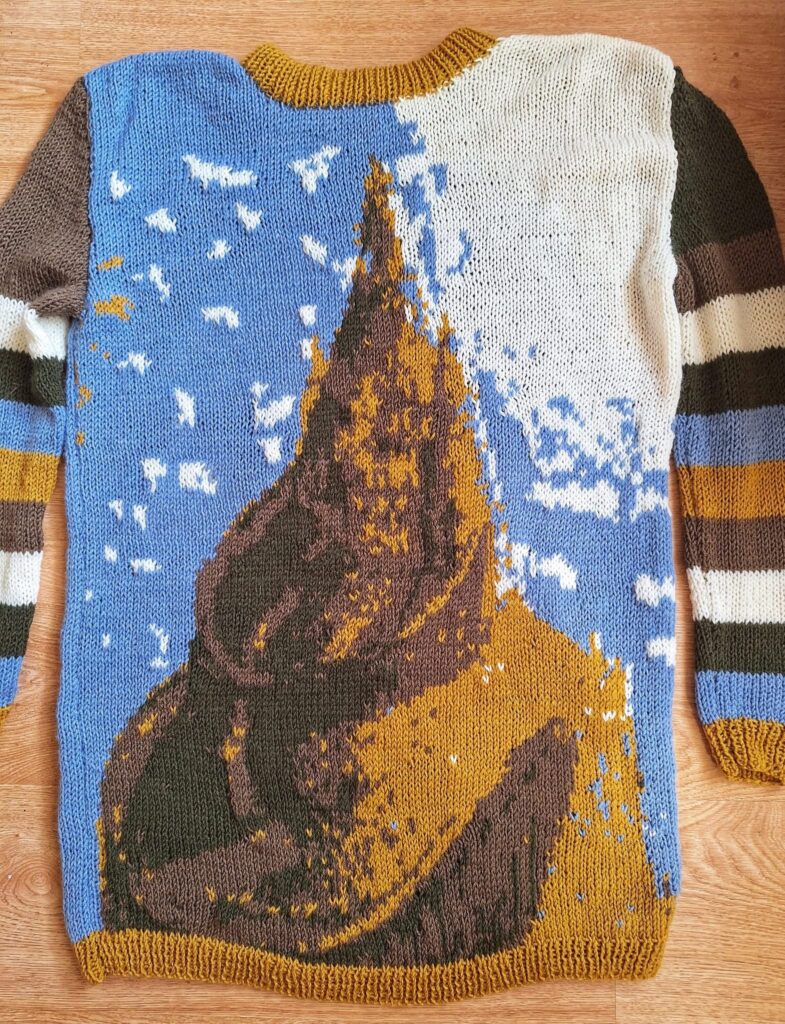
“When you knit a garment yourself, it becomes precious – you value it differently. Such clothing lasts longer, sometimes for many years,” she says.
And she is confident that the jumpers bearing Čiurlionis’ portrait will also endure – lasting reminders of the artist’s anniversary, worn proudly for years to come.