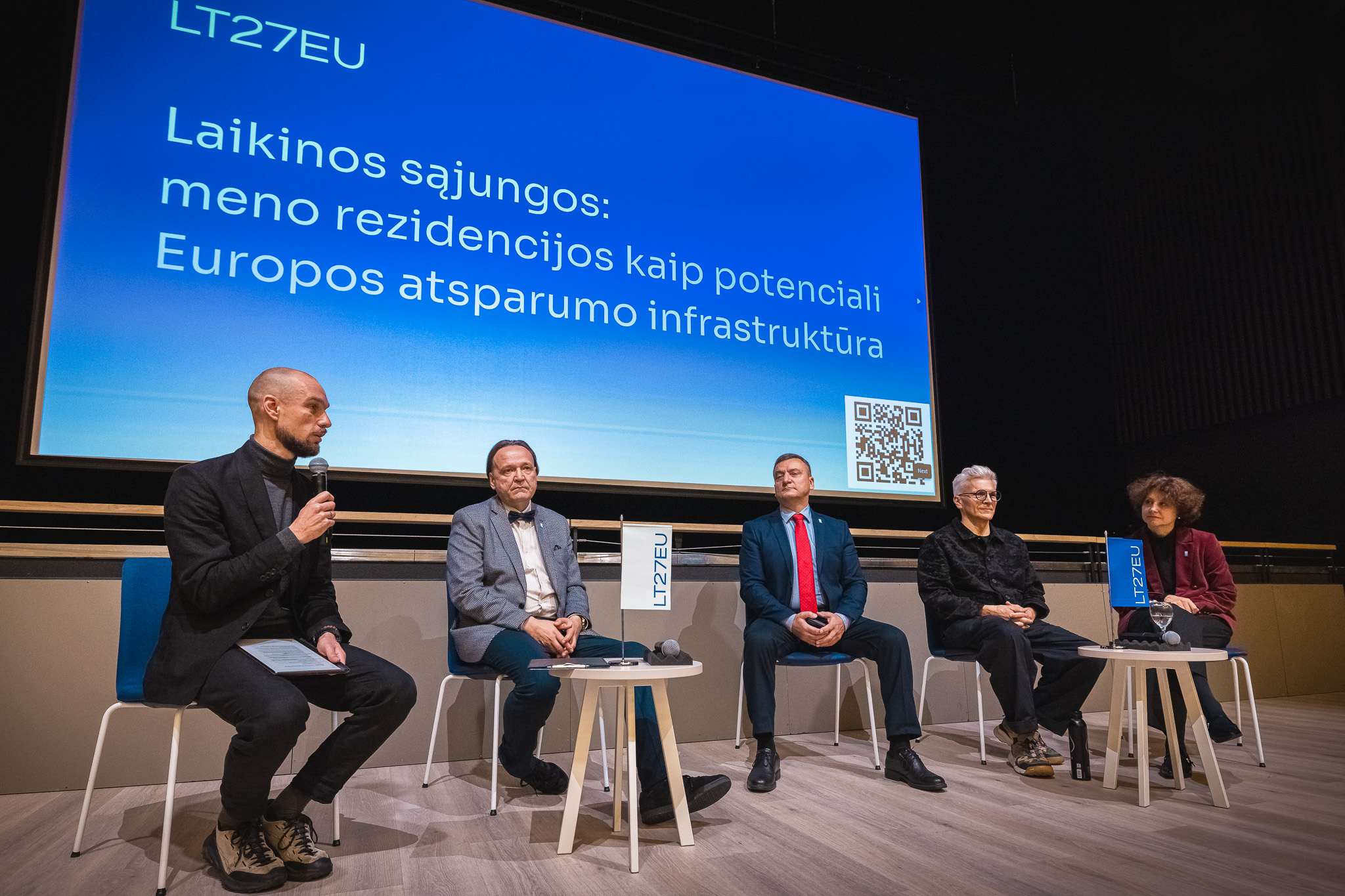
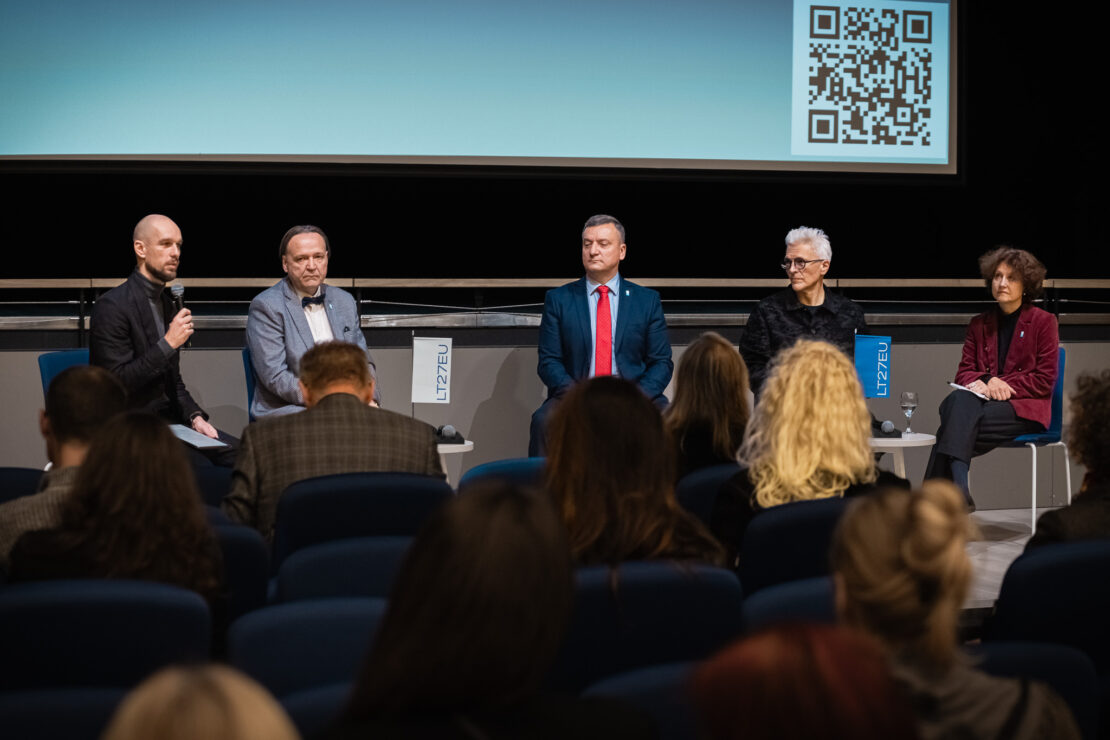
European security is usually associated with armed forces, border protection and economic sanctions. But can an artist, writer or translator who comes to the seaside for a few months to create also contribute to it? In a discussion held in Nida on 23 October, participants explored how art residencies can help strengthen trust and cooperation between European societies.
The conversation brought together representatives of the arts, diplomacy, the military and local government. The event is part of Lithuania’s preparations for the Presidency of the Council of the European Union in 2027.
Shared creativity helps build lasting connections
Art residencies are not only spaces for creative work. People of different nationalities, languages and professions exchange experiences there, get to know one another better and form connections that can later grow into long-term partnerships. Shared everyday life and creative work help people discover common interests and build mutual trust.
Against the backdrop of rising geopolitical tensions, the participants considered how these connections can contribute to European security.
Trust helps strengthen security
According to Tomas Čeponis of the Strategic Communications Department of the Lithuanian Armed Forces, the security of both the European Union and NATO depends not only on agreements and procedures. It also depends on whether people trust one another and feel a sense of belonging.
“Investing in connections between European societies is not merely a cultural investment. In a sense, it is an investment in our long-term resilience,” said Mr Čeponis.
Talking is worthwhile even when there is disagreement
Ambassador Audra Plepytė emphasised the power of art to bring people together. In her view, art can change entrenched attitudes, break down stereotypes and cross not only physical borders but also those that have formed in people’s minds.
According to the Ambassador, art residencies can become spaces where dialogue, shared experience and creative work help build connections that strengthen mutual understanding and tolerance.
Artist and Massachusetts Institute of Technology (MIT) professor Gediminas Urbonas proposed viewing residencies as diplomatic infrastructure. Drawing on the ideas of the philosopher Isabelle Stengers, he stressed that the value of these spaces lies in the opportunity to sustain dialogue even when no common consensus can be reached.
“Artist residencies can be understood as diplomatic infrastructures: not only as a refuge in times of crisis, but as spaces where different practices, values and forms of knowledge can remain in a state of negotiation,” said Mr Urbonas.
In other words, people with different experiences and values can continue the conversation without having to bring their views into line.
Reconciling societal resilience with creative freedom
Narūnas Lendraitis, Deputy Mayor of Neringa, reminded participants that international artist residencies are, first and foremost, spaces for professional art and creative exchange. Nevertheless, they can also strengthen the resilience of local communities and of society as a whole.
In his view, if residencies are expected to play a greater role in advancing the security and resilience goals of the EU and its Member States, this must be clearly set out in their programmes. It is important to define which competencies the residencies will foster, how they will work with local communities, and whether they will help strengthen critical thinking and the ability to recognise disinformation spread by hostile states.
Two important themes thus emerged in the discussion: should cultural institutions become more actively involved in strengthening national security, or does their strength lie precisely in their independence and in their ability to keep dialogue open even when agreement cannot be reached? And how can art residencies contribute to European resilience while preserving creative freedom?
Preparations for the Presidency of the Council of the EU involve the cultural community, too
The discussion took place on 23 October 2026 at the Agila Nida Culture and Tourism Information Centre as part of the forum “Between Spaces: Residency Dialogues” (22-23 October), organised by the Ieva Simonaitytė Klaipėda County Public Library and the Agila Centre. The event formed part of Lithuania’s preparations for the 2027 Presidency of the Council of the EU, whose Seimas-approved priorities include security and the resilience of democratic systems.